Fair-Weather Friends
Social security is once again a third rail of American politics. History tells us that might not last for long.
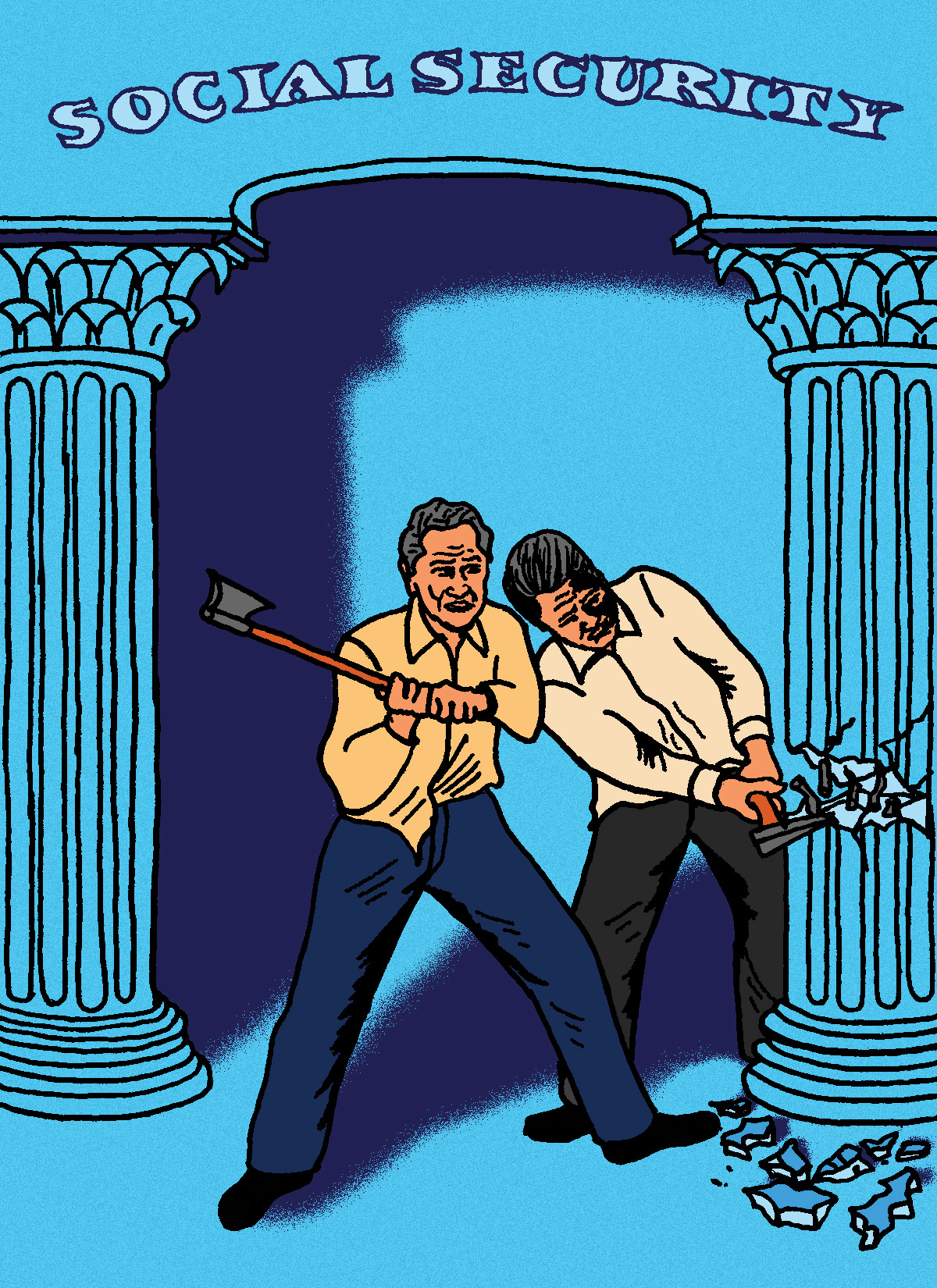
Illustration by Gaurab Thakali
Is there anything in American life as simultaneously beloved and embattled as Social Security? From the moment it became the proverbial third rail of US politics, it seems like politicians can’t help but stab and jab at the program, even at the risk of their own political deaths.
Even stranger, for the past half century the ones doing the prodding have often been from the very Democratic Party that counts Social Security’s passage as part of its triumphant legacy.
When Franklin D. Roosevelt signed the Social Security Act into law in 1935, the United States was the only major industrialized country not to have a public pension system to take care of its elderly. A substantial share of pre-Depression Americans — unless they were wealthy, had family to care for them, or got a philanthropic handout — spent their golden years in poorhouses, panhandling on the street, or surviving through bitter poverty at a rate that plummeted from 50 percent in 1935 to 35 percent twenty-four years later, before falling below 10 percent by century’s end.