Why Australia Marched to War
How Iraq brought Australia into America’s war machine — just in time for a showdown with China.
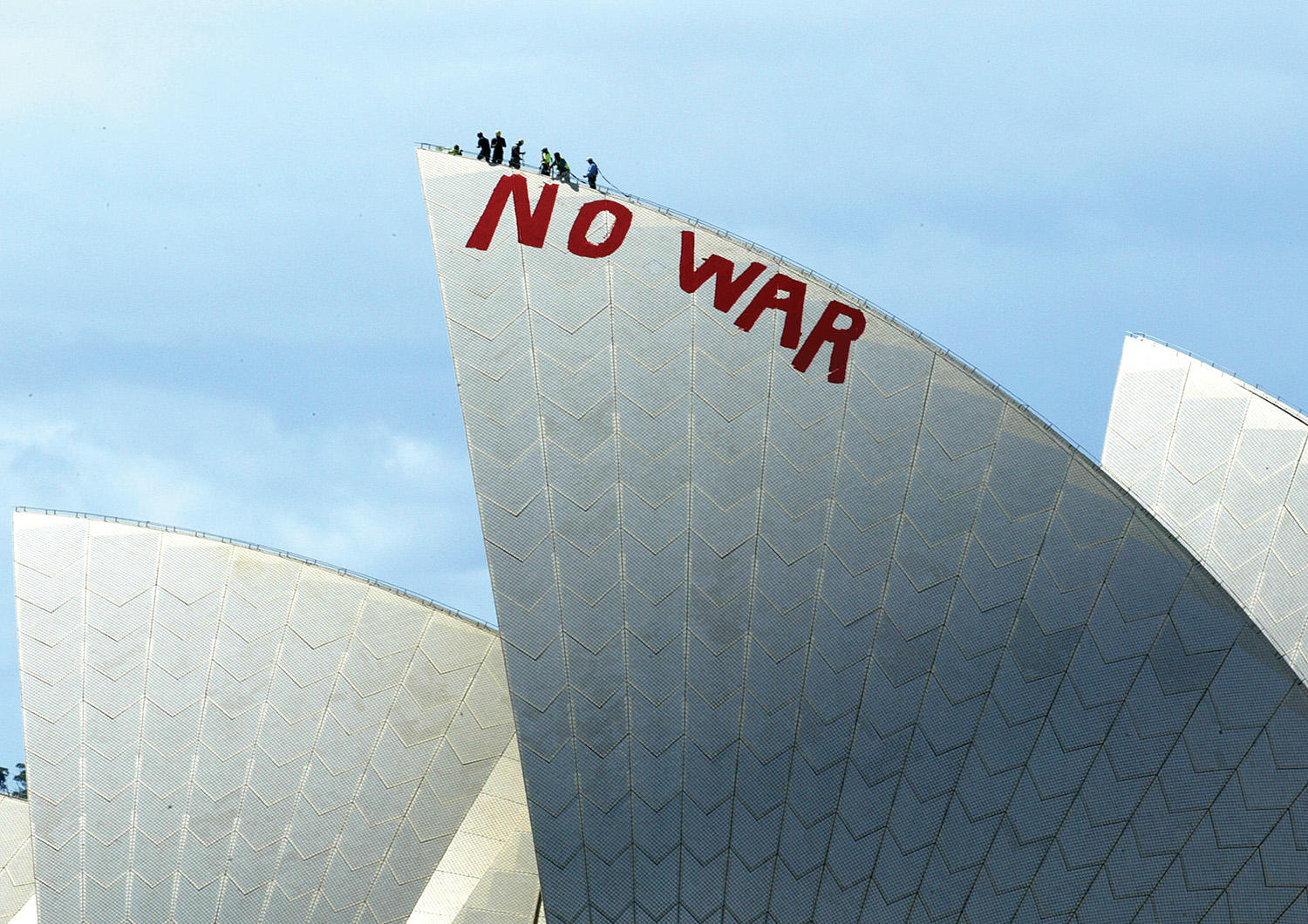
(Greg Wood / AFP via Getty Images)
They were some of the largest protest marches in Australian history.
On the weekend of February 15, 2003, hundreds of thousands filled the streets of capital cities to show their disapproval of the impending war. An estimated 150,000 marched in Melbourne, perhaps 200,000 in Sydney. Writing for the Age, Martin Flanagan reported that the protesters stretched down Melbourne’s Swanston Street “as far as the eye could see.” So large was the crowd, many were trapped on escalators at Melbourne Central train station. It was, several sources argued, “Australia’s largest peace rally.” There were smaller protests in large cities and small towns across the continent. Local news outlets reported that more than two thousand rallied in tiny Bellingen, in the rural hills of northern New South Wales.
On most measures, the 2003 protests were larger de-monstrations than the Vietnam War moratorium marches that had proved so divisive a generation earlier. Weeks later, as the first bombs started to fall, activists Dave Burgess and Will Saunders painted “NO WAR” in red capital letters across the sails of the Sydney Opera House.