The OG Fake News
Long before disinformation became a moral panic, respectable media outlets like the New York Times trafficked in false information that led to decades of war in Iraq.
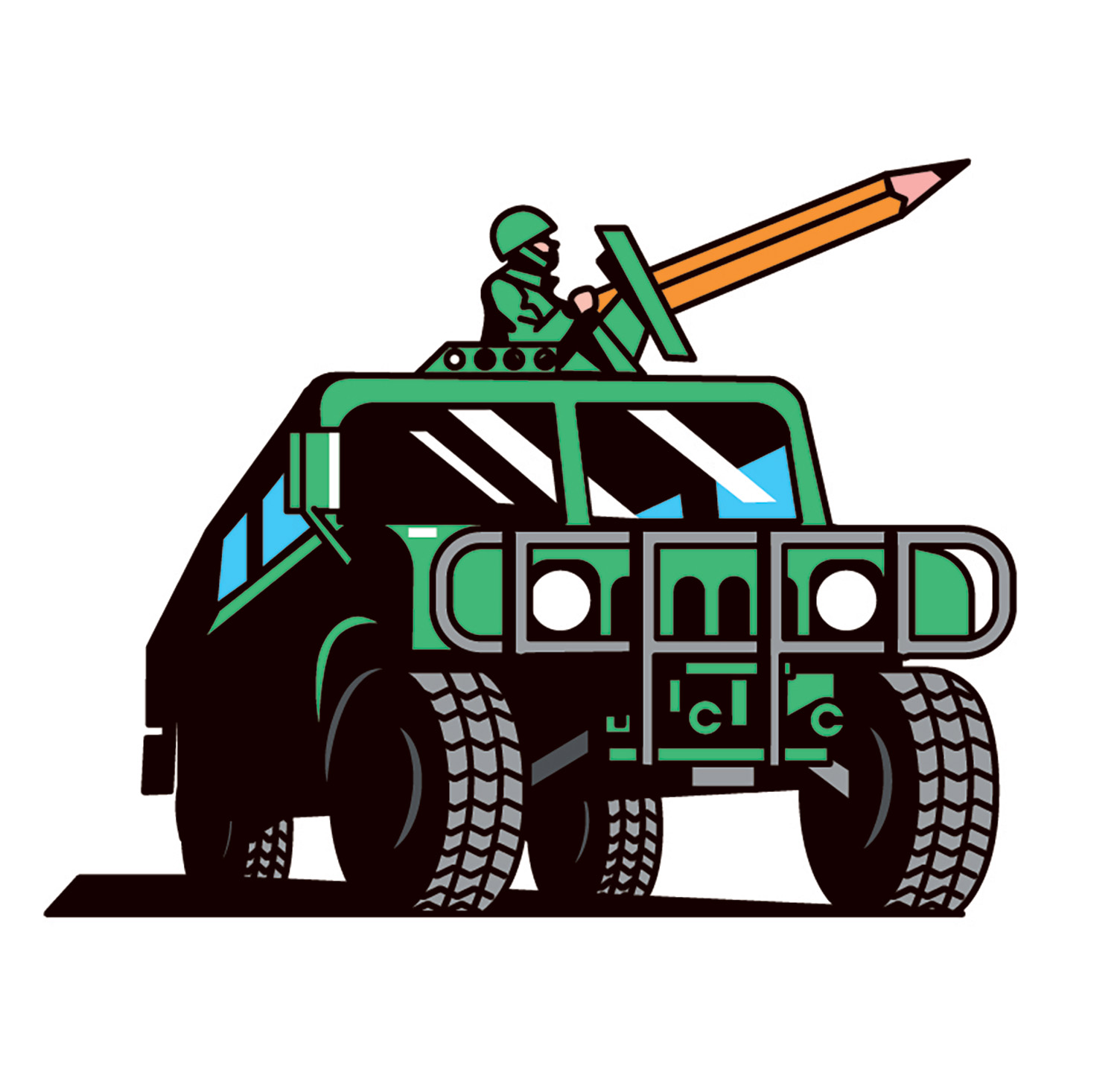
Illustration by Harry Haysom
Sometime during 2003, I went to a party marred by the presence of New York media liberals. I remember that it was in Manhattan, a beautiful open-plan apartment with high ceilings. Talking with two prominent writers, the Iraq War came up. I said that Americans have a responsibility to oppose our government’s conflicts in almost all cases because, since World War II, every war had been disastrous, and that half a century provided a large data set. The men I was speaking to dismissed this idea, not with arguments or evidence but instead with condescension, explaining that you couldn’t expect to think that way and be “relevant.”
It was a revealing moment, suggesting that what was at stake for people like those two writers was respectability, being part of “the conversation,” more than the project of creating a world with less bloodshed and cruelty. Brown University’s Watson Institute for International and Public Affairs estimates that more than 280,000 Iraqi civilians have died from direct violence in this war, while acknowledging that the actual number of deaths, direct and indirect, is likely much higher. Twenty years later, the family members and friends of those hundreds of thousands of dead might disagree about the “relevance” of the antiwar opinion.
That’s why it’s been surreal, over the last five years, to see liberal media types like these now adopting the eradication of “disinformation” and “fake news” as a kind of moral crusade, given that their own lies about weapons of mass destruction in Iraq led to decades of tragically pointless mass death.