Laughing at the Void
British political comedy of the 1990s and 2000s satirized a low-stakes world of media management and spin. What happened when it tackled the tragedy and atrocity of the war in Iraq?
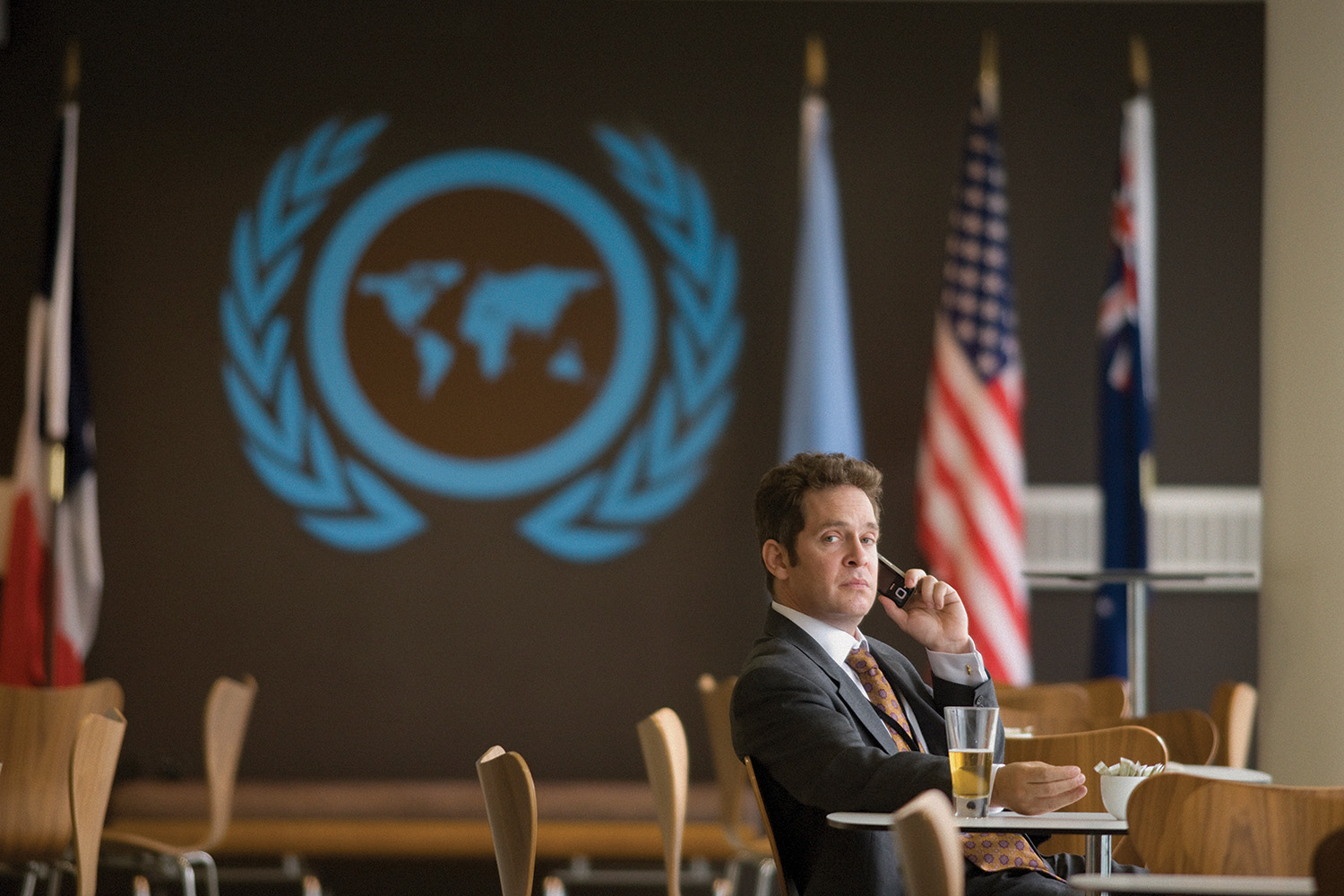
(IMDb)
Sharing many cast members as well as a certain sensibility with his satirical BBC series The Thick of It, Armando Iannucci’s 2009 film In the Loop imagines various Anglo-American state departments in the run-up to a war in the Middle East. Peter Capaldi reprises his television role as Malcolm Tucker, infamously based on New Labour “spin doctor” Alastair Campbell, bullying his MP — in this case Simon Foster (Tom Hollander), the minister for international development — and departmental staff into supporting military action, against Foster’s conscience.
As in The Thick of It, the story plays out in the upper echelons of state bureaucracy. We never see the president or the prime minister, nor do we find out which party any of the ministers represent; politics here is largely a question of committee procedure and media management. We don’t see, or even hear, anything of the mass protests that characterized the buildup to the Iraq War in 2003. The very idea of representative democracy seems practically irrelevant. When “ordinary” people do intrude on the narrative, it’s with concerns that couldn’t seem more trivial — although the minister’s reluctance to deal with them does eventually come back to bite him. (As Foster says of having to meet constituents: “It’s like being Simon Cowell, but without the ability to say, ‘Fuck off, you’re mental.’”)
Much of the humor in The Thick of It comes from how low the stakes were in British politics in the mid-2000s, when Tony Blair’s government continued to secure large majorities despite minimal public support and plummeting electoral turnout. Tucker’s psychopathic treatment of his incompetent team — obviously New Labour, but never named as such — and media contacts is frequently absurd. The stakes in In the Loop, by contrast, could not be higher. But as with Hans Blix’s weapons inspections and parliamentary debates on both sides of the Atlantic, the outcome feels preordained: what matters for most of the central characters (who, unlike Tucker, are opposed to the war) is that they did the right thing — or were at least seen to try.