Just How Bad Were UN Sanctions Against Iraq?
The impact of UN sanctions on Iraq has been difficult to quantify — and that’s part of the problem.
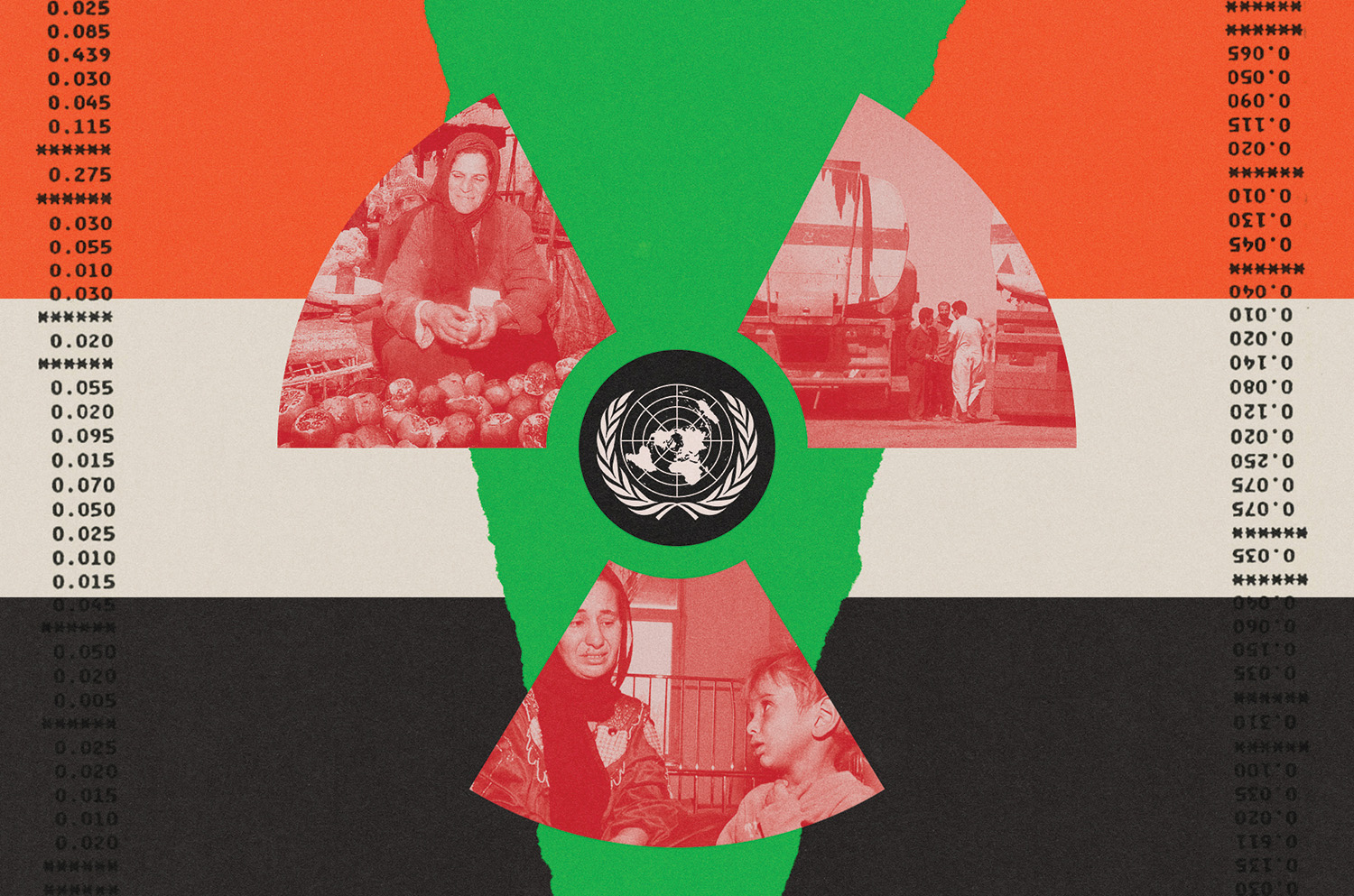
Illustration by Ricardo Santos
Noam Chomsky, Edward Said, and a range of like-minded activists declared in 2000 that “the sanctions [on Iraq] are weapons of mass destruction.” This issue of Jacobin agrees, but over twenty years later, debate continues to rage about the sanctions’ short- and long-term impacts.
Beginning in August 1990, the United Nations imposed the longest-running and most far-reaching sanctions on Iraq in the body’s history through Security Council Resolution 661. Its goal was to induce the Iraqi government to pull out of recently invaded Kuwait, to pay reparations to Kuwait, and to destroy any weapons of mass destruction in its possession. With some modifications, such as the 1996 introduction of an “Oil for Food” program that allowed limited exportation of Iraqi oil, the sanctions remained in place until the US-led invasion and occupation of Iraq in 2003.
Some scholars and commentators have claimed that, however unfortunate their other effects, UN sanctions were effective in stopping Saddam Hussein from developing his chemical and nuclear weapons programs. Yet the sanctions were obviously not effective in destabilizing the regime or removing Hussein from power, nor, as some had hoped, in improving human rights in Iraq. Indeed, many have argued that sanctions led to a dramatic strengthening of Hussein’s already tight grip over the oil-rich Gulf country.