Bill Clinton’s War
Years before Dubya, President Clinton tried to get the public on board for military escalation with Iraq.
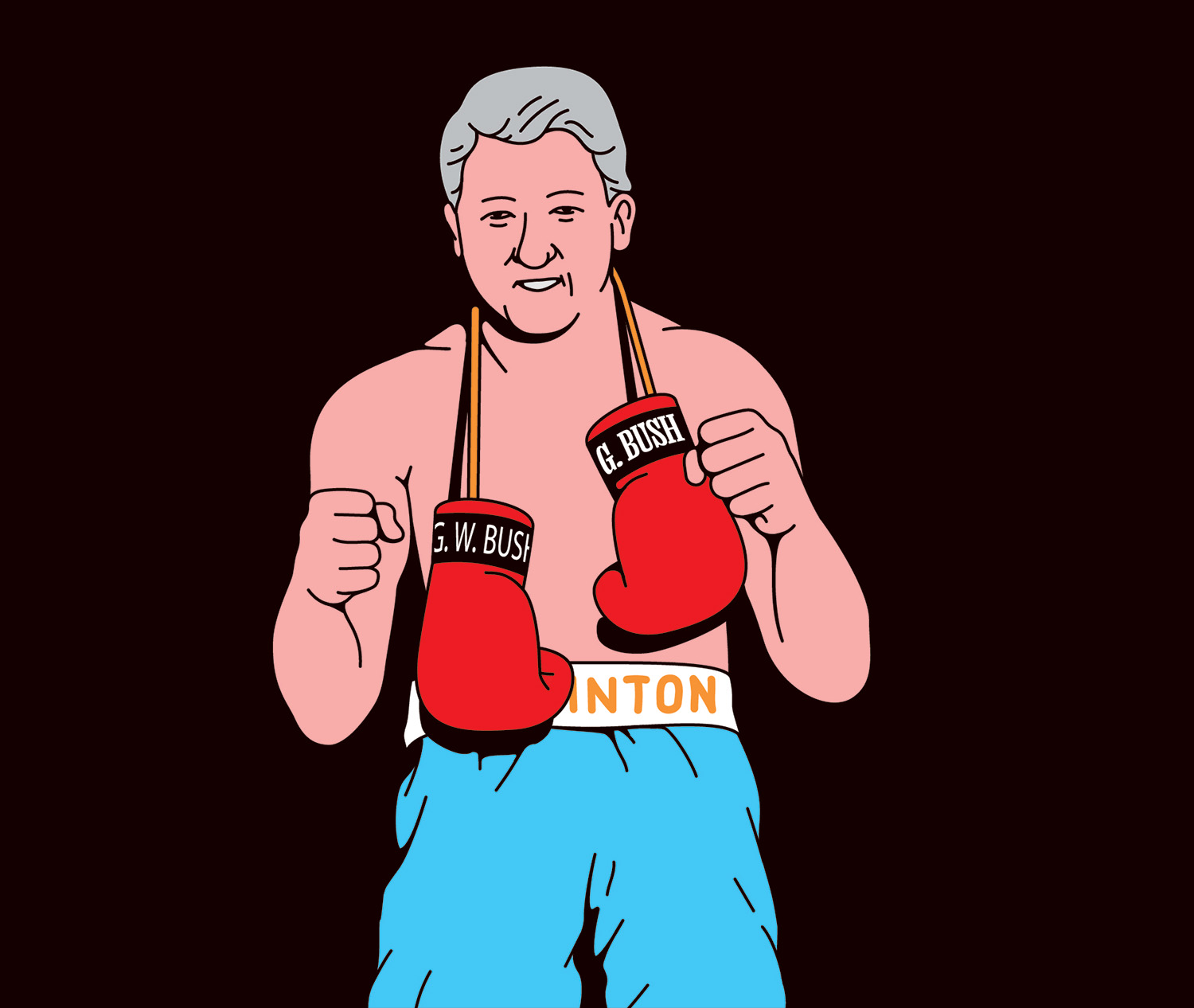
Illustration by Harry Haysom
It took two wars to dislodge Saddam Hussein from power — the first launched by George H. W. Bush, the second by his son a decade and change later. That one-two punch, delivered by two Republican administrations, is usually how we think of the road to Iraq’s bloody, calamitous regime change.
In reality, the twelve years between the Bush wars weren’t so much empty space as connective tissue, most of them filled in by Bill Clinton’s two-term Democratic presidency. Saddam made for a pretty juicy target: a brutal autocrat known for torturing children as an interrogation tactic, he was notorious for gassing Iraqi civilians and starting two wars with his neighbors, putting in place everything needed to cast him as the new Adolf Hitler — worse than Hitler, even, as the elder Bush claimed.
Though President Clinton was largely following his predecessor’s lead, things escalated dramatically under his watch when, in June 1993, twenty-three Tomahawk missiles streaked into Baghdad in the dead of night. Launched after an Iraqi plot on Bush’s life was uncovered, Clinton — calling the foiled assassination attempt an “attack” — cited the UN Charter’s Article 51 and its provision for using force in self-defense as justification. A suspected intelligence compound was blown into smoking rubble, while a few missiles strayed off course and killed eight civilians.