Urban Legends, Urban Truths
The 1998 B-list slasher film Urban Legend unleashes on its protagonists a host of horrors from the American folk canon. Some have their roots in real life.
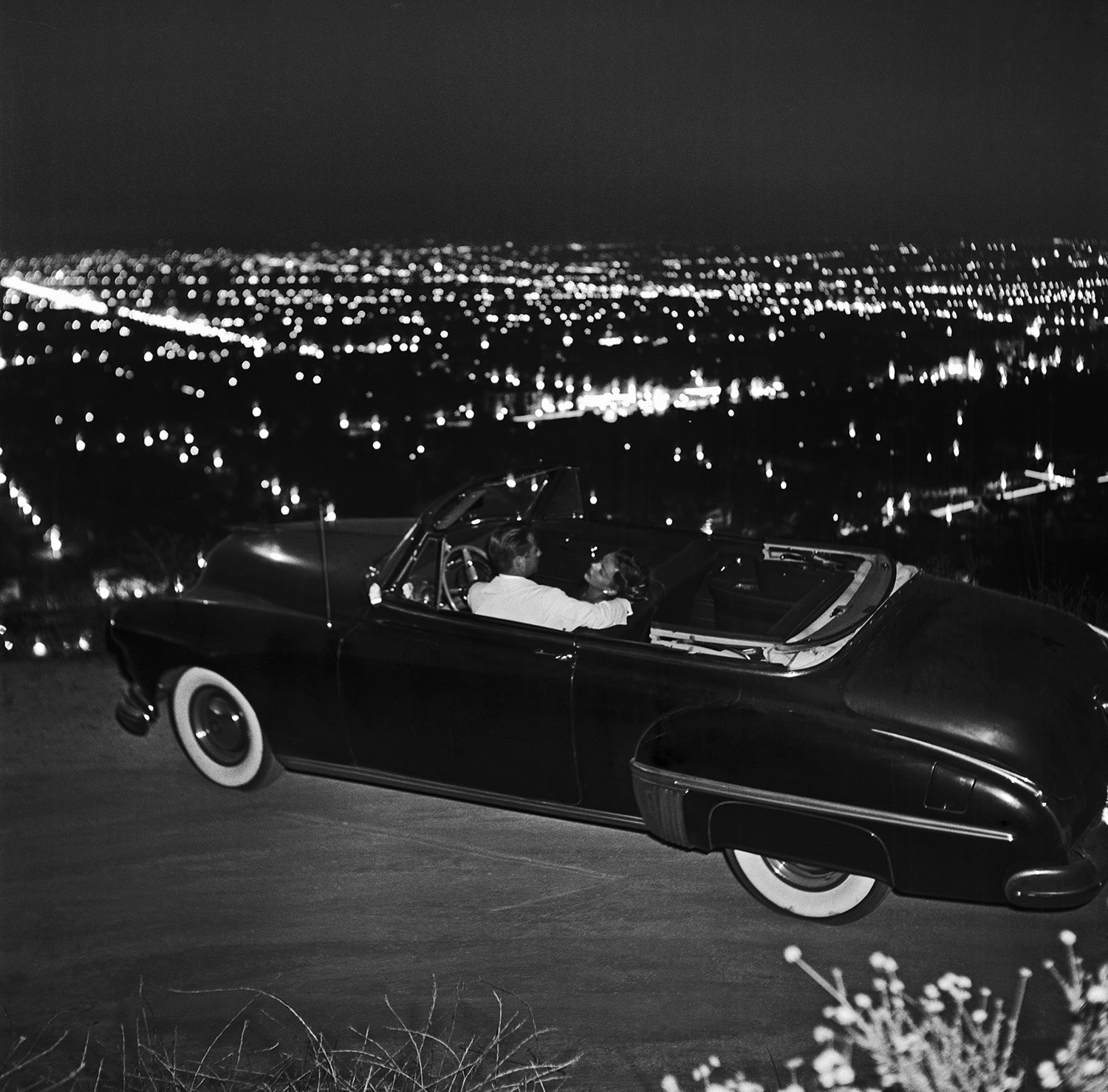
(Earl Leaf / Michael Ochs Archive / Getty Images)
The Killer in the Back Seat
Legend: A woman driving alone at night realizes she is being trailed by a trucker who keeps flashing his high beams at her. Disturbed by the trucker’s persistent tailgating and the ceaseless shine of his lights, the woman attempts to shake him off by ducking down a series of side roads, but it’s no use. Eventually he rams his truck into the back of her car, jarring — but not killing — the woman. As they stand beside their wrecked vehicles, the trucker reveals the reason for his strange behavior: the dead mental patient in the back of the woman’s car, fingers still clutched around a serrated knife. The trucker explains that each time the would-be murderer raised his knife to kill the woman, he would flash his lights, and the killer would duck back down to avoid being seen. Otherwise, he would surely have stabbed the woman behind the wheel
Lesson: Women should never drive alone at night.
Potential origin: The most unrealistic thing about this urban legend is that, in almost all its iterations, the woman behind the wheel survives unscathed. In reality, many cases of killers lurking in back seats result in sordid success. For example, in 1937, 20-year-old Beatrice Roth of Cincinnati, Ohio, was shot and killed by a jilted would-be lover who had concealed himself in the back seat of the car where she sat awaiting her escort. Such cases recurred throughout the 20th century. In 1946, a couple driving home from a date discovered a man crouching behind the driver’s seat, pistol in hand, waiting to stick them up; in 1953, a young woman was struck across the face at a red light by a man who popped up from the back seat and promptly ran away; in 1992, a Florida woman was sexually assaulted by a serial rapist who had snuck into her unlocked car while she ran an errand; and so on.
The Hookman
Legend: A young couple is rounding first base on a lovers’ lane when one of them accidentally turns on the radio. A newscaster announces some chilling news: a notorious serial killer, identifiable by a hook where his left hand would be, has escaped from a nearby mental institution. To her boyfriend’s frustration, the girl grows uneasy at the news and insists they head home. The boy claims that the locked doors and rolled-up windows of his car are enough to defend them against any potential intruder, but his girlfriend simply won’t hear it. Eventually, in a burst of frustration, the boy slams his foot on the gas pedal and speeds the entire way back to his girlfriend’s house. As she gets out of the car, however, her fears are vindicated: a bloody metal hook is hanging from the back door.
Lesson: If you have premarital sex, someone is absolutely going to die.
Potential origin: Many believe this terrifying tale is rooted in the real-life Texarkana Moonlight Murders, committed by an unidentified serial killer active in Texas and Arkansas for ten weeks in 1946. Three of the four attacks (which left five dead) targeted young couples on local lovers’ lanes, who were found with multiple gunshot wounds, blunt force trauma, and, in some cases, evidence of sexual assault. The murder spree precipitated a widespread rumor panic and cast a long shadow across lovers’ lanes countrywide. Since the case was never solved, it quickly entered the canon of urban legends as an anti-canoodling warning to American youths.
The Babysitter and the Man Upstairs
Legend: A teenage babysitter is keeping an eye on three children. After putting the kids to bed on the second floor, the babysitter settles in to watch television for a few hours in the living room downstairs. She begins to doze off but is abruptly awoken by a phone call on the landline: “Check on the children,” says a voice on the other end. The babysitter hangs up, assuming a prank call. But the same caller rings her up a few more times. Finally, unnerved, the babysitter calls the police. They assure her they will trace the next call, which comes just a few minutes later. The police call the babysitter back and tell her to get out as fast as she can — because the call is coming from inside the house. When the cops arrive, they find the three children murdered and the killer lying in wait to execute the babysitter next.
Lesson: When mothers leave home, they put their children in danger.
Potential origin: In 1950, a 13-year-old babysitter, Janett Christman, met her end while on the job in Columbia, Missouri. At some point during the night when she was supervising the three-year-old son of Ed and Anne Romack, Christman was assaulted, bludgeoned, and strangled to death. Her last words, recorded by the local police department around 10:30 that night, were “Come quick!” — but cops dismissed the frantic message as a prank. Two-and-a-half hours later, the Romacks found Christman dead in a pool of blood near a shattered window. But since no blood or torn fabric was found on or near the glass shards, which would have presumably injured any entrant, investigators concluded that the broken window was meant to throw them off the trail: the killer (who was never identified) must have either been allowed into the home by Christman or have been lurking there before she arrived.