How Lyndon LaRouche Said Goodbye to Marxism and Hello to Crazy
Lyndon LaRouche started off lecturing about dialectics and Rosa Luxemburg. By the 1980s, he was Glenn Beck with a private security force.
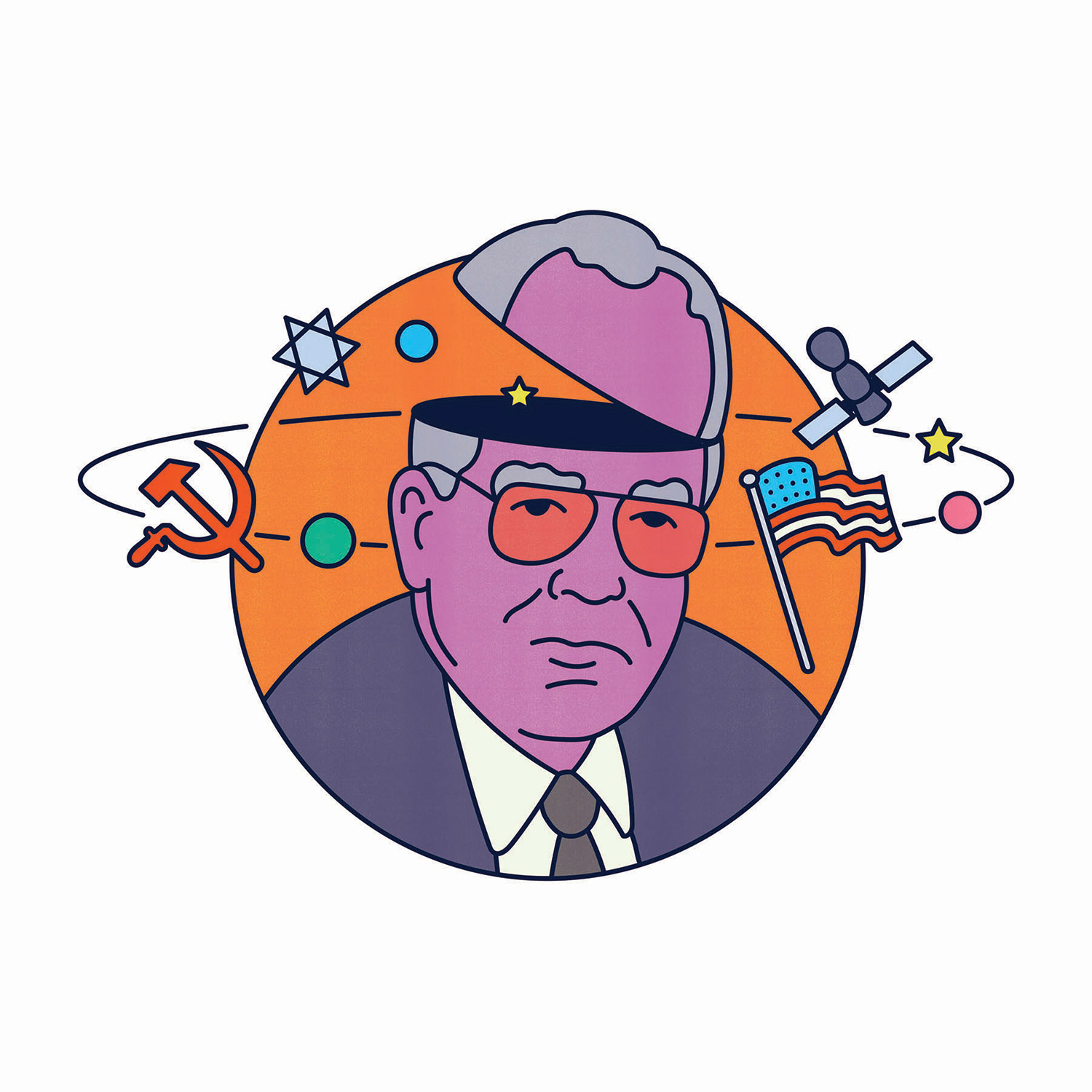
Illustration by Gabriel Alcala
The Chicago Democratic primary of March 18, 1986, was expected to proceed like any other — a victory for the usual machine candidates backed by Adlai Stevenson III, himself gunning for a second chance at Illinois governor. Instead, the truly bizarre happened: two outsider candidates, members of a mysterious yet innocuously named group, the National Democratic Political Committee, emerged victorious.
Mark J. Fairchild took the nomination for lieutenant governor with a lead of twenty thousand votes, and Janice Hart won the nomination for secretary of state by ten thousand. The National Democratic Political Committee was no simple Democratic National Committee advocacy group; it was the instrument of an ex-socialist by the name of Lyndon LaRouche.
Naturally, the Democratic Party of Illinois leadership fell into a panic. LaRouche had a reputation for antisemitism and general crankery. He was at this point a militant supporter of both Ronald Reagan’s “Star Wars” program to build space lasers and his “war on drugs.” Democratic leadership would react by claiming that the LaRouchian victory was a fluke. Stevenson would refuse to run on a ticket alongside the outsider candidates, instead opting for a third-party run, only to be defeated by the Republicans.