Futurist Forgeries
No art movement has ever been so comprehensively faked as the revolutionary “Russian avant-garde” of the 1910s and 1920s.
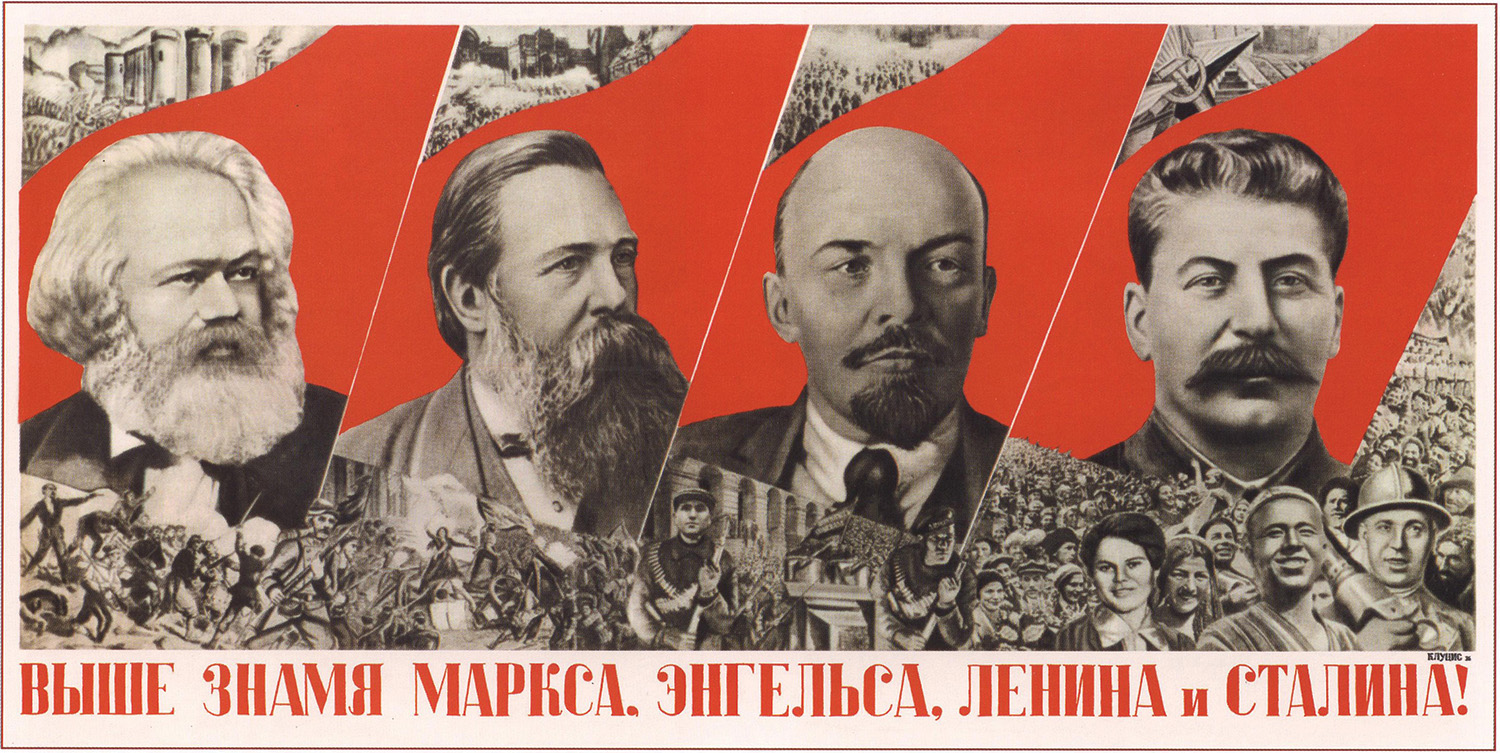
Gustav Klutsis (Wikimedia Commons)
If you go to eBay and type “Rembrandt” or “Picasso” into the search bar, you will not find canvases selling for a few hundred dollars purporting to be authenticated works. But try it with a few famous Eastern European names — Kazimir Malevich, Lyubov Popova, El Lissitzky, Gustav Klutsis — and you’ll find exactly that. Canvases that look wholly convincing as examples of Russian and early Soviet painting styles such as cubo-futurism, suprematism, rayonism, and constructivism are there for sale at very decent sums. These are just a few of the hundreds, probably thousands, of fake Russian avant-garde paintings and collages that have gone on the market since the 1970s.
No art movement has ever been so comprehensively faked as the Russian avant-garde. The forgeries have duped even those whose job it is to know better. In 2008, the Bunkamura Museum in Tokyo had to remove fake canvases purporting to be by Wassily Kandinsky, Marc Chagall, and Ivan Puni; in 2009, an exhibition of the painter and designer Aleksandra Ekster at the Château Museum in Tours was closed after it transpired that 190 of its 192 paintings and drawings were fakes; in 2018, the Museum of Fine Arts in Ghent was investigated by the Belgian police after a comprehensive exhibition entitled Russian Modernism 1910–1930 turned out to consist wholly of forgeries — the museum’s director was fired. The oeuvre of one avant-garde painter, Nina Kogan — a pupil of Malevich — is believed by some experts to consist entirely of fakes.
Museums have gradually gotten wise to this. Recently, the Museum Ludwig in Cologne put on an exhibition juxtaposing their real and fake Popovas, Malevichs, and Alexander Rodchenkos. This was less daring than the approach taken by the Museum of Contemporary Art in Denver, which put on a 2010 show of Russian avant-garde canvases its director, Adam Lerner, purchased online. The canvases were piled up high on the white walls, wild and colorful. Did it matter, Lerner asked, whether any of them were “real” or not?