The Liberated Camera
The great films that bookend the career of Mikhail Kalatozov brought together revolutionary politics and revolutionary cinema. Each, however, was firmly rejected by the movements they aimed to represent.
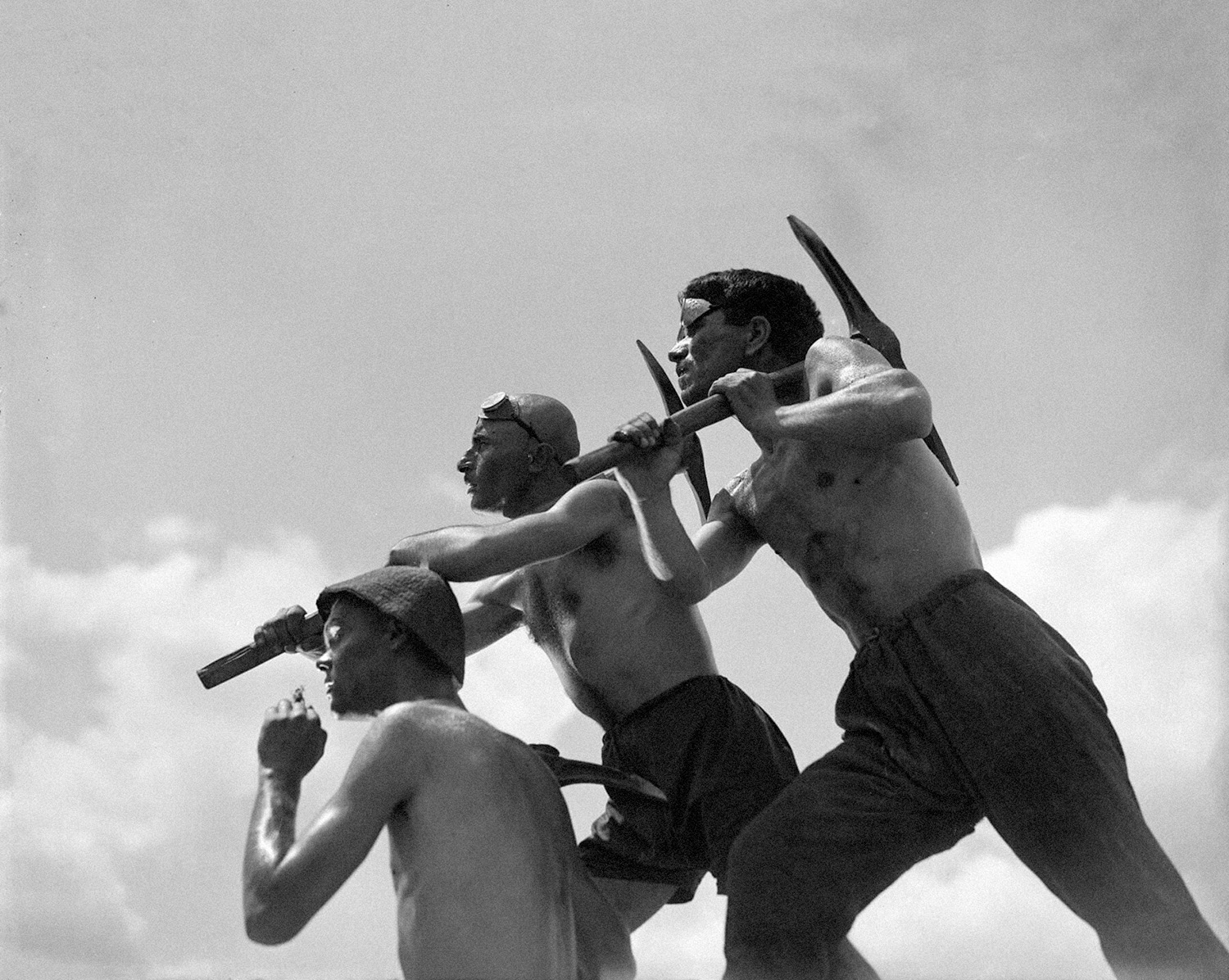
Still from Salt for Svanetia (1930).
While Sergei Eisenstein, Dziga Vertov, and Andrei Tarkovsky are undeniably the most celebrated names in Soviet cinema, the Georgian director Mikhail Kalatozov has some influential advocates of his own. Both Soviet and French directors of the 1960s have cited 1957’s The Cranes Are Flying as a cinematic epiphany. Yet two of Kalatozov’s films — Salt for Svanetia in 1930 and I Am Cuba in 1964 — initially elicited censure, derision, and indifference among the public and critics alike, only to be rediscovered decades later as forgotten masterpieces.
Kalatozov’s path to making Salt for Svanetia tells a complicated tale about the formation of a Soviet culture. The expulsion from early Soviet Georgian cinema of “bourgeois specialists” — accused of nationalism, exoticism, and aesthetic backwardness — proved to be a boon for the young Kalatozov, born Mikheil Kalatozishvili in Tbilisi. As part of the Georgian futurist movement, he found immediate common ground with a group of innovators sent from Moscow. The great proponent of montage cinema Lev Kuleshov noted that Kalatozov was able to film mundane objects to make them look like “fairy-tale precious stones.” Kalatozov soon set to work with the famous writer Sergei Tretyakov, a friend of Walter Benjamin and Bertolt Brecht, who had just returned from a long trip to China. Their initial joint film had been censored as “formalist,” but certain of its scenes were incorporated into Kalatozov’s pseudo-documentary opus Salt for Svanetia.
Salt for Svanetia defies conventional genre boundaries. It tells the story of a remote region high in the Georgian mountains whose inhabitants lack the salt needed to sustain life. Kalatozov shot scenes of laborers at work, engaging in the cutting of slate and the thrashing of barley as well as burial and birth rites, in a “surrealist manner.” Close-ups depict the effects of the salt deficit (animals licking rocks splashed with urine) while long shots portray extreme weather and spectacular isolation. The movie then turns into an agit-film, propagating the revolutionary transformation of this archaic community and its integration into Soviet territory by building roads, upon which the much-needed salt would be conveyed.