Stuck in the Middle With Lula
After narrowly coming to power, Lula begins his third presidential term navigating between the demands of his supporters and the threat of a right-wing coup.
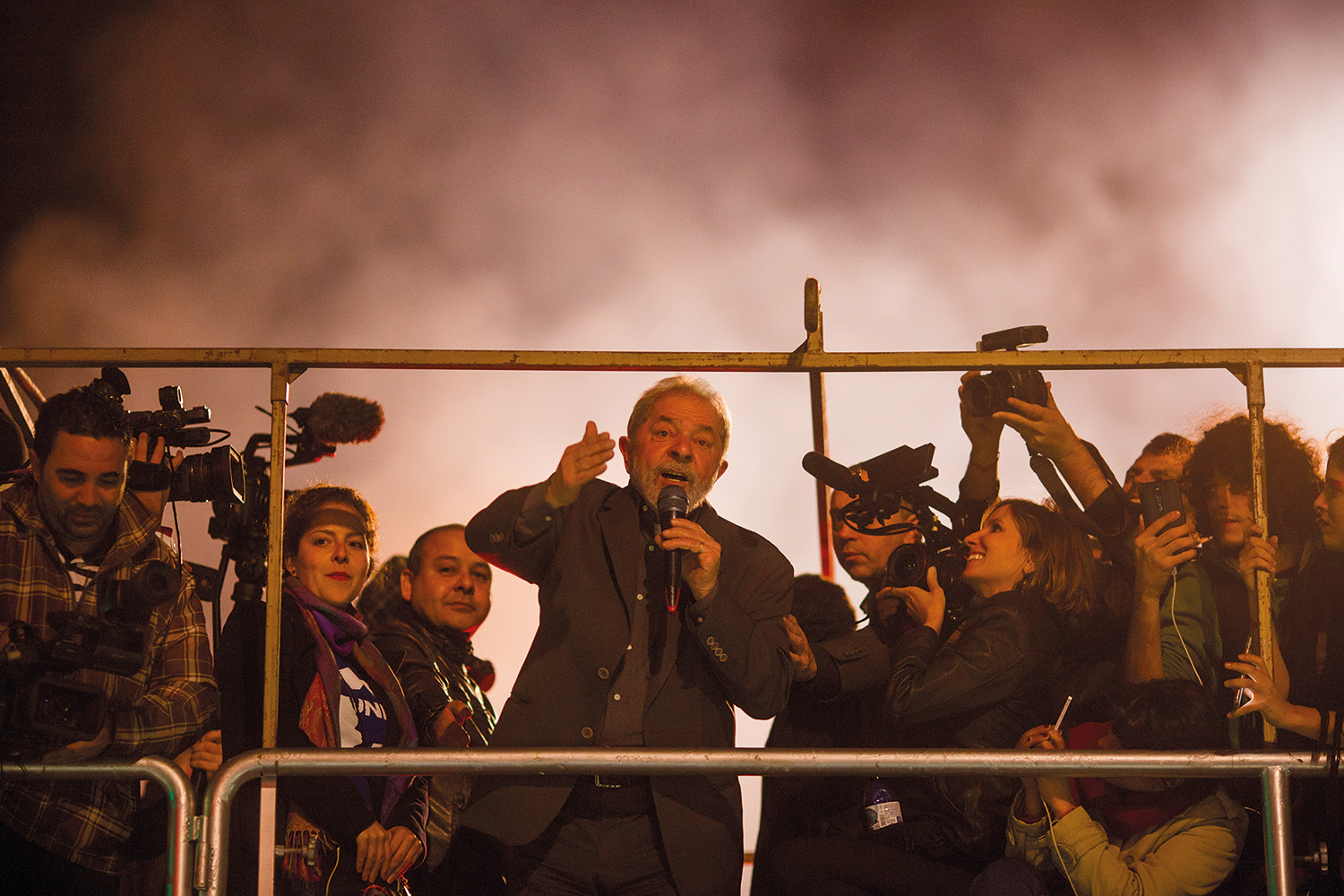
President Luiz Inácio Lula da Silva speaks at a demonstration against then president Michel Temer, June 10, 2016. Temer was accused in the court of public opinion of contributing to the impeachment of his predecessor, Dilma Rousseff. (Victor Moriyama / Getty Images)
“The world is watching Brazil,” Isabel Cademartori said in late October, as voters in Latin America’s largest nation went to the polls. As a member of the Social Democratic Party of Germany, serving in the Bundestag since 2021, Cademartori was heading a delegation to observe Brazil’s electoral process. The right-wing incumbent, Jair Bolsonaro, spent the campaign calling into question Brazil’s ability to carry out a free and fair election, an assertion based as much on his antidemocratic inclinations as his failure to overtake former president Luiz Inácio Lula da Silva in the polls.
Bolsonaro’s mercurial, authoritarian nature managed to attract unprecedented international attention to Brazil’s presidential race. Would he get another four years in office? Would he leave if defeated? Both formal observers, like Cademartori, and informal ones poured into the country to find out.
As expected, Lula won, with sixty million votes to Bolsonaro’s fifty-eight million. Some interpreted his narrow victory as a sign of weakness for the ex–factory worker who governed for two terms beginning twenty years ago. After all, despite presiding over a calamitous response to the COVID-19 pandemic and earning universal condemnation for Amazon deforestation, the incumbent had helped elect several key allies at different levels of government. Even in defeat, Bolsonaro had unquestionably demonstrated a surprising strength. On the other hand, considering that no sitting president had lost reelection since the constitution first allowed an incumbent to seek a second term in 1997, Lula’s victory was no small feat. The war for Brazil’s future — or at least this key battle — was won by the candidate with deep roots in organized labor and social movements.