No Man’s Land
In propaganda posters from World War I, the fatherland is a woman. And she wants you to buy war bonds.
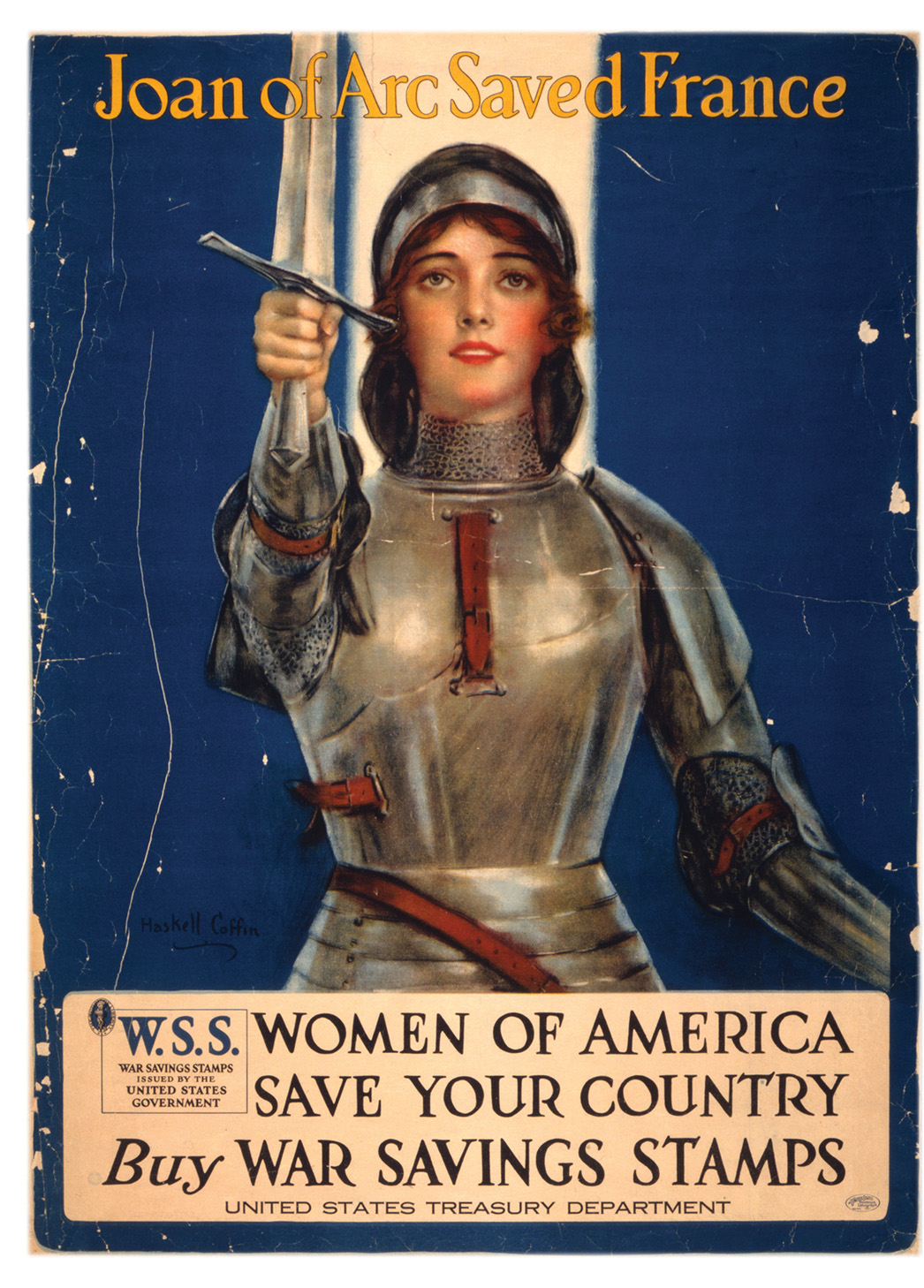
Poster by William Haskell Coffin, 1918.
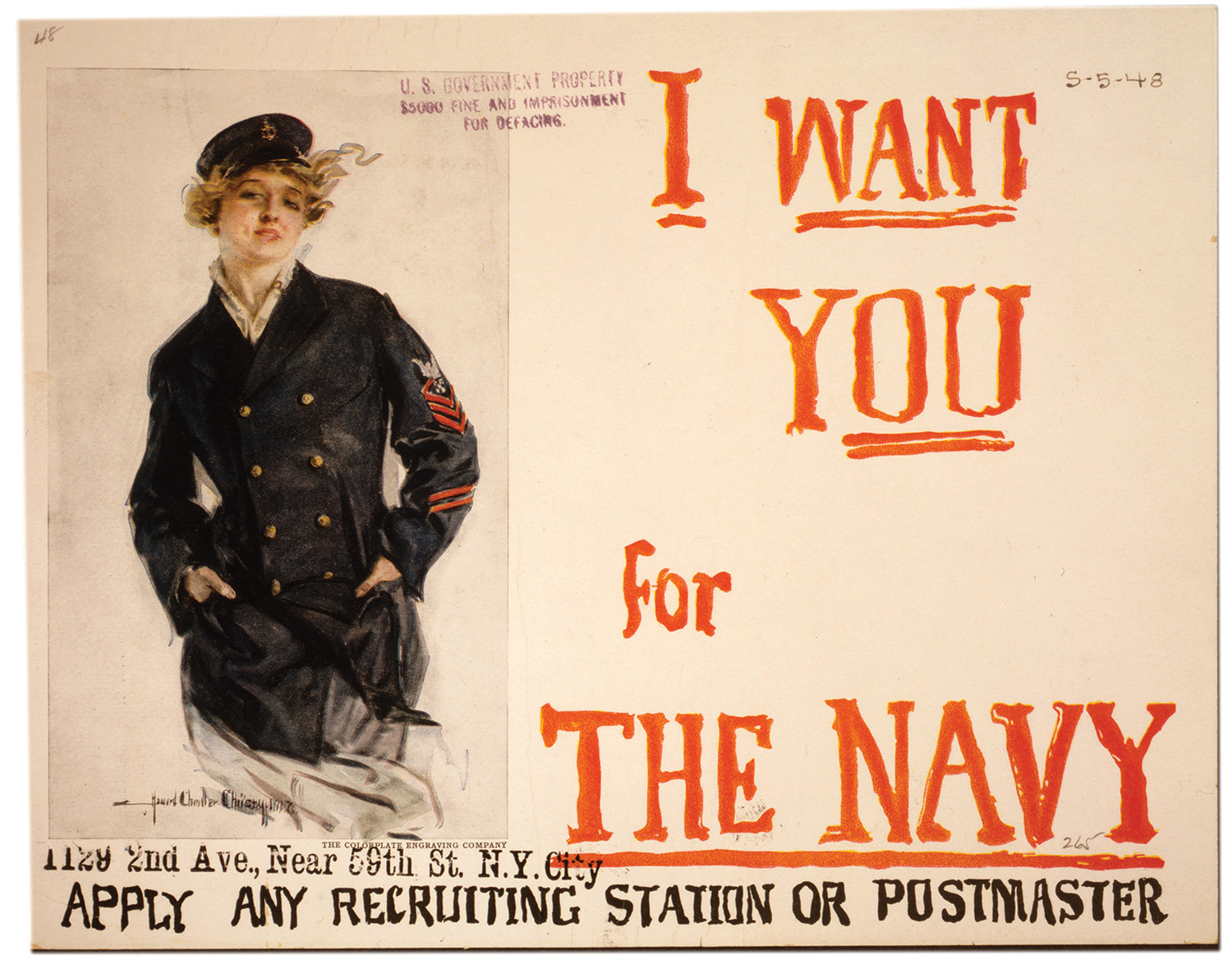
During World War I, the US government commissioned posters from a number of prominent commercial artists and illustrators. Two of the most famous are William Haskell Coffin and Howard Chandler Christy. The former’s depictions of women frequently appeared on the covers of magazines in the first half of the twentieth century; the latter is best known for his Scene at the Signing of the Constitution of the United States (1940), now on permanent display at the US Capitol, and his portraits depicting prominent Americans. Both Coffin and Christy answered the call of war in 1917, bringing their considerable talents to bear for the nation — namely through propagandized depictions of attractive American women. But the posters are more than pretty pictures: the women captured are symbols unto themselves, signifying the nation, sovereignty, citizenship, and more.
Shield-maiden
It might seem strange that the patron saint of France would appear on a US Treasury Department poster encouraging American women to buy war savings stamps, but the story of Joan of Arc has long resonated beyond her city of Orléans. A kind of mythic shield-maiden, Joan of Arc is imagined engaging in the masculine pursuit of glory in battle without yielding her femininity — note the soft features of the woman in the poster — or, importantly, her maidenhood, which in this image is safely encased in full-body metal armor; the American woman could fulfill a similar role by supporting US involvement in World War I monetarily. By drawing a tether between the French past and the American present, this Coffin poster legitimizes US involvement in a war on European soil: the woman in the poster is both Joan of Arc and the American everywoman, bedecked in medieval European armor but color coded in the red, white, and blue of the modern American flag.