Internationalism After Mass Politics
Internationalism persists as a rallying cry, but what would it mean to go beyond sloganeering?
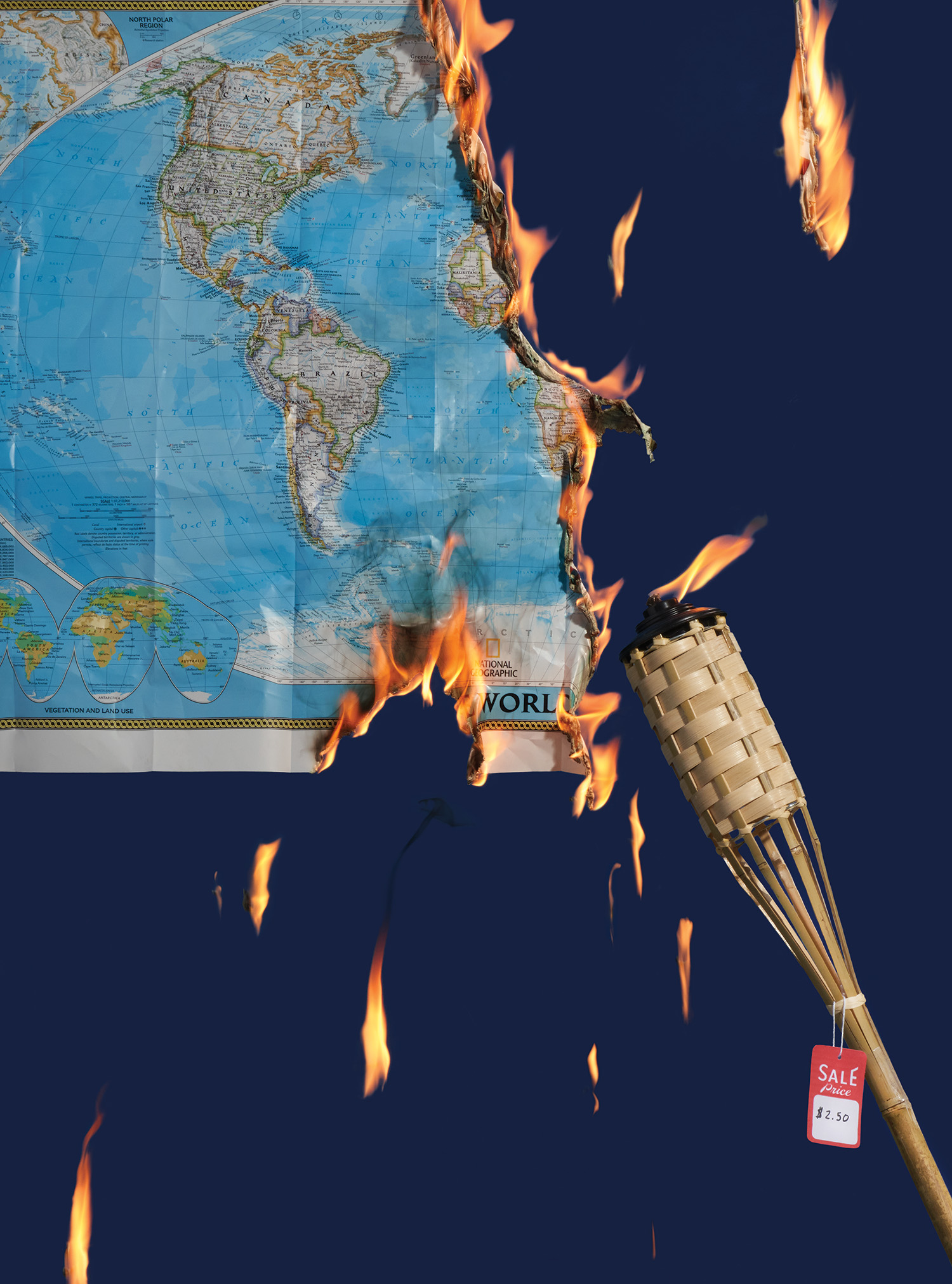
Illustration by Margeaux Walter
Born in Egypt to a Jewish family from East London, with a childhood split between Berlin and Vienna, Eric Hobsbawm’s life was defined by internationalism. He joined the communist movement in 1931 at the age of fourteen and experienced firsthand the rise of Nazism, which drove his family to finally settle in England, where he would spend most of his life. With a coming-of-age defined by the furies of interwar nationalism, it was perhaps no surprise that he would become one of its foremost theorists.
For Hobsbawm, the nationalism that emerged with the advent of mass politics and democratization in Europe was, in part, a response to the rise of the working class. Amid the disruptions and uncertainties brought about by capitalist development, nationalism grew as a political project of the middle classes. It was, according to Hobsbawm, a politics premised on the willingness of people to identify themselves emotionally with their “nation” and to be politically mobilized as such.
Nationalism was not an organic, preexisting sentiment swelling up from the masses — it was produced through modernization and its technologies, like the railway and the printing press. The expansion of public education and the increase in literacy made it possible for nationalism’s various invented traditions to spread and gain power. Hobsbawm waspishly observed that historians are to nationalism what poppy growers are to heroin addicts: “We supply the essential raw material for the market.”