The Trade War Comes to the Middle East
For the last two years, Washington and its allies have sought to consolidate influence in the region. This bid for hegemony is coming up against a new force: Chinese capital.
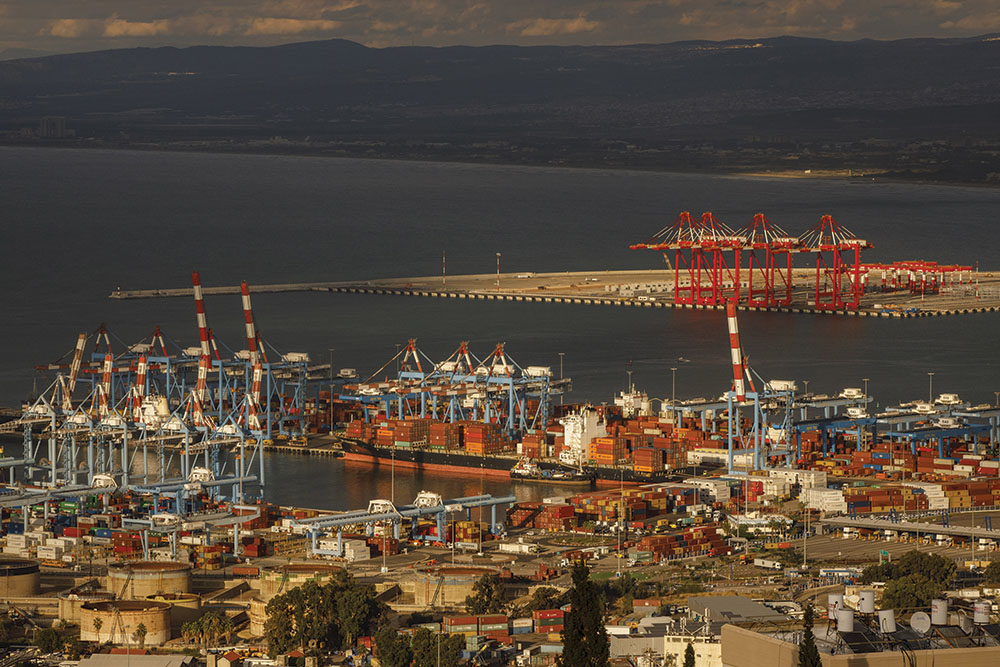
Kobi Wolf/Bloomberg via Getty Images
On April 1, Israel and the United Arab Emirates announced a free trade agreement projected to reach $1 trillion in value within ten years. “This milestone deal will build on the historic Abraham Accords and cement one of the world’s most important and promising emerging trading relationships,” said UAE minister of foreign trade Thani bin Ahmed Al Zeyoudi.
The Abraham Accords, signed between Israel and the UAE in 2020, have effected a major shift in the region. While financial deals were previously conducted in secret, in the aftermath of the accords, regional trade with Israel has exponentially increased, grand regional infrastructure projects have been in the works, and an unlikely coalition has formed in the East Mediterranean Gas Forum (EMGF). Now the United States is seizing the moment by boldly pushing its Arab allies toward diplomatic normalization with Israel, as reflected in the passage of Jared Kushner’s “deal of the century.” It’s also banking on market interests to act as the diplomatic glue that brings these nations together in an economic bloc under its patronage, with little to no concessions made by Israel on the illegal occupation of Palestine.
Having one of the lowest intraregional trade rates in the world, with just 5 percent of exports going to neighboring countries, the Middle East has no broad regional infrastructure to foster economic cooperation. For multinational corporations, this has long resulted in disconnected supply chain logistics, investment barriers, and a lack of consistent regulatory frameworks between countries in the region — and with it, susceptibility to foreign economic influence providing alternatives and solutions.