Where Ships Go to Die
You’ve probably never heard of one of the dirtiest and most dangerous jobs around.
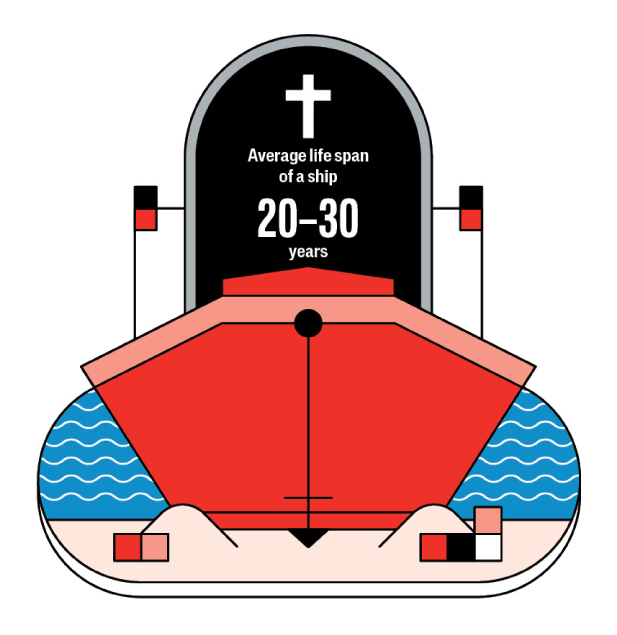
Illustration by Marco Miccichè.
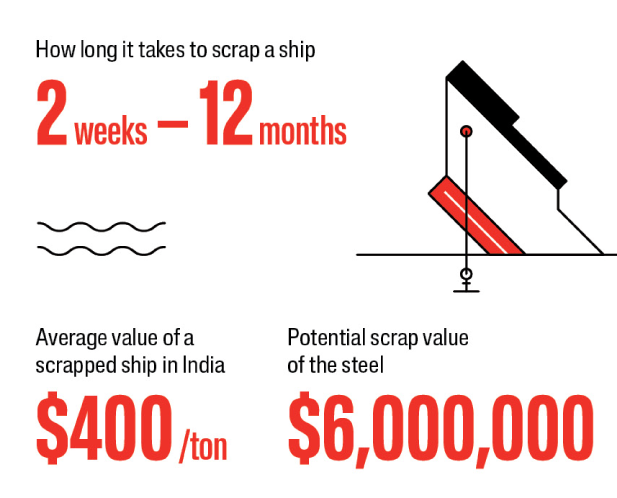
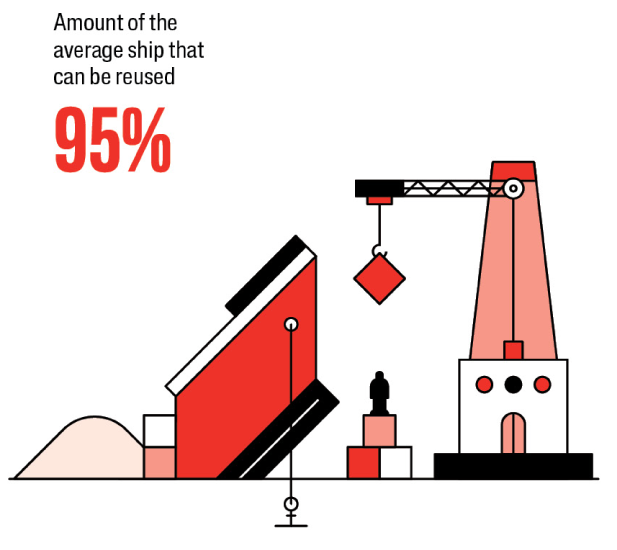
Shipbreaking — the process of dismantling old ships into salable scrap metal and disposable parts — is one of the dirtiest and most dangerous industries on the planet. Up until the 1970s, much of global shipbreaking occurred in the United States; however, the promise of cheaper labor eventually lured the industry to Taiwan and Korea, and thereafter to India. Now much of the work takes place on South Asian beaches, where it is done informally and without meaningful oversight: the workers live in adjoining shanties with little access to health and sanitation services, a circumstance that compounds the innate dangers of work in the shipbreaking industry. As a result, shipbreaking workers — many of whom are underage — face extremely high levels of injury and death.
When a ship reaches the end of its life, a shipowner will likely opt to sell it to a so-called cash buyer, often with help from a broker who takes a cut of the sales price. Cash buyers take over responsibility for transporting an old ship to its scrapping destination — and, more nefariously, they allow shipowners to vacate legal responsibility for the labor and environmental circumstances under which ships are recycled. As a result, almost all of shipbreaking happens through the intermediary of the cash buyers, who pay shipowners up front for an old ship, then resell it to the shipbreaking company willing to pay the most for the vessel. Throughout the entire recycling process, stakeholders seek to avoid responsibility for the circumstances under which shipbreakers labor: cash buyers register vessels under new names, flags, and addresses; and shipowners, in turn, conceal the identities of their buyers and pretend ignorance about the shipbreaking industry. Everyone profits — except the shipbreaking workers themselves.