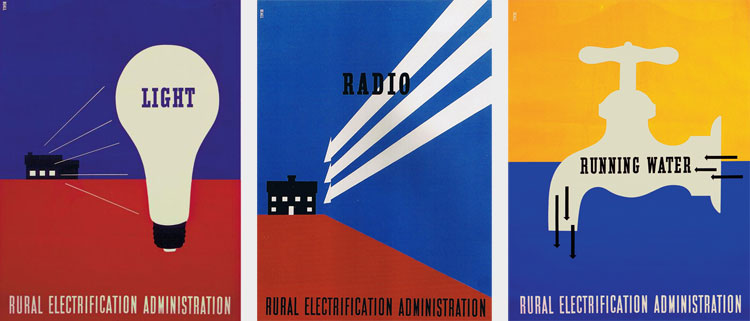
Voices From a Forgotten Revolution
The Rural Electrification Act (REA), passed in 1936 as part of the New Deal, enabled the federal government to provide loans to rural electric cooperatives. Access to electricity transformed education, farm work, and home life for communities previously ignored by big electric companies. Nearly 50 years after the passage of the act, the North Carolina Association of Electric Cooperatives conducted 44 interviews with rural residents whose lives were affected by the REA.
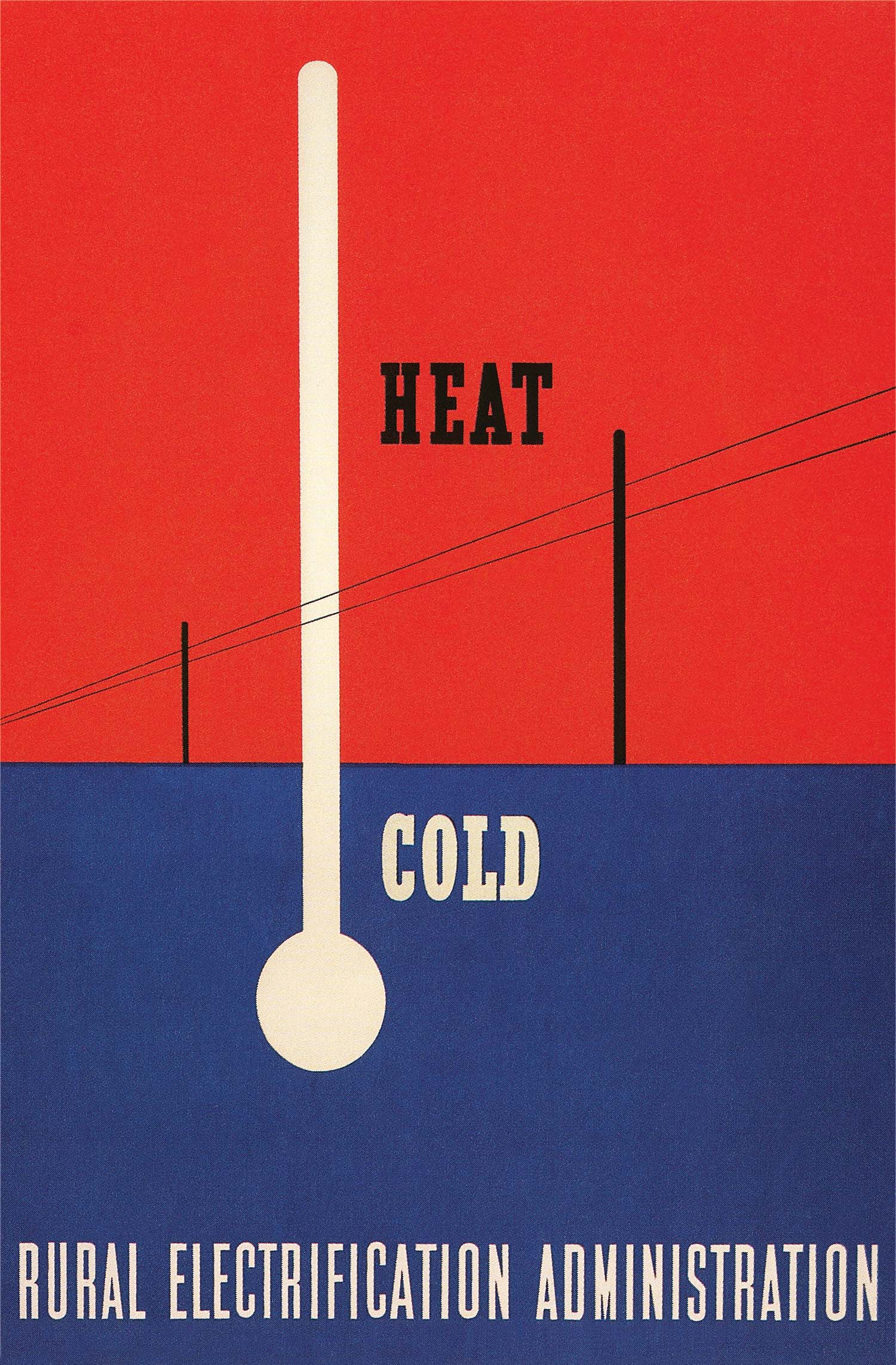
Lester Beall was commissioned in 1937 to design a set of posters promoting the Rural Electrification Administration. His work highlighted amenities brought by electricity to US cities that rural communities still lacked.
Cooperation is really the way to succeed. And this rural cooperative movement confirms what I have believed personally for a long, long time — that if you can get a group of people working together cooperatively, you can achieve whatever you desire. What enabled the rural cooperatives to succeed was the fine spirit of cooperation and the philosophy that, working together, we could achieve our goals and objectives . . . . When we were working to get [electric cooperatives] in this area, a businessman said to me, “What you’re doing is socialism.” I replied, “If it is socialism, it is good socialism, and I like it.”
We used the electricity for lights and appliances in the home. We also had the lines run out to the barn, where you could see out around the barn at night to feed up. Back then, we didn’t have grain bins and the buildings that we have today. Another important thing that electricity did for us was that it allowed us to have running water, which was really convenient around the farm.