The GOP’s Puppet-String Populism
Republican populism may have a new sugar daddy, but they’re hawking the same old solutions.
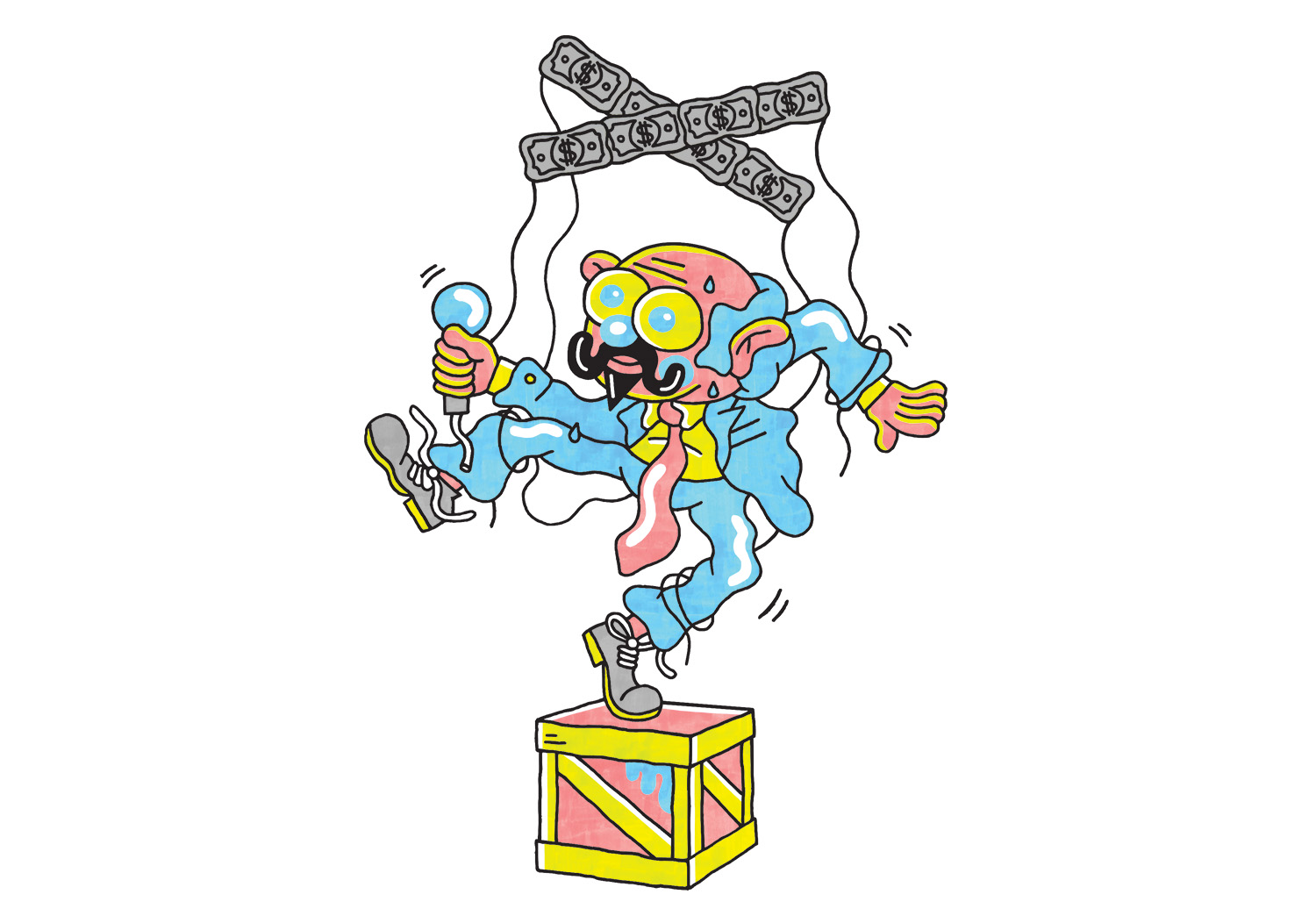
Illustration by Sam Taylor
Take any Republican from the mid-twentieth century and show them the GOP of today, and they would be at home. The recent campaigns around critical race theory in schools and the attacks on the parents of LGBT teens would hardly shock a member of the Eisenhower-era right, which spent its time witch-hunting communists in schools and homosexuals in government jobs.
Other aspects of the modern Republican Party, however, might appear more puzzling to them. Ohio Senate candidate and memoirist J. D. Vance, for example, declared last year that “Establishment Republican apologies for our oligarchy should always come with the following disclaimer: ‘Big Tech pays my salary.’ ” The critique of American oligarchy has, of course, traditionally been one of the primary concerns of the Left, while the Right has tended to either justify or deny the existence of such concentrated political-economic power.
But Vance isn’t alone in his attacks on big business. Florida governor Ron DeSantis, a leading contender for the 2024 Republican presidential nomination, recently told the Florida Chamber of Commerce, “If you’re using your power as a corporation, and you’re leveraging that to try to advance any ideology, I think it’s very dangerous for this country, and I’m not just going to sit idly by.”