The Attack on Yemen’s Infrastructure — and the Humanitarian Disaster That Followed
Saudi planes have wreaked havoc on every part of Yemen.
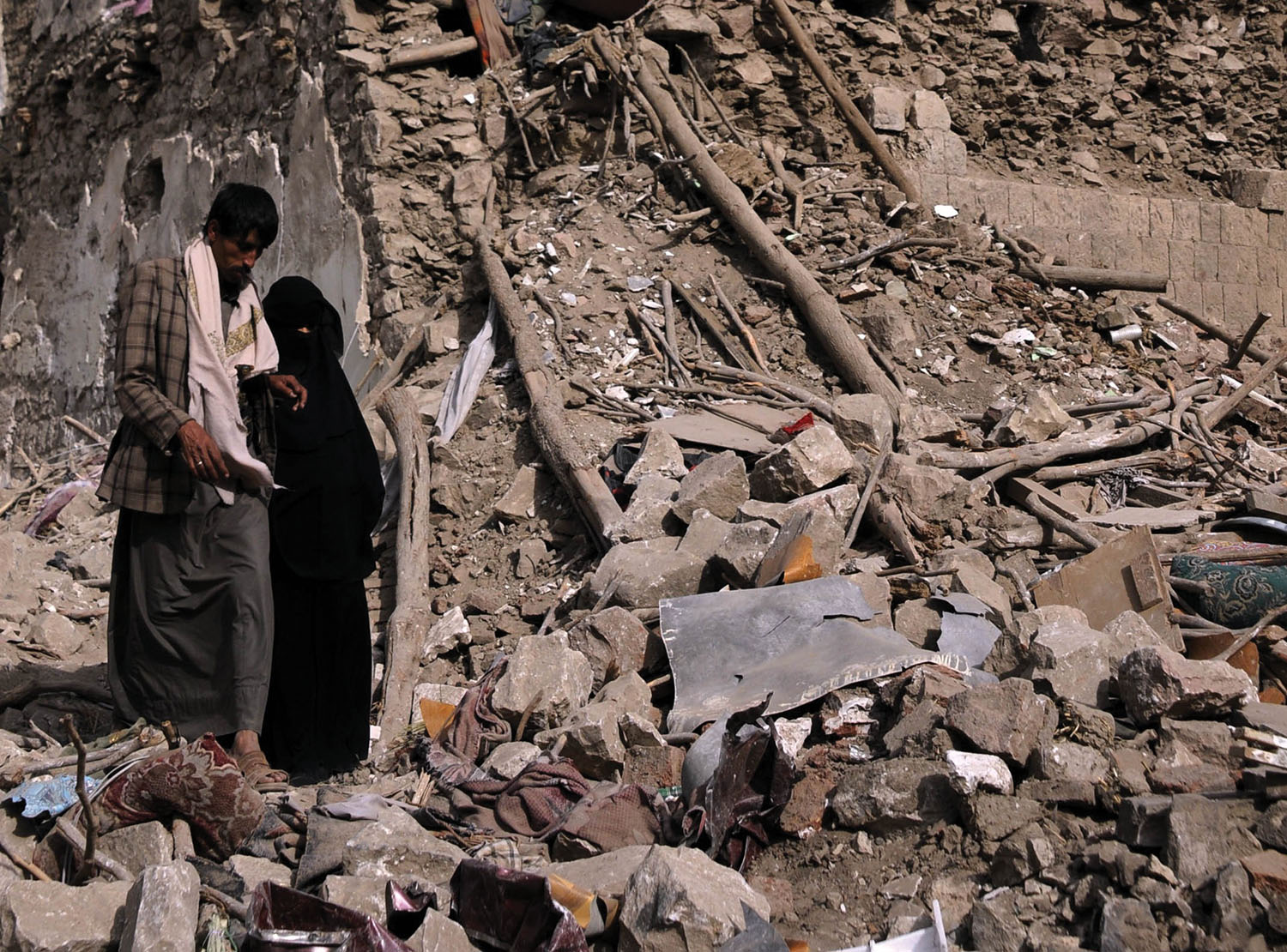
Yemeni civilians inspect the rubble left behind by a Saudi air strike in a residential area in Sanaa, September 2015. There have been more than 20,100 air strikes on Yemen since the war began in 2014 (Getty Images).
Medical and water infrastructure in Yemen has been bombed upward of 200 times since 2015, meaning that a hospital, clinic, well, or related vehicle has been hit in an air raid by Saudi-led — and US-backed — coalition forces every ten days on average, as the conflict in the country enters what is now its seventh year. As early as 2016, damage to Yemeni infrastructure was estimated to be between $4 and $5 billion.
- Water
On April 17, 2015, Saudi-led coalition jets bombed the electrical grid supplying power to the Yemeni capital of Sanaa, forcing the sole wastewater treatment plant to rely on diesel fuel. By May of that year, the plant had shut down, and wastewater subsequently streamed through the streets of the Bani al-Harith district of the city. A seawater desalination plant in the city of al-Mukha was bombed in January 2016, leaving the already water-starved population bereft of the means by which to produce drinkable water from the Red Sea. Another water treatment facility in the al-Mina district, which provides the city of al-Hudaydah with most of its drinking water, was bombed in late July 2018. Just a day later, a UNICEF-sponsored sanitation facility in the Zabid district of al-Hudaydah was attacked. Water treatment facilities in the city of Saada were bombed in the spring of 2015, and the Talmous water station and reservoirs in the city were struck again on January 11, 2022, leaving 200,000 citizens without access to water. The result of such attacks on water infrastructure, which far outnumber those listed here, has been the worst cholera outbreak of modern times, with more than one million suspected cases and 3,000 deaths as of 2020.
- Energy
Power lines between Sanaa and Marib were attacked on June 10, 2014. When technicians began to fix the lines after the first attack, gunmen attacked the lines a second time, leaving the entire nation in darkness and suspending work at a major gas plant in Marib. Subsequent air raids in 2015 struck the electrical grid and a petrol station in Saada. A major telecommunications hub in al-Hudaydah was bombed on January 21, 2022, plunging the entire country of Yemen into a four-day internet blackout. Such attacks on energy infrastructure have compounded with attacks on water infrastructure to worsen the cholera epidemic in Yemen, and with attacks on shipping infrastructure to worsen the country’s economic crisis.