Palaces of Shelter
The metros in Kyiv and Kharkiv — Soviet-era “palaces of the people” — have doubled as bomb shelters during the Russian invasion of Ukraine.
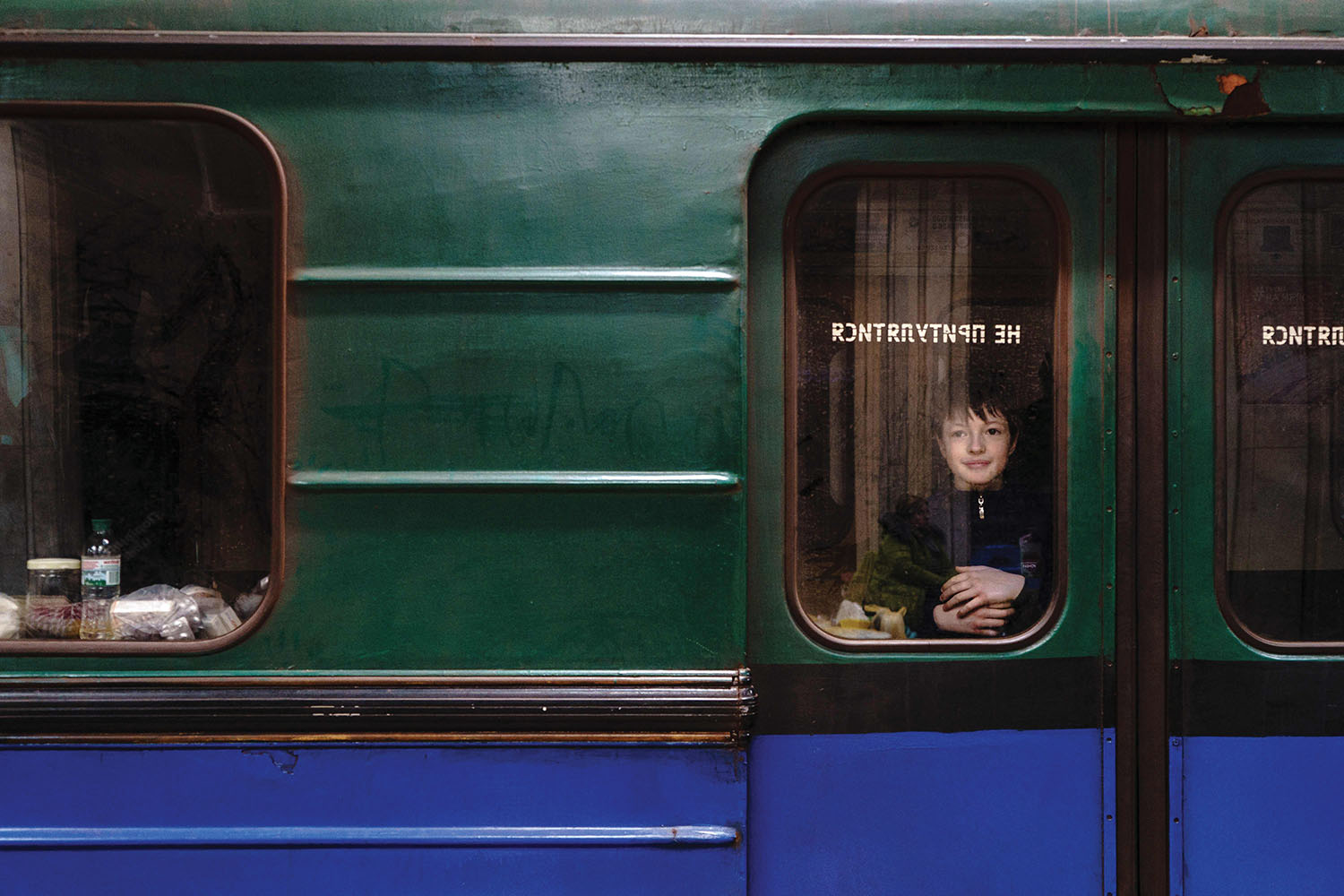
While bombs drop aboveground, an estimated 30,000 Ukrainian civilians shelter inside the Kyiv and Kharkiv metro systems, which include extensive toilet and drinking water facilities. Image from Getty Images
In early March 2022, anonymous antiwar activists flyposted the Moscow Metro with maps of the metro systems of Kyiv and Kharkiv, two Ukrainian cities then being shelled by the Russian army. The posters featured texts below the maps reminding Moscow transit riders that, at this precise moment, men, women, and children were sleeping in the metros of these two cities in order to take shelter from Russian artillery. Beneath that was the slogan “NO WAR.”
The gesture of these activists was a reminder of the solidarity that once built all three of these metro systems, each of which was constructed according to the same extraordinarily high standards, based on the precept that public transit architecture should be more than just a rudimentary way of helping people get from point A to point B, instead serving as “palaces for the people.”
The Moscow Metro gets all the attention — a Stalinist monument loved by many who hate literally everything else about Stalinism. From the opening of its first line in 1935 to its most recent extensions, the Russian capital’s subway has been celebrated not just for its reliability — in a context where things working properly is often hard to find — but for its spectacular architecture. Metro architects like the Kharkiv-born Alexey Dushkin combined constructivism, classicism, and the architecture of ancient Egypt to create grandiose, haunting underground cathedrals. But admiring Moscow is only scraping the surface of the Soviet underground. Sixteen metro systems were constructed in the USSR, four of them in Ukraine — extensive networks in Kyiv and Kharkiv, with mini systems in Dnipro and Kryvyi Rih. All four are architecturally flamboyant and built incredibly deep underground — so deep that the stations can serve as bomb shelters if needed. This hadn’t happened to any of these systems except Moscow during the Great Patriotic War. Until now, that is.