Macron Isn’t Really Withdrawing From West Africa
Drawing on the War on Terror’s model of drones and special forces deployments, the French government is keeping troops on the ground in Africa.
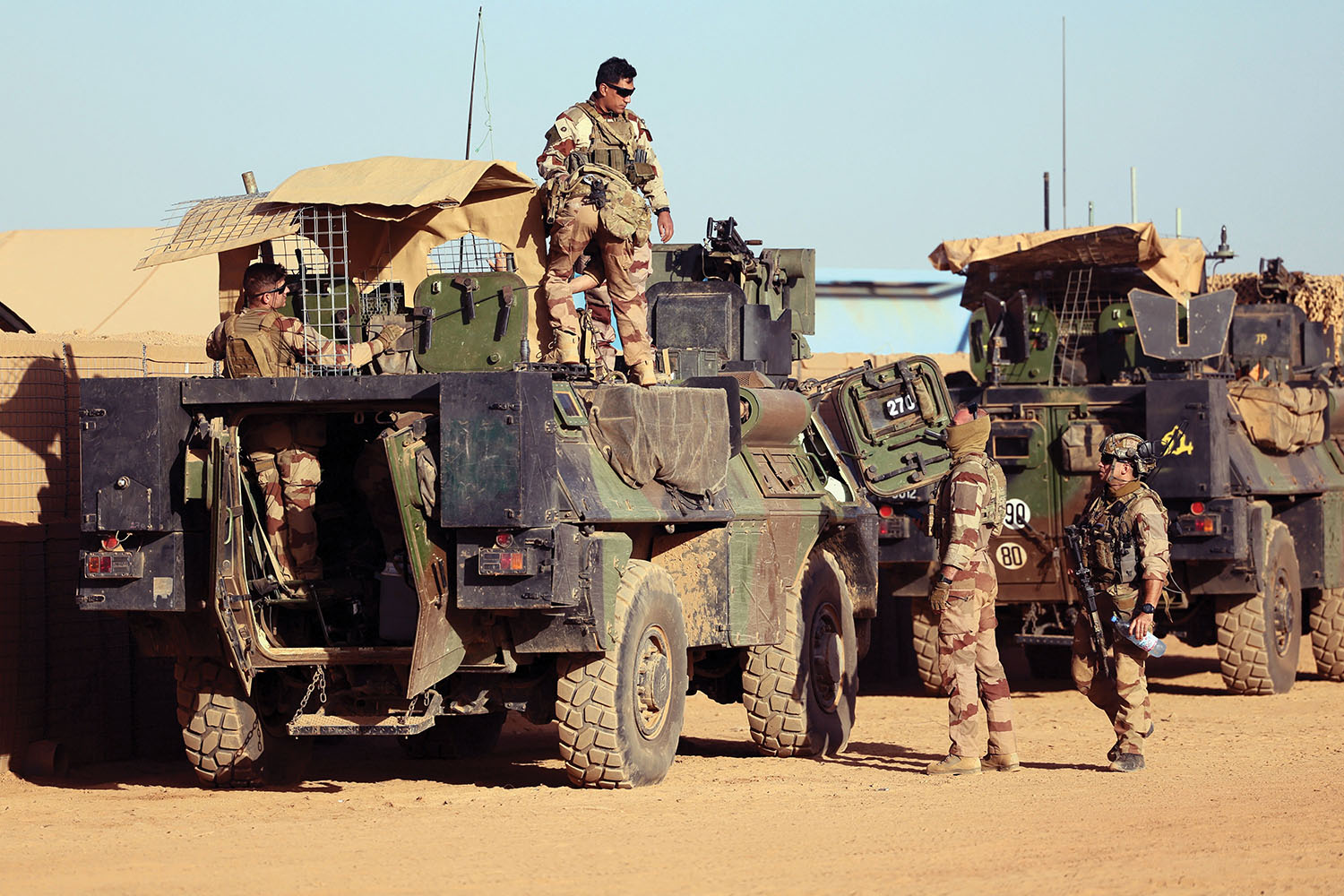
French soldiers prepare their armored vehicles for special operations with Task Force Takuba at the Menaka military base in Mali, December 2021. Takuba is a French-led multinational military task force of 14 European countries — consisting of 800 soldiers from France, Sweden, Denmark, Estonia, and Czechia — assisting the Malian Armed Forces in the Liptako region of West Africa. As French troops withdraw, the future of Takuba is unclear (Getty Images).
On February 17, French president Emmanuel Macron announced the withdrawal of his country’s forces from Mali, following a humiliating breakdown in relations with the ruling junta in Bamako and the failure of the French military to combat an Islamist insurgency in the Sahel. The announcement caused consternation in the motley collection of European forces still present in the country, but it induced a rare moment of unity among the leading candidates in France’s upcoming presidential elections, all of whom agreed on the necessity of the withdrawal.
Prior to her first-round exit, Valérie Pécresse, the struggling conservative nominee for Les Républicains, bemoaned the way the Malian junta had treated France — expelling its ambassador following Macron’s refusal to recognize the government of Assimi Goïta, which had taken power in a coup in May 2021. Goïta earned the enmity of Macron by pivoting away from France and toward Russia, whose support, Goïta hopes, can both resolve the insurgency in the north of the country and enable Mali to escape France’s neocolonial grasp.
France lost forty-eight soldiers during nine years of anti-insurgency operations in Mali, and public opinion — to the degree it pays any attention to the wars in Africa fought in its name — had become hostile to the mission. Pécresse insisted that French blood should not be spilled for such an ungrateful country.