A Stunning New Chapter Begins for Amazon Warehouse Workers
In a staggering upset, Staten Island Amazon workers just won a union election. It’s the start of a new chapter for workers at one of the world’s most powerful companies
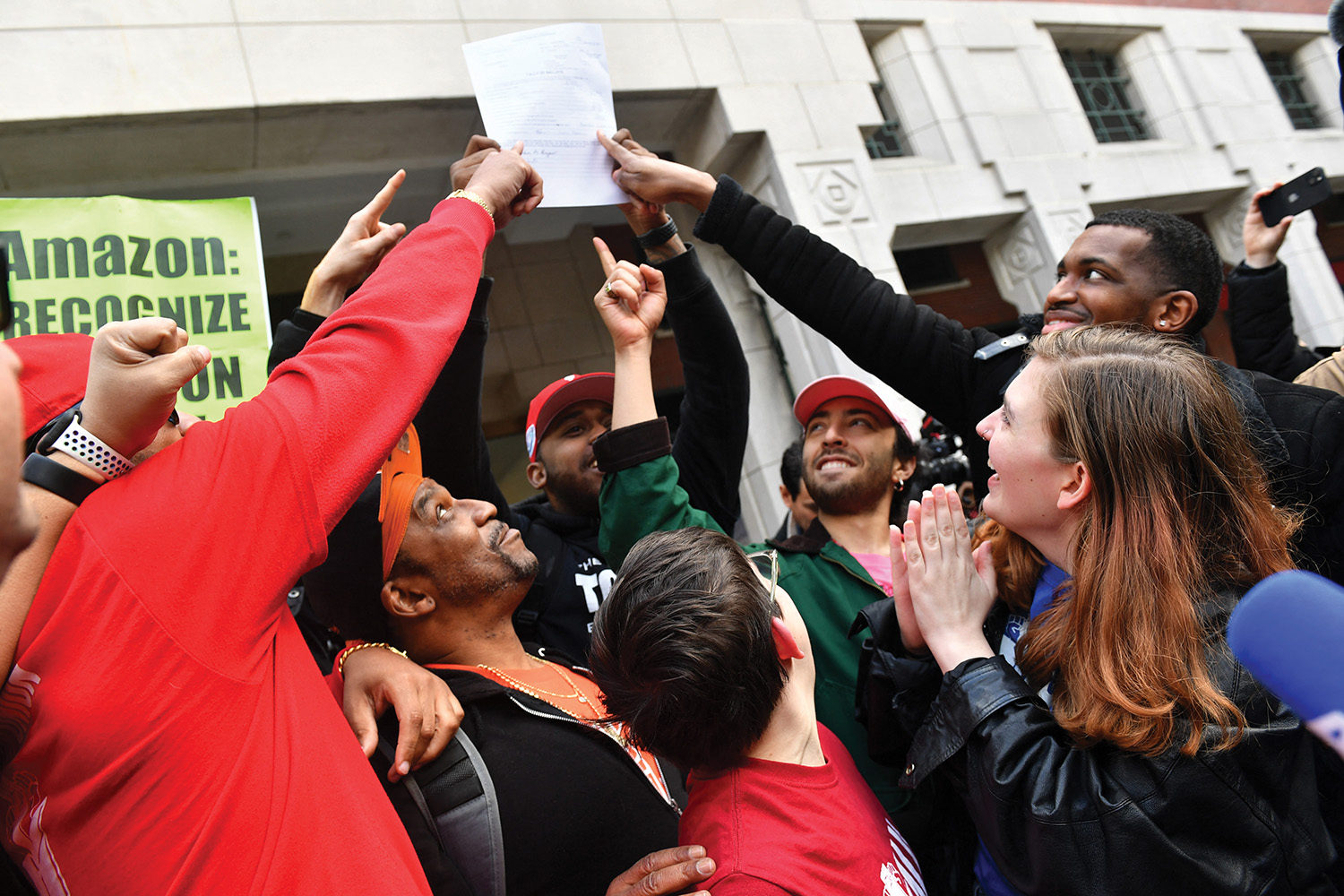
Amazon workers celebrate following the April 1, 2022, vote for the unionization of Amazon’s JFK8 warehouse in Staten Island, New York. It’s the first union at the notoriously anti-union company. Workers voted 2,654 to 2,131 in support of the drive, and several more campaigns are underway by the newly formed Amazon Labor Union.
In an upset for which there are few parallels in the US labor movement’s post-Reagan history, Amazon warehouse workers in the United States have won recognition of a union for the first time ever. The National Labor Relations Board (NLRB)–supervised vote at JFK8, a fulfillment center in Staten Island, was 2,654 in favor of unionizing with the Amazon Labor Union (ALU) and 2,131 against, at a facility with 8,325 eligible voters. Sixty-seven challenged and eleven voided ballots will not be determinative, given the union’s margin of victory.
It is hard to overstate the obstacles workers faced to get this far. In addition to Amazon’s inordinately high turnover rate, a menace for building sustained shop-floor organization, Department of Labor filings released in late March show that Amazon spent $4.3 million on union-busting consultants, a startling amount for any company. Usually, it takes even megacorporations years to rack up that kind of a bill with the specialists in the uniquely American industry of professional anti-union experts. Many of the consultants leading captive-audience meetings and otherwise crafting Amazon’s war on organizing were paid $3,200 per day.
On Staten Island, workers said union busters were a regular presence at JFK8. They wrote the scripts for meetings and shaped the anti-union messaging that papered the warehouse’s bathroom stalls and hallways and that was also sent to workers via mailings, Instagram ads, phone calls, text messages, and videos projected on screens inside the facility. ALU, for its part, is clear about workers’ demands: a $30-an-hour minimum wage, increases in paid time off and vacation days, paid breaks during the day, union representation at any disciplinary meetings, and greater support for childcare.