No, Large-Scale Societies Don’t Need Massive Inequalities
Serious consideration of the archaeological record puts to bed the myth that human history follows an evolutionary arc from simple and egalitarian to complex and hierarchical, challenging the assumption that democracy can work in small groups while scaling up requires domination.
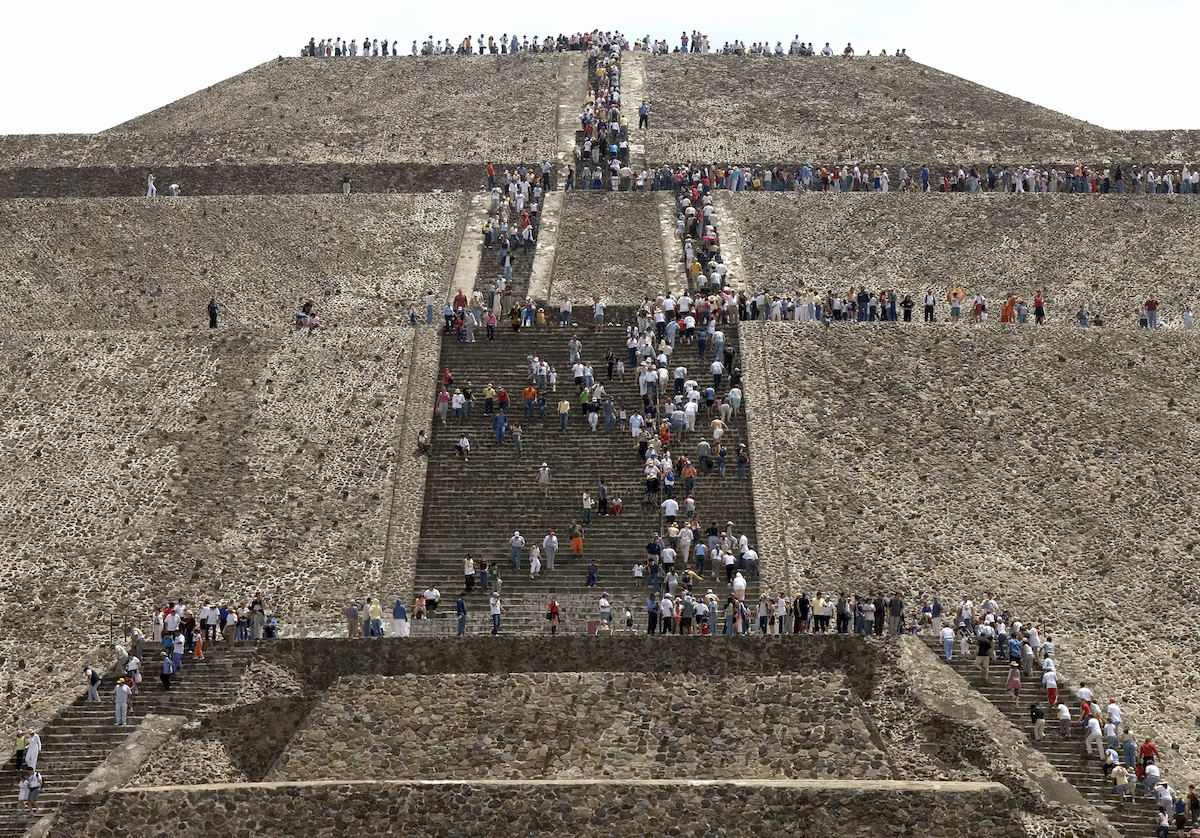
In the multiethnic urban settlement of Teotihuacán, the inhabitants stopped building pyramids and embarked on an extraordinary project of social housing. (Jonathan Kirn / Getty Images)
The popular narrative goes that history is governed by evolutionary forces. While there are exceptions to every rule, its broad sweep pushes in a general direction that is predictable and obvious. Before the rise of agriculture, humans lived in small egalitarian bands. It’s been downhill ever since, as our species trends increasingly toward domination and arbitrary hierarchy.
Belief in this story about humanity isn’t confined to either side of the political spectrum. But is the narrative true? World-renowned archaeologist David Wengrow of University College London says no. Wengrow makes this case in his new book, The Dawn of Everything: A New History of Humanity, which he coauthored with the late anthropologist David Graeber.
Earlier this month, Wengrow joined Astra Taylor to discuss the book on Jacobin’s The Dig podcast. The following transcript has been edited for clarity and length.