Communists Against the Mafia
The battle against the Sicilian Mafia wasn’t waged by cops and judges — it was waged by communists and labor militants.
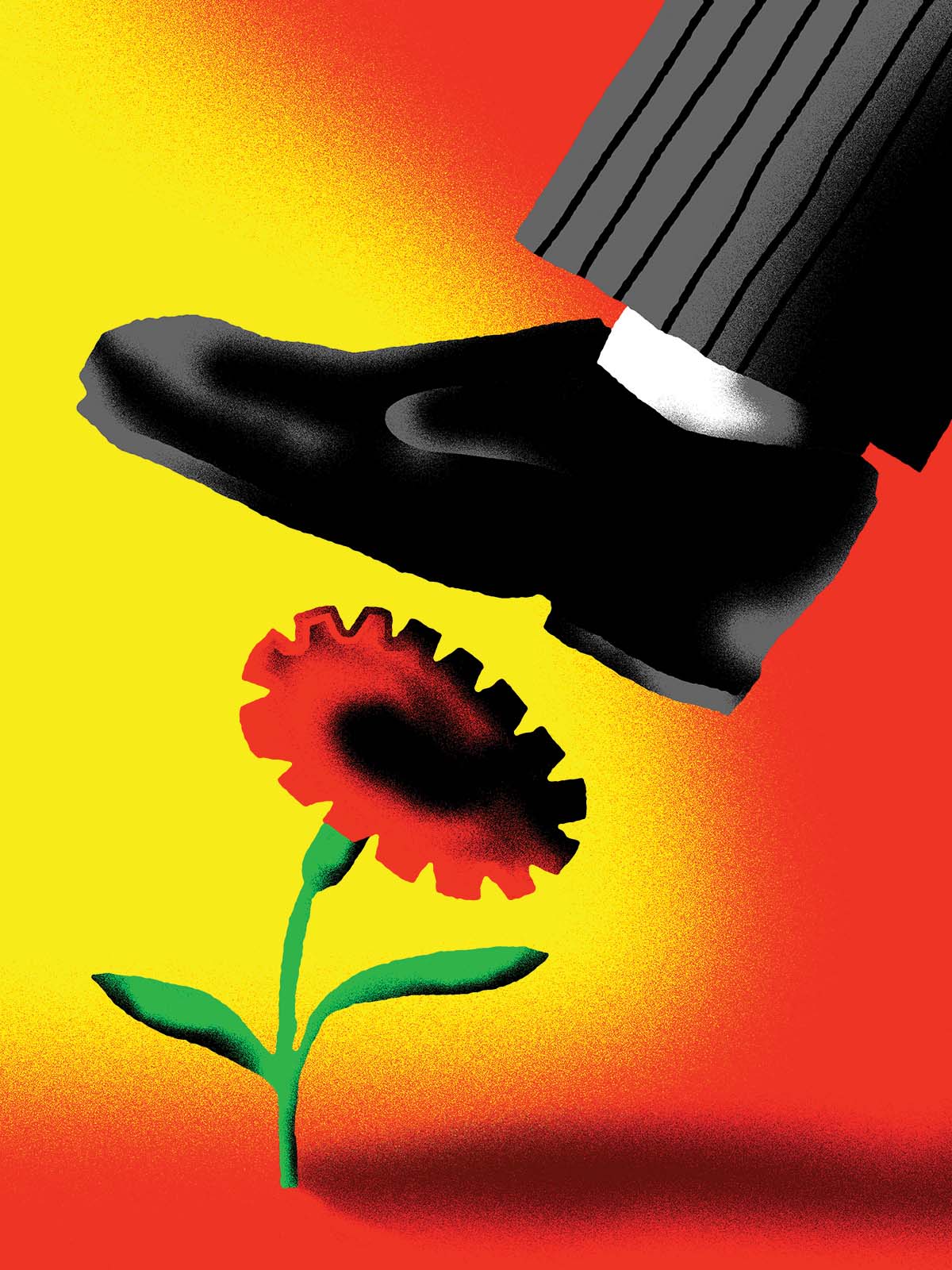
Illustration by Daniel Zender.
On May 9, 1978, Italians woke to news reports about the murder of former Christian Democratic prime minister Aldo Moro by the Red Brigades. The same morning, in the small Sicilian town of Cinisi, the police found the body of Giuseppe “Peppino” Impastato, a young anti-mafia activist murdered by Cosa Nostra — the Sicilian mafia.
Impastato is commemorated each year as an example of young Italians’ fight against what was once the country’s most powerful criminal organization. Official memorialization presents this as a nonpartisan history that crosses political divides, which suits those who want to relegate the fight to a question of mere law and order. Yet while the mafia has, for more than a century, waged war on rebellious peasants and farm laborers, trade unionists and left-wing members of parliament, the resistance against its control has been just as militant — and every bit as political.
Early Battles
The mafia first emerged in the last decades of the nineteenth century as an organization designed to protect the profits that the spike in the citrus fruits trade (and its foreign exports) had brought the big landowners, the latifondisti. Mafia gangs defended profits on not only lemons and oranges but also sulfur, as the mine owners sought organized protection. The gabellotti — entrepreneurs who rented and managed the big landlords’ properties — were also mafiosi or mafia-linked. They were flanked by the campieri, a private police force that kept order in the estates, an ancestor of today’s caporali (work-gang bosses) — figures who controlled the workforce by means of violent repression.