The Hip-Hop Road to Socialism
Since it first went mainstream in the 1980s, hip-hop has been a big business, and many of its leading figures have a strongly capitalist ethos. But there’s an alternative tradition of socialist rap music that challenges the status quo.
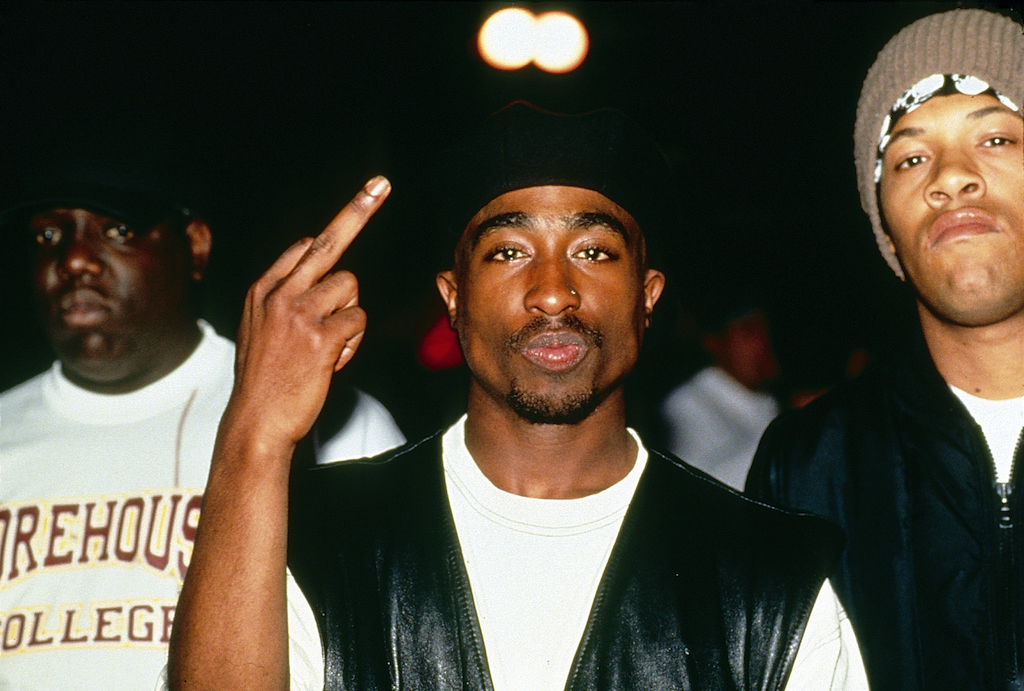
Rappers (L-R) the Notorious B.I.G., Tupac Shakur, and Redman backstage at a Tupac performance at Club Amazon in New York on July 23, 1993. (Al Pereira/Michael Ochs Archives/Getty Images)
The video for “Marx is a Post-90” features an illustration of the nineteenth-century philosopher and social revolutionary flashing a peace sign. This Chinese rap song extols the virtues of Marx: a young emcee, decked out in a sports jersey with “13” blazoned across the chest, describes his first introduction to Marxist philosophy as something that he had to study to get through exams, before later becoming a full-blown red-or-dead convert.
“You stand up and say the proletariat’s strength will overcome evil,” the rapper spits in his native tongue. “I am your Bruno Mars / But you are my Venus.”
For the uninitiated, “Post-90s” is a demographic cohort: the term refers to people born in the closing decade of the last century. Think of them as the Chinese version of millennials. The Chinese government commissioned “Marx is a Post-90” as a way of getting young people interested in politics, and the video is about as cool as you’d expect from government-approved rap music, with a strange and awkward glop of communist imagery and parody-level rap stunting.