From Your House to Our House
America’s experiment with public housing was far less successful than Europe’s — but this hasn’t made it any less influential.
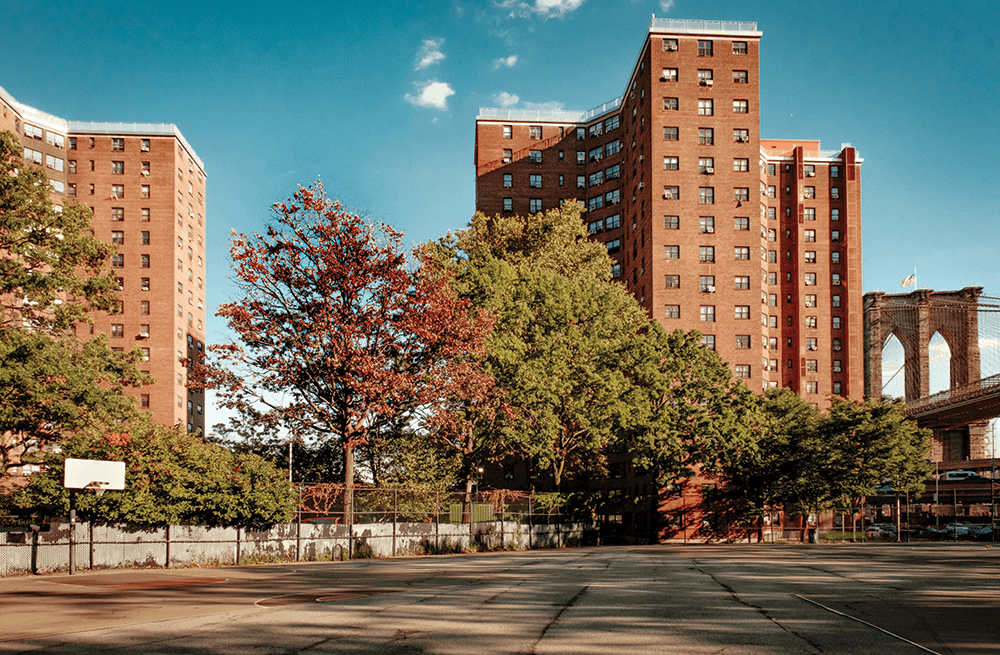
Like many English people, my first encounter with the United States was in Manhattan. On a cold December afternoon, I walked from the Upper East Side all the way down to the Brooklyn Bridge. At the end, I found myself in an area I later realized was called “Two Bridges.”
A large part of it was made up of what the British would call “council estates” — publicly owned housing rented from the local government, built in the twentieth century. The differences between these places in the UK and the buildings I was looking at were as notable as the similarities. Sure, the basics were the same — affordable apartments, built and laid out on modern movement planning principles that emphasized access to light, air, and (here, rather scrubby) greenery over proximity to main streets and workplaces. But aesthetically, I had seen little like it.
I was looking at the Alfred E. Smith Houses, built between 1950 and 1953. A British council estate from that period would have large windows, a mix of low-rise and high-rise buildings, and carefully considered surface materials — different colors of brick or concrete and balconies. And all of that created in a bankrupt country whose cities were emerging from six years of aerial bombing. But here, everything was covered in one brick, in one color, with no balconies, and — the most obvious difference — only the most minuscule windows. Why were they so small? Were people not meant to look out the window?