Bootstrap Populism
Rallying behind “free enterprise” mythology, American capitalists have long claimed to be gritty underdogs facing off against a rising statism.
On September 18, the Financial Times (FT) got a makeover. That day, the newspaper had a canary-yellow cover with the words “Capitalism. Time for a Reset.” sprawled across a nearly blank front page in size-seventy-two font. The editors used the cover to announce a “new agenda.” The newspaper would do its part to save free enterprise capitalism in this “time of disruption and fragmentation.”
As FT editor Lionel Barber put it, “The Financial Times believes in free enterprise capitalism” — a system that has “delivered peace, prosperity and technological progress for the past 50 years.” But sometimes, paraphrasing Thomas Babington Macaulay, reform is necessary. “Today, the world has reached that moment. It is time for a reset.”
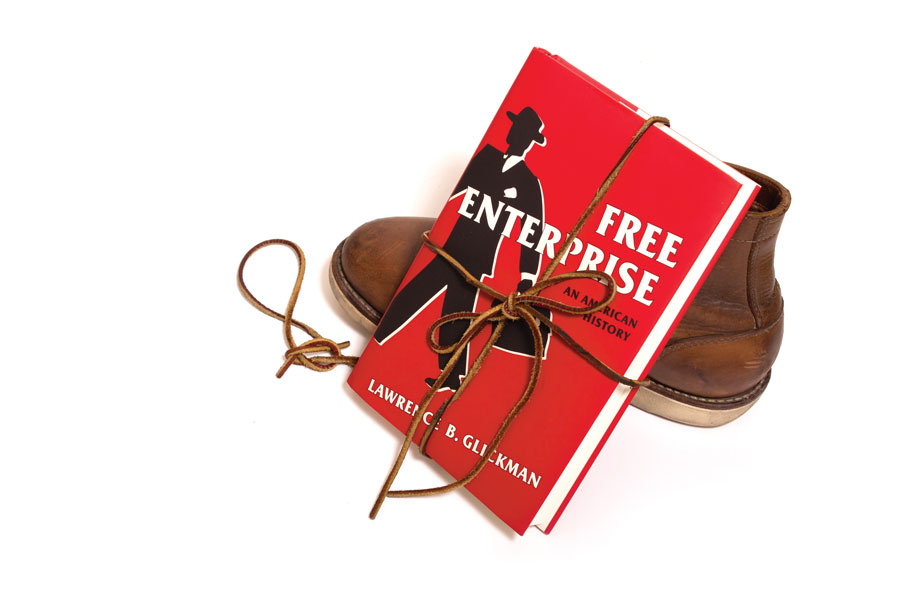
Barber assumes that FT readers understand what he means by “free enterprise.” But as Lawrence B. Glickman argues in his new book Free Enterprise: An American History, the term is a slippery beast — difficult to pin down yet central to our understanding of modern capitalism.