An Empty Tale
The foreign policy establishment is responding to Trump-era brutalities by demanding more, not less, aggression and empire.
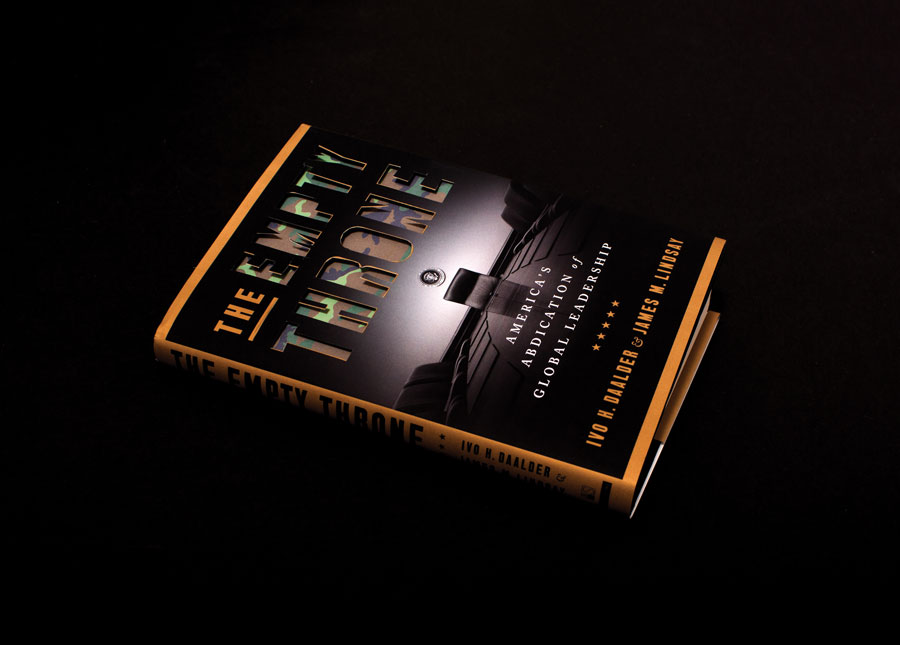
The American foreign policy establishment is in crisis. Donald Trump’s election, which occurred despite his repeated attacks on recent US foreign policy, revealed that mainstream thinkers no longer retain hegemony over the national security debate. The myriad failures of post–9/11 military intervention — Afghanistan, Iraq, Libya, Syria — have shattered the consensus that insists the United States is the “indispensable” nation on which world peace and prosperity rely.
The future of US foreign policy is up in the air. The last two years have witnessed an animated debate between establishmentarians who defend the US-led “liberal international order” that supposedly reigned before Trump and critics who argue that, much like the Holy Roman Empire before it, the liberal international order was neither liberal nor international nor an order, but rather a mask for American empire. Where establishmentarians desire a return to normalcy, others insist that, going forward, the United States must adopt a far more “restrained” approach to world affairs.
Into this fray enters Ivo H. Daalder and James M. Lindsay’s The Empty Throne: America’s Abdication of Global Leadership. Given their establishment perches — Daalder is the president of the Chicago Council on Global Affairs; Lindsay is senior vice president of the Council on Foreign Relations — it is not shocking that the two vociferously defend the “rules-based world order.” Though The Empty Throne doesn’t reveal much that is novel — like most short books written in the wake of Trump’s victory, it is primarily a description of recent news events — it is nonetheless a useful window into the thinking of an establishment that finds itself adrift, uncertain of what to do next. And it demonstrates that, if this is the best elites have to offer, there is an unprecedented opportunity for democratic socialists to transform how Americans understand their own country and its place in the world.