We Once Had the Answers
Sweden’s social democrats managed to solve a housing crisis and build a million homes in less than a decade. Why, then, is the Miljonprogrammet maligned today?
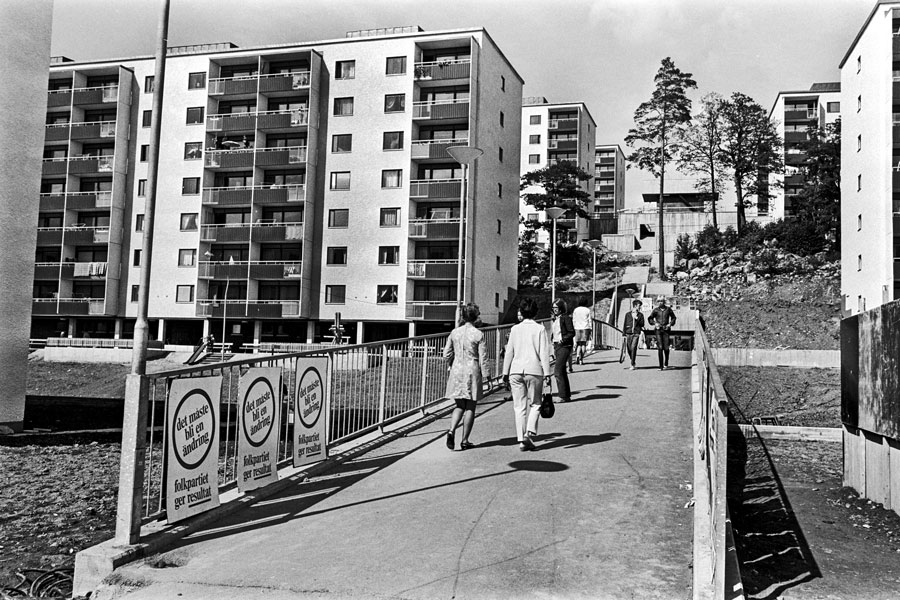
Residential area in Skärholmen in early August 1968 — Olle Lindeborg / PrB / TT / 190.
In less than a decade, a country with a population of only 8 million constructed a million new homes. It was a remarkable achievement — one in four Swedes still live in houses built in this period. And yet, the “million program” has become a symbol of socialist failure, proof that large-scale political solutions to social problems should never again be attempted. What happened, and should we bother to correct the record?
In 1964, the ruling Social Democratic Party (SAP) set out to create a “comprehensive program for society’s housing and land policy.” The premise for the program was Sweden’s late and rapid industrialization in the late 1800s, which fueled urbanization. With construction unable to keep up, this led to an acute housing shortage in the 1950s, overcrowding in cities, and a generally low housing standard. The crisis was real, and due to a combination of political will and economic good fortune, it was possible to address it.
Sweden came out of World War ii with its industries intact and benefited from a postwar reconstruction boom. The SAP had been in power since 1932, and used the next three decades to cement its social-democratic program and create the welfare state programs and sectoral bargaining we associate with the Nordic model. Crucially, a radical pension reform in 1959 helped tap into the capital that could be put to use in large-scale housing production, and was bolstered by subsidized lending and other funding mechanisms for municipalities to begin construction projects. Reforms in public land acquisition also made it possible to acquire large areas for city planning.