Rebuilding the Social City
To solve the housing crisis, we may have to go back to the future.
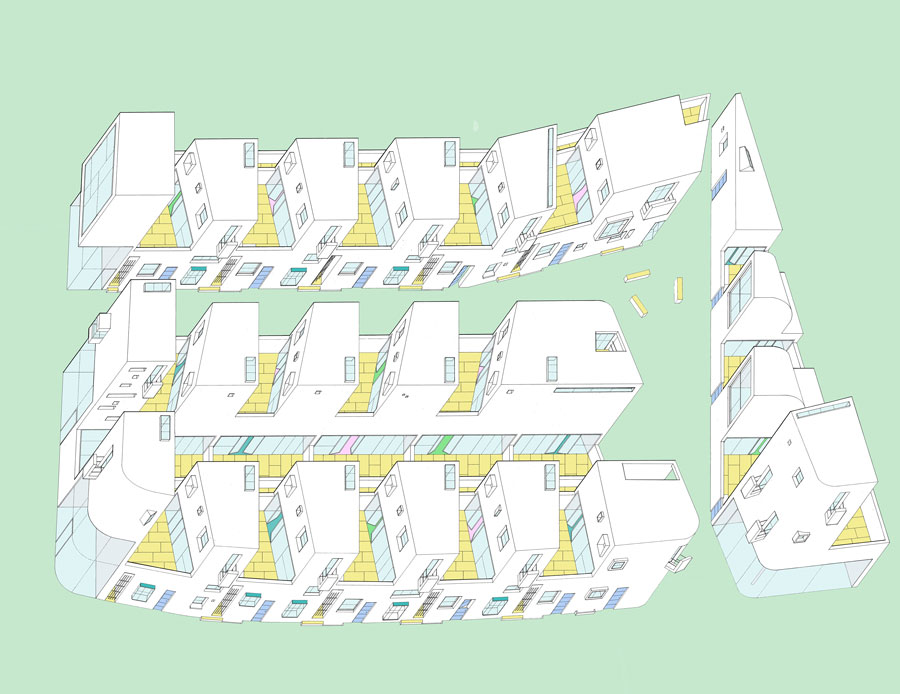
Donnybrook Quarter (Image Courtesy of Peter Barber Architects).
One of the most frequently heard solutions to the housing crisis was summed up by the British urbanism portal CityMetric in the slogan “Build More Bloody Houses.” For sure, there will have to be new bloody houses in any socialist approach to a problem that neoliberalism has quite deliberately fostered. But even leaving aside the question of why builders don’t build more bloody houses (it’s often much more profitable not to), we need to ask other questions. What kind of houses do we want? Where do we want them? And what should they be like to live in?
The products offered by the building industry are geared towards the maximization of profit for landowners and developers, and most of the typologies we see around us — from the “stunning developments” on British riversides and the “executive estates” in the suburbs, the pencil towers of Manhattan to the McMansions in the exurbs — are the products of greed, closing off the enormous architectural and design possibilities. So, if these tedious, flashy, and mean options aren’t enough, what can we do instead?
One of the most obvious places to look for this answer is in the legacy of housing provision embarked on by reforming governments in Europe in the twentieth century, whether built by the social- democratic municipalities of its west or state-socialist regimes to the east. In both cases, there was a serious attempt at freeing architecture and planning from the grip of landlordism, and housing was built that was in nearly all cases superior to what the private market had provided for workers.