Gung Ho For Privatization
How a troubled army recruit from a privileged background became an angry advocate for veterans health care privatization.
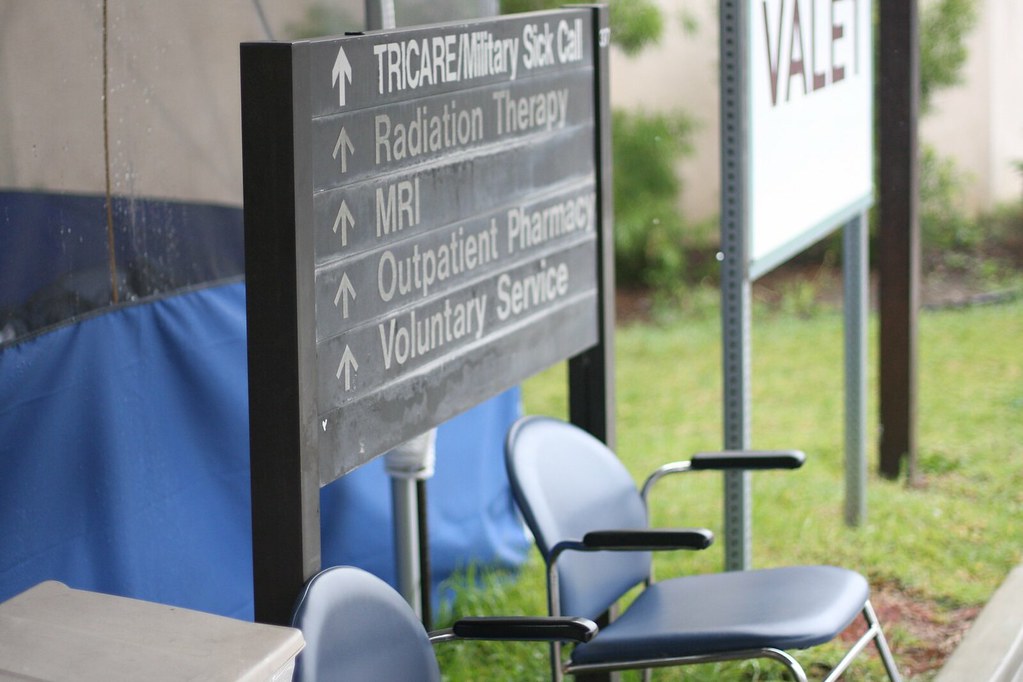
A sign at a Veterans Administration hospital in Long Beach, California. SupportPDX / Flickr.
Ever since the United States launched its open-ended Middle Eastern wars, testing the limits of an all-volunteer army, military recruiters have had bigger quotas to fill in poor and working-class communities. At times, this has resulted in less than rigorous screening of new recruits for past psychological problems.
Young people with a history of violent and aggressive behavior in their childhood or teenage years — or carrying other emotional baggage from dysfunctional family life — may survive basic training. But their assignment to active duty is often fraught with multiple opportunities for experiencing new forms of trauma, at home and abroad. Perhaps the worst-case scenarios that can result include the four mass shootings in the last year that involved veterans. All had troubled personal histories that should have barred them signing up in the first place.
Recruits in better shape initially can later develop mental or physical problems that adversely affect their job performance and lead to their expulsion from the military. Several hundred thousand of these veterans now have “bad paper” — less-than-honorable-discharges — which makes them ineligible for much needed care from the Veterans Health Administration (VHA).