The House That Debt Built
Cleveland’s Quicken Loans Arena is a monument to the subprime mortgage crisis and the companies that caused it.
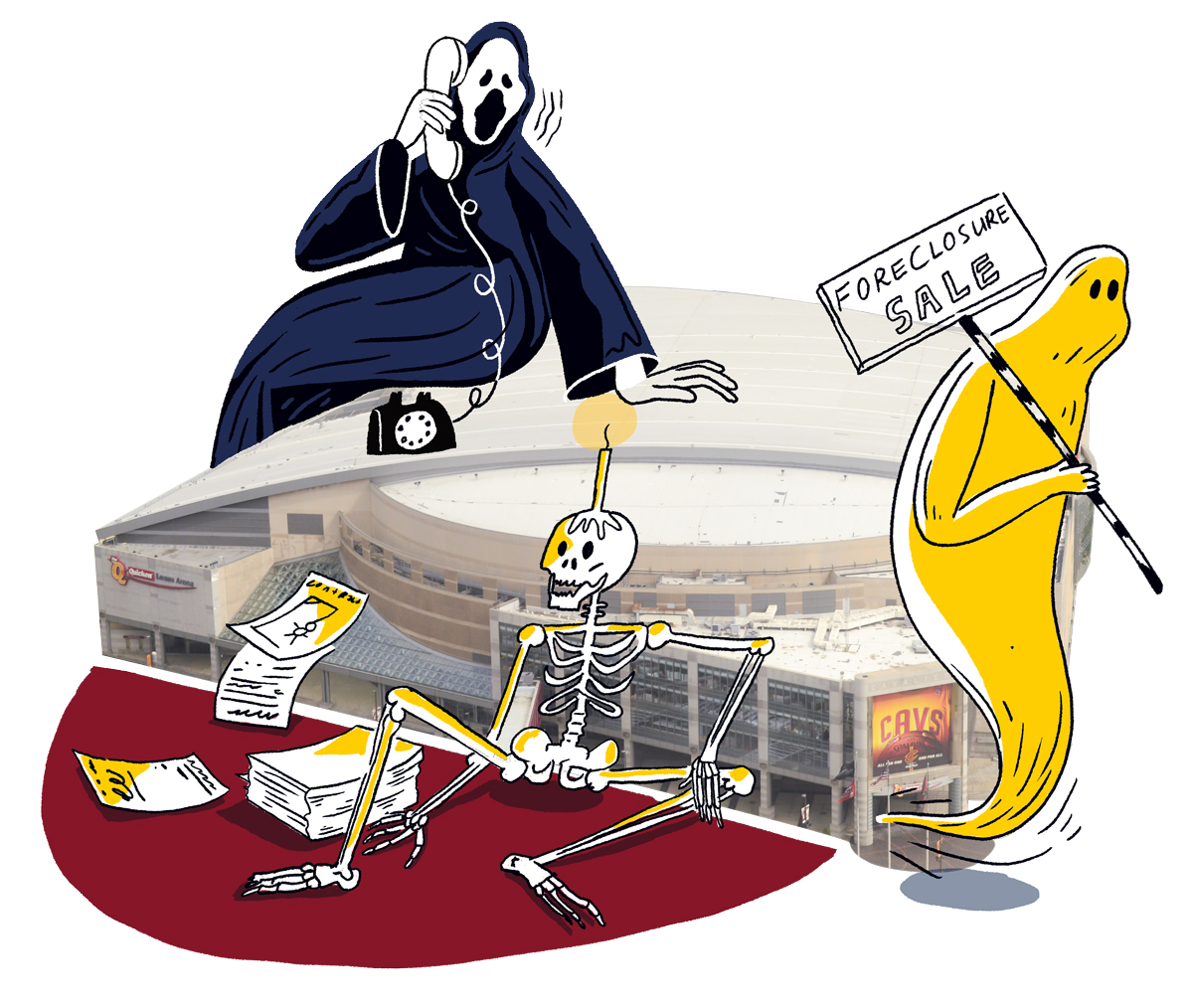
Illustrations by Aart-Jan Venema
In 2005, Dan Gilbert dropped $375 million on a majority stake in the Cleveland Cavaliers basketball team. Just two years earlier, the Cavs had acquired the most promising young athlete in the league by drafting LeBron James, and now Gilbert intended to elevate the whole operation to world-class standing. “Execution will be the name of the game at every level and in every corner of the organization,” he pledged.
Gilbert’s first order of business was renovating the team’s home stadium — Cleveland sports fans would have new scoreboards, new seats, the works. But first, he slapped a new name on the Gund Arena. From then on, it would be called Quicken Loans Arena, after the company Gilbert founded and continues to run — an online mortgage firm that struck gold in the boon years before the subprime mortgage crisis.
Quicken Loans began with a simple realization: there was real money to be made in mortgage lending. Rising home prices, together with deregulation in the financial sector, had turned housing finance into an exciting market. The trick was to originate as many new mortgages as possible, and in the highest possible amounts. Dan Gilbert’s business was to market subprime loans to vulnerable homebuyers, then polish up the risky debt to sell it in tranches on the secondary market. And business was booming.