New Labour’s Boom and Bust
Ten years after the financial crisis Blairism is finally dead and buried.
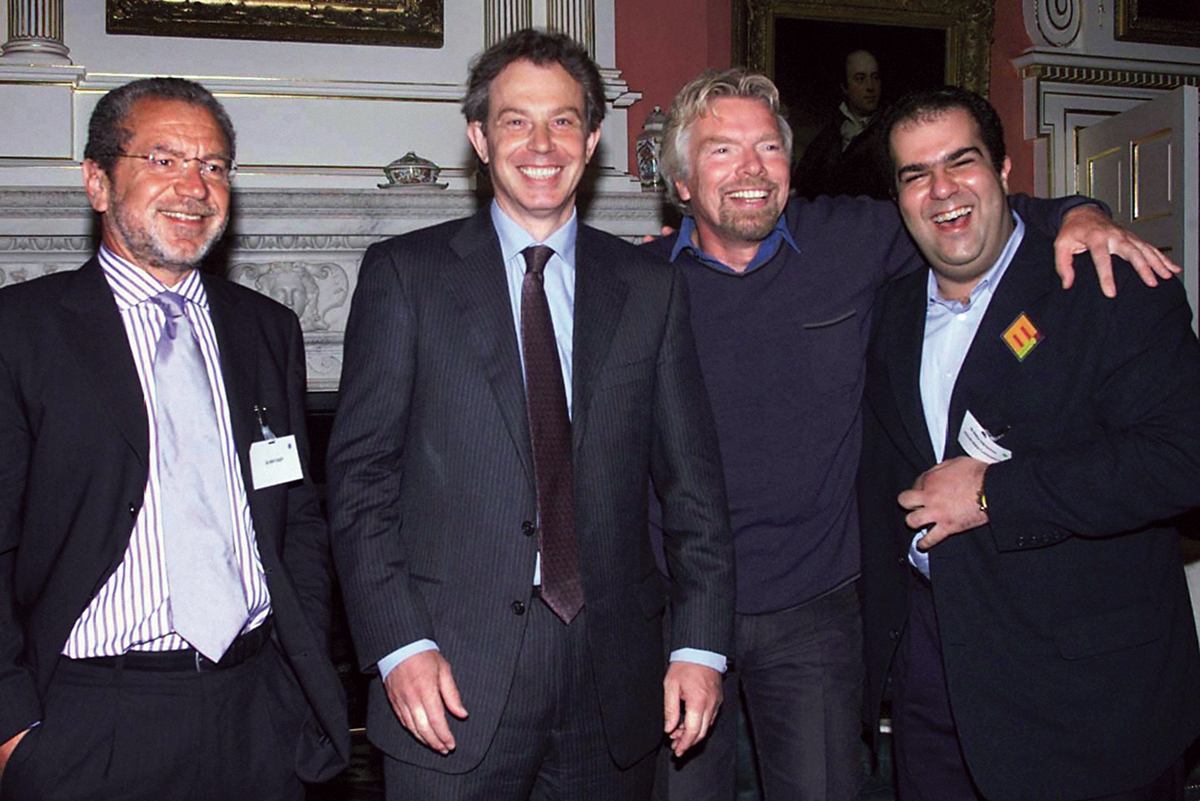
Former Labour Party leader Michael Foot said once that “socialism means nothing if it does not mean shaking capitalist society to its foundations.” But in the 1990s New Labour decided it needed some fancy new friends. Prime Minister Tony Blair is seen here hanging out with Amstrad chairman Alan Sugar, Virgin boss Richard Branson, and EasyJet head Stelios Haji-lannou. Photo by Sean Dempsey/PA Images/PA Images/Getty Images.
It was a lucky escape for Tony Blair. The British prime minister resigned in June 2007 in a special Labour conference handing over power to his successor, the chancellor of the Exchequer, Gordon Brown.
In foreign and domestic policy, several long shadows were cast over his premiership: the introduction of tuition fees for university students; the cash for honors scandal; the rampant use of private finance initiatives in the public sector; and most notably, the Iraq War. But economically, Blair could claim to have presided over one of the longest periods of growth in living memory — forty successive quarters — and both interest rates and unemployment were low.
Then came the crash. The recession was caused by the global financial crisis, not by Labour’s fiscal profligacy, as the Conservatives claim. But Blair’s government deliberately pandered to the financial sector and super rich, which had a particularly damaging effect on the UK economy’s resilience, while simultaneously doing the bare minimum to strengthen workers’ rights.