The Unions and the Movement
Through organizing around Medicare for All, unions can not only save millions of Americans, they can save themselves.
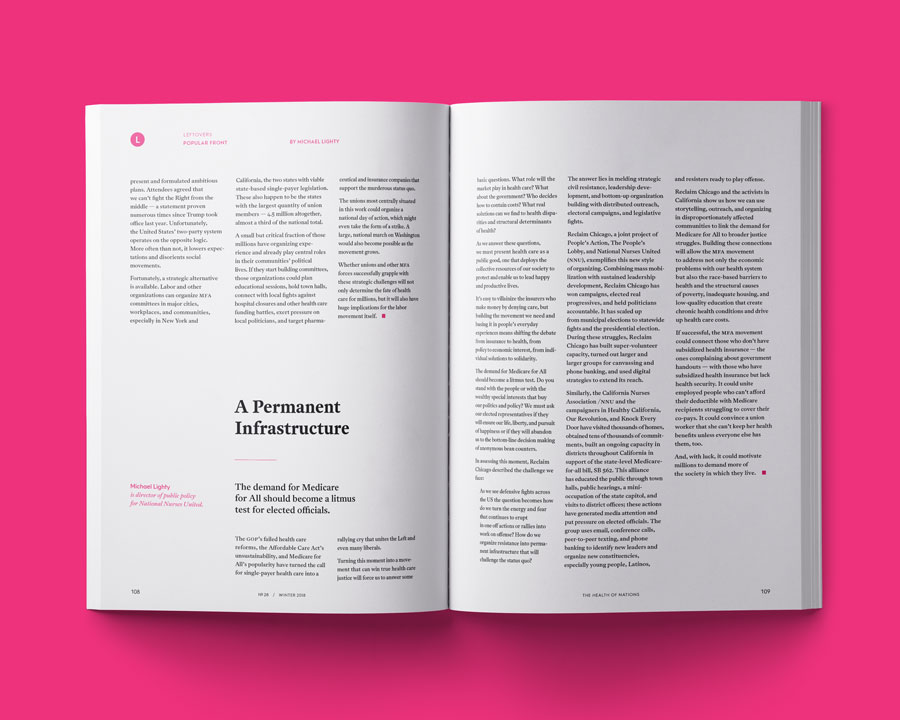
Health care has become a central, if under-analyzed, feature of our political moment. The promise, partial success, and ultimate failure of Obama’s Affordable Care Act (ACA) fed Trump’s electoral victory, but it also provided the largest opening to date to win universal, government-provided health care. What forces unite, what strategies they develop, what organizations they build, and what momentum they generate will determine if we can claim this victory.
Labor union participation and the politicization and mobilization of unionized workers will be decisive. Unions and their members, though weaker than at any point since the 1930s, still have the social weight and resources to pose a serious threat to the for-profit health care industry. Moreover, their involvement in a successful battle for Medicare for All (MFA) could revitalize the labor movement while it faces incredible challenges from the right.
Many unions have long supported a single-payer system, at least rhetorically. Twenty-five international unions, including the three largest unions, the National Education Association (NEA), Service Employees International Union (SEIU), and the American Federation of State, County, and Municipal Employees (AFSCME) as well as thirteen more of the top twenty, have pledged support for either specific legislation, like hr 676, or single-payer health care more generally.