New Yorkers Want to Tax the Rich. Julie Menin Doesn’t Care.
Zohran Mamdani has called for taxing the rich to close New York City’s large budget deficit. His position is popular with most New Yorkers, but wealthy City Council Speaker Julie Menin is giving cover to Gov. Kathy Hochul’s refusal to raise taxes.
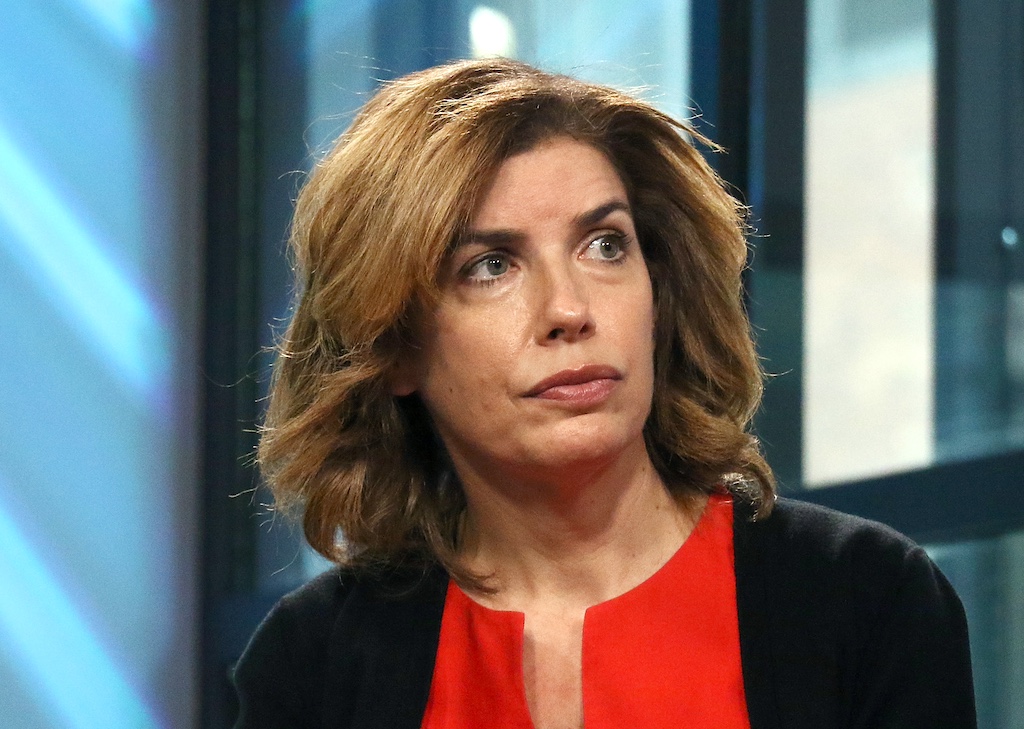
Julie Menin’s refusal to push for higher taxes on the wealthy is of a piece with her other moves as the highest-ranking member of the city council. (Jim Spellman / WireImage via Getty Images)
It was not an April Fool’s Day joke.
On the morning of Wednesday, April 1, New York City Council Speaker Julie Menin, the most powerful member of the fifty-one-person legislative body, made an announcement regarding the contentious city budget. Rather than work with the mayor to find new revenues, Menin has continued to dig in her heels in opposition to Mayor Zohran Mamdani’s progressive budget priorities.
Menin is promising to balance the city’s budget by revising estimates of revenue from existing sources and achieving savings through cuts (“right-sizing”), but she continues to oppose taxing the rich and refuses to join forces with the mayor to pressure Governor Kathy Hochul on the issue.
New York State is currently in budget season, with the state budget constitutionally mandated to be passed by April 1 and the New York City budget due by the end of the fiscal year. But this year, the state budget will be late, due to the ongoing battle between Governor Hochul’s defense of the fiscal status quo and the growing statewide movement to tax the rich. The majority of New Yorkers, including 72 percent of New York state Democrats, support raising taxes on the rich, but Governor Hochul remains steadfast in her refusal to seek new revenue sources among the growing ranks of ultrawealthy New Yorkers.
The stakes are high. Even setting aside the devastation Donald Trump’s federal budget cuts will impose on the most vulnerable New Yorkers, Mayor Mamdani has inherited an estimated $5.4 billion deficit due to the mismanagement of the previous administration. Comptroller Mark Levine has called it the “biggest budget deficit since the Great Recession.”
Mamdani has already found some savings within the budget, which Menin’s counter-budget doesn’t acknowledge. But together with the Trump cuts that will impact almost half of New York City residents, who rely on some version of Medicaid, Hochul’s refusal to tax the rich — and Menin’s support for the governor’s position — is a matter of life and death for many New Yorkers. As the Trump tax cuts represent a regressive redistribution of wealth from middle-class and low-income Americans toward those with the highest income and assets, we should understand the governor’s and speaker’s unwavering opposition to taxing the rich as making them complicit with Trump’s oligarchic agenda.
Ironically, Hochul maintains a web page where New Yorkers can “tell their story” about how the federal budget cuts are affecting them personally and lists a variety of affected programs, including reductions to Supplemental Nutrition Assistance Program (SNAP) benefits and billions in funding for hospitals. This messaging conveniently deflects responsibility for public service provision from the state to the federal government. But as the New York State Tax the Rich campaign has always pointed out, great wealth already exists in New York, and there is no reason for the state government to allow New Yorkers’ health care and social service needs to go unmet.
There are many reasons why Hochul and Menin are opposed to taxing the rich. As the governor relies on the billionaire donor class — including many named in the Jeffrey Epstein files — to fund her campaigns, she is obligated to prioritize their interests. And Hochul likely feels vulnerable in an election year, as she faces a challenge from Nassau County Executive Bruce Blakeman. While Hochul held a comfortable lead of 20 points in February, that lead fell to 13 points in late March.
This electoral heat will probably mean Hochul continuing to parrot Republican talking points in an attempt to placate her donors — but likely further alienating her base. In 2022, Hochul barely squeaked out a victory of 5 points over a MAGA Republican, former congressman, and now Trump administration acolyte Lee Zeldin in a historically low-turnout general election. Hochul failed to recognize then, and still seems not to recognize, that inspiring the Democratic base to turn out is a more promising electoral strategy than tacking to the center and providing an uninspiring “Republican lite” ticket.
Menin’s refusal to push for higher taxes on the wealthy is of a piece with her other moves thus far as the highest-ranking member of the city council. In addition to public pushback against Mayor Mamdani’s extremely popular call to tax the rich, Menin has so far used her political capital to promote extremely controversial protest “buffer bills” that would limit public assembly and create police work around protests in areas surrounding houses of worship, schools, universities, and other educational institutions.
These bills passed, with some revisions, despite objections from civil liberties and human rights experts. These laws violate basic democratic rights of public assembly and freedom of expression under the guise of public safety, but they explicitly attack those who protested at universities during the height of the Gaza solidarity movement.
Menin’s leadership on the council appears to represent a form of magical thinking, an attempt to undercut the momentum around and popularity of Mamdani’s demand to tax the rich to create a sustainable source of revenue. Menin’s announcement on Wednesday shows her refusing to engage with the material conditions facing New York. Whether it’s because of pure ideological commitment or her own class interests, Menin seems willfully blind to the real options for dealing with the country’s largest city’s big budget problem.
A case in point: during the April 1 budget presser, when asked if New York should raise taxes, Menin stated that she does “believe in progressive taxation” but wants to avoid a situation where “you’re pitting states against each other,” referring to the right-wing and factually inaccurate talking point that the rich would move from New York should their taxes be raised.
Menin and the city council’s counter-budget is a last-ditch effort, in collaboration with Governor Hochul, to weaken the growing consensus around the importance of taxing the rich in New York State and beyond. This is not just a local fight but also increasingly a national one, as efforts such as Illinois’s and California’s billionaire tax proposals show; Michigan, Rhode Island, and Washington State are similarly debating more progressive taxes on their richest residents.
Menin fails to understand that more than her personal financial interests are at stake: much of the future of our fragile multiracial democratic experiment hangs in the balance. She may try to dress up her intervention in New York City’s “tax dance” as a “reasonable” response to Zohran’s agenda, but history will judge her and her allies as engaging in a final, desperate attempt to shore up Reaganomics — a fading and unpopular doctrine that New Yorkers and Americans broadly seem ready to abandon.