A Socialist Teacher Is Running for Kentucky State House
Public school teacher and socialist Robert LeVertis Bell is running to represent Louisville’s 43rd District in the Kentucky state house. Jacobin spoke to him about his campaign and the prospect of being the lone socialist in a red-state legislature.
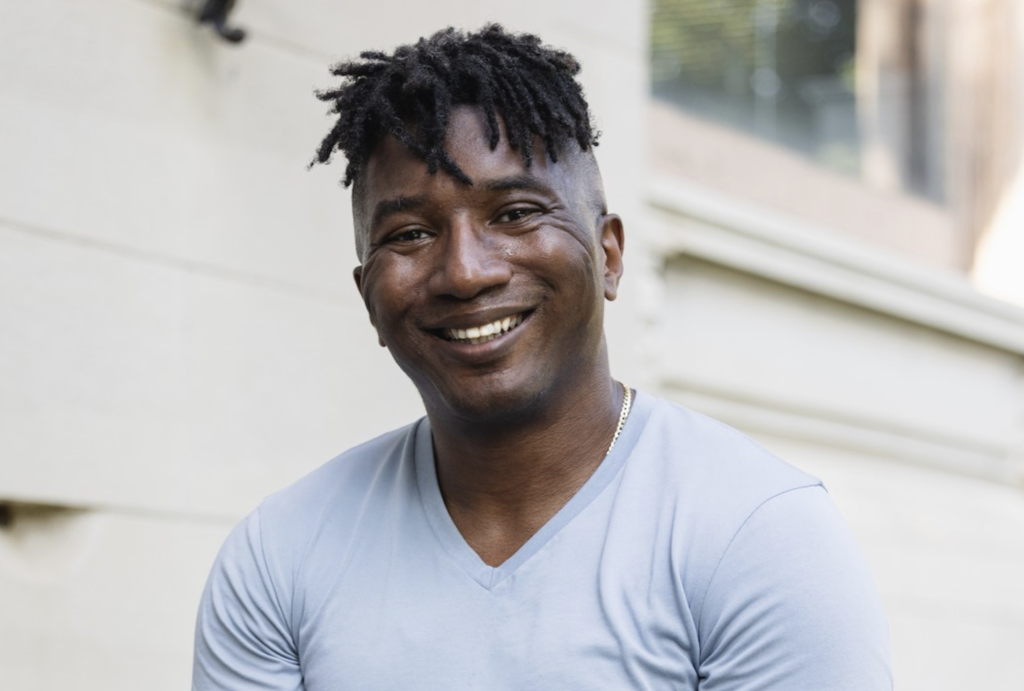
Robert LeVertis Bell is a longtime socialist organizer and public-school teacher running for office Louisville. (Robert Levertis Bell for State Representative)
- Interview by
- Tyler Love Rooney
Socialists’ highest-profile victories in the recent election cycle were scored in blue coastal cities in blue states: Zohran Mamdani’s and Katie Wilson’s campaigns for mayor of New York City and Seattle, respectively. But candidates backed by Democratic Socialists of America (DSA) made inroads across the country last November, including in the South and the Midwest.
The socialist left looks to be keeping up its momentum. Francesca Hong, a Wisconsin state representative and the DSA-endorsed candidate for governor, has a real shot at winning the Democratic primary for the position. In New York State, socialists are hoping to send former United Auto Workers (UAW) organizer Claire Valdez to Congress and grow its already sizable bench in the state legislature. And DSA is backing a number of other races at the state and municipal levels across the United States.
That includes the campaign of Robert LeVertis Bell, a longtime socialist organizer and public school teacher who is running to represent Louisville’s 43rd District in the Kentucky House of Representatives. Jacobin spoke to Bell about his election, how growing up in Louisville shaped his politics, and how he thinks of his potential role as a socialist legislator in a red state.
Tyler Love Rooney
Can you tell me about the neighborhood where you grew up, and how your upbringing shaped your politics?
Robert LeVertis Bell
I grew up in Louisville, Kentucky — West Louisville specifically. I grew up in two neighborhoods; one is called Shawnee, and the other is called Parkland. Growing up in West Louisville in the 1990s, especially in the way that I grew up, shaped everything.
My dad’s neighborhood, the neighborhood that I feel like I grew up in the most, is deep West Louisville. At least back then, it was quite economically diverse. It was a black neighborhood, but it was a very diverse black neighborhood in a way that we don’t really have as much anymore in this city. There were people like my dad — lawyers and doctors and police officers and so on. But then there’d also be people who were scraping to get by, or people who were living nearby who were drug dealers, et cetera.
It was in the ’90s — the murder rate was high. So even though life at home was quite comfortable for me, life outside the doors of my house was sometimes quite perilous. I got robbed multiple times. People I was close to, friends that I knew, would get robbed. Some people I knew or went to school with, kids from the neighborhood, were even killed.
So you saw this wide swath of black life there. I think it shaped me to feel like my community was a rich one — culturally rich, socially rich. But I saw, more so than a lot of people, exactly what the consequences are of our society’s disinvestment from communities.On top of that, the other house that I grew up in was in Shawnee. That’s my grandmother’s neighborhood and I’ve talked about her a lot; her name is Mattie Jones. She is a big civil rights activist in the city of Louisville. She’s very venerated here as one of the leaders of the civil rights struggle. Growing up in her house, which was the big central family home in Shawnee . . . Christmas and Thanksgiving holidays would have over a hundred people, because she had a huge extended family of people who love her and adore her. This house was a hub of activity. And social justice, or “the struggle,” as we called it in the household, was just part of the air we breathed.
Jesse Jackson’s 1988 campaign for president was one of the earlier memories I had of my grandmother’s activism. A woman named Anne Braden, who was also a very venerated figure around here, was a regular at the house. I was around these people who were invested in the idea that making the world a better place was a personal responsibility and were driven to do so.
So between growing up in West Louisville in general and seeing everything that I saw but also specifically growing up with people like my grandmother or Reverend Louis Coleman, Anne Braden, and the movement from an early age — both gave me insight into some of the deficits our communities faced. But also, I was shaped by the privilege of being around these beautiful people who were invested in fixing that and felt like it was their responsibility.
Tyler Love Rooney
In a state dominated by the Right, what does it mean to operate openly as a socialist, and what obstacles might that create for your work?
Robert LeVertis Bell
That is a big question. First, while the state is dominated by the Right, it is important to note that Louisville is a blue city in a red state. I do not generally live in fear of right-wing vigilante violence or anything like that against socialists. And in my neighborhood, I would say that being a socialist is the modal position. I would say, if people were asked, more would say they are socialist than would describe themselves as liberal, and certainly more than conservative. I have a socialist who represents me on city council, J. P. Lyninger, so I want to be clear about that.
At the same time, yeah, Kentucky is a red state. There is an 80-20 Republican majority in the state house, which is what I am running for. What that means is that socialists in some environments who are running for state office are running as — I do not want to say they are running as adjuncts to the Democratic Party — but their connection to the Democrats is tenuous at times. If they must, if there’s Democratic majority, they sometimes are engaged in work that is about winning majorities in the Democratic caucus so they can possibly pass transformative legislation that is socialist-written.
That is not something that is immediately on the horizon for Kentucky. I think about my friends and comrades in New York City and New York State — about them having to play ball or build these coalitions with capital-D Democrats, because they have a real possibility of getting things passed that can help the working class in those states. In Kentucky, getting that sort of legislation — public renewables, things like that — are more on the long-term horizon.
So, as a socialist in government in Kentucky, my job would primarily be to run defense. I will do this defense in coalition with Democrats and other progressives running defense to stop bad laws, to stand up for working people, to fight where we can. But also, primarily my responsibility is to set a long-term agenda for actually reshaping politics in the state.
I would say, in the state of Kentucky, or anywhere for that matter, the Democratic Party has not been a party that represents working-class interests. As a person going into the state house who is explicitly, exclusively looking to build political power for the working class, I am thinking long-term about base building, setting an agenda that people can rally around, finding other candidates around the state who can come along with that agenda over the next several cycles.
Before we can really talk about, say, passing transformative legislation, before we can think about winning majorities, etc., we must base-build, fight like hell against bad bills, and produce a real agenda to be a rallying point for leftist progressives in the state.
Organized Labor in Kentucky
Tyler Love Rooney
How do you understand the relationship between Kentucky’s state government and organized labor?
Robert LeVertis Bell
Organized labor and Kentucky are at a pivotal moment, I think. There are people, especially in the industrial unions, which are more excited than ever about the idea of expressing political independence from the Democratic Party’s establishment.
That does not necessarily mean that they are Republicans or want to be Republicans. They do sometimes endorse Republicans in some races, but by and large they endorse Democrats, and they have always endorsed Democrats. The Democratic establishment has, at times, had more of a hold on labor politically, because it was often the only hope that labor had for getting things like right-to-work laws repealed, or keeping them from passing in the first place.
Things like bringing back prevailing wage laws are what the labor movement is obviously concerned about, and wanting to have conditions in which working people can organize freely — things like being able to get dues deductions from paychecks. These are things that labor has fought for, and will continue to fight for in the state of Kentucky. And Democrats, at least a few of them, have been the only consistent allies that labor has had on that front in this red state.
That said, I think more people in the world of labor — especially those who are involved in politics — are realizing that some concessions have to be extracted from Democrats if they are going to get any more of the loyalty and endorsements and so on that labor has offered them, having gotten so little in return. We still have right-to-work. We still do not have prevailing wage. And a lot of the Democrats in office don’t seem inclined to fight for these things.
At present, I’m really encouraged by the movement, especially among some members and leadership of the industrial unions in the state, to orient a little more militantly toward working-class organization and being less willing to take a back seat to the Democratic Party leadership when asked to. The Kentucky state AFL-CIO [American Federation of Labor and Congress of Industrial Organizations] has really taken the lead lately and has aggressively supported labor-focused candidates this cycle. I’m proud to have its endorsement in particular.
Funding Public Education
Tyler Love Rooney
As a public school teacher, what do you think fully funded education requires? And where do you believe that funding should come from?
Robert LeVertis Bell
We should stop under taxing wealth and industry. That is where the funds should come from.
When it comes to fully funding public education, you are talking about having adequate funds to have well-trained, well-compensated teachers in every classroom. You also have well-trained and compensated support staff. You have buildings that meet the needs of the students who are in those buildings. We would have a diverse and rich curriculum that is building-decided and teacher-decided, and the resources to see that curriculum to fruition. If you are talking about music instruction, art, instruction, and, so on, fully funded means making sure those things are maintained, and supplied, etc.
It means having adequate resources for our multilingual students. Right now, I teach at a nearly majority-multilingual school and have classes composed mostly of multilingual students. But it only has a handful of support staff that are multilingual and equipped to help multilingual students. We have very few translators and things like that.
With fully funded education, there would be adequate, paid opportunities for teachers to get quality professional development and professional education so that they can refine and expand on their skill sets. It also means high-quality education from pre-K to postsecondary, with fully funded, well-paid, well-compensated teachers and well-trained teachers and administrators and support staff — where teachers have a lot of autonomy and the resources to conduct their education as trained.
Protecting Immigrants and Trans People
Tyler Love Rooney
Would you support legislation limiting local law enforcement’s collaboration with federal entities such as Immigration and Customs Enforcement [ICE]? And what are your plans to protect immigrants and trans people from state-level discrimination?
Robert LeVertis Bell
I can’t unilaterally do any of those things, but absolutely, I would support prohibiting state and local law enforcement from collaborating with ICE and to really put limits on these 287(g) agreements to generally stop folks, say, in local law enforcement from collaborating with ICE.
ICE as an institution has proven itself to not be worthy of any collaboration with the sensibly legitimate aspects of our government. It is an internal enemy to things that we ostensibly hold dear in our society: civil liberties, including the right to due process for our immigrants but also for lots of people.
As for trans people, in Kentucky, SB150 passed in 2023 severely limiting LGBTQ rights in schools and targeting trans youth specifically by banning any gender-affirming care for minors and allowing teachers to misgender students. It’s going to be a priority for me to work to overturn that law and to continue the fight for a statewide Fairness Law that establishes the protections statewide that were won in Louisville in 1999.
Lessons From 2022
Tyler Love Rooney
You have run unsuccessfully for this office before. What was the biggest obstacle for you then, and how are things different this time?
Robert LeVertis Bell
There were two big obstacles. The first time I ran for this office in 2022, I was running against the incumbent, Democrat Pamela Stevenson, who was very much supported by the political establishment. She still is, but she will no longer be in the seat. She’s running for US Senate now. Notwithstanding her incumbency status and strong institutional support, we came within 375 votes of beating her.
A major reason that we could not come closer or even defeat her is that two weeks before the election in 2022, my mother went into hospice, and we had to take the foot off the gas a little bit while I tended to and spent more time with my mother. I have no regrets whatsoever about that, but if things were different in that respect, I would have had more time to finish stronger with our closing message.
The two things that are different this time are, first, that it is now an open seat — I’m no longer running against an incumbent. My opponent this time absolutely has a ton of institutional support, but she does not have the name recognition of my opponent in 2022. Second, we’ve learned a lot in the past four years from our electoral project in Louisville DSA. We have refined some things about the work we do. Also, I lost my mother five days after that election. Barring personal tragedy of that magnitude, I don’t see anything stopping me from closing out the message more strongly than in 2022.
The Fight Ahead
Tyler Love Rooney
When you think about the political terrain in Kentucky over the next decade, what do you think the Left needs to do to gain ground? And how do you see your own work fitting into that larger fight?
Robert LeVertis Bell
We’re not an island. The prospects of the Left in Kentucky are quite tied to the prospects of the Left in the rest of the country. We all have a responsibility to continue to build this work, refine this work, refine our organizations, and to advance both our electoral project and our labor work to build working-class political independence and militancy.
Kentucky is an island, specifically though, to the degree to which it is a unique place. In this respect, I feel like my responsibility as one of the representatives of our movement here would be to be a clarion or tribune — to build the work across the state. It must exist outside of our cities in Kentucky. We must continue to build throughout the state, especially in Appalachia. And I think winning this election will be a watershed moment for really reorienting the political left in the state around the interests of the working class.