Zohran Mamdani Wants to Build Housing. He Should Build Green.
After his White House meeting last week, Zohran Mamdani has a tentative plan to build 12,000 units of affordable housing in Queens. It’s a chance to tackle the climate and affordability crises simultaneously by building green.
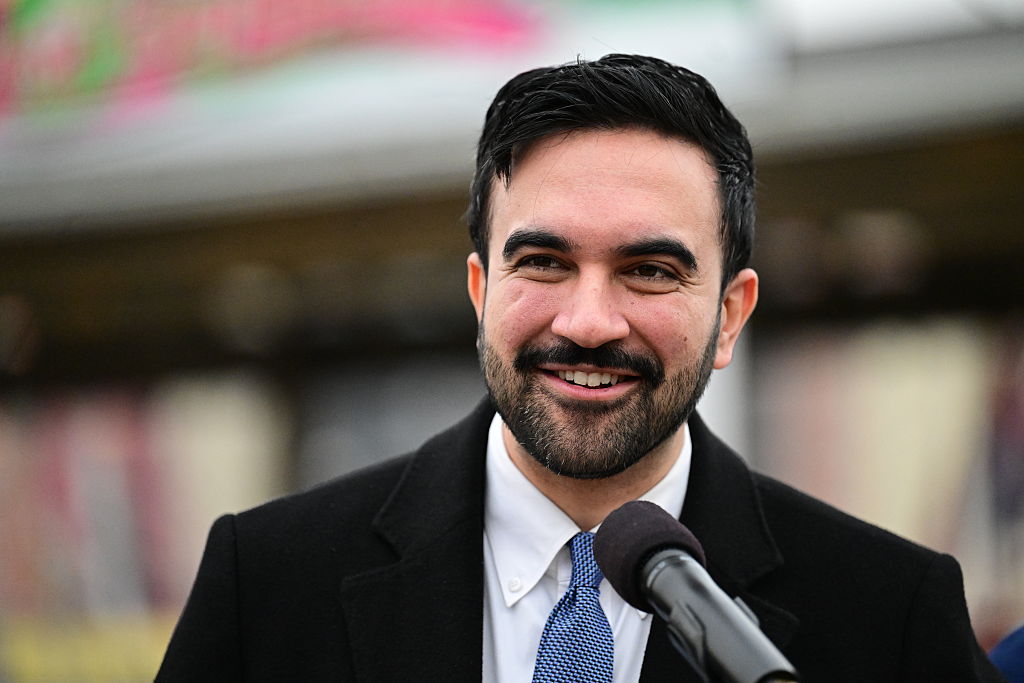
As the Zohran Mamdani administration turns toward ambitious new construction proposals, it has an opportunity to advance green industrial policies as it delivers large numbers of affordable housing units. (Kyle Mazza / Anadolu via Getty Images)
It’s not every day that a democratic socialist has the chance to make a pitch for social housing to the president, but that’s exactly what happened last week. When Mayor Zohran Mamdani and President Donald Trump met for a second time in the Oval Office, they came away with a possible plan to build 12,000 units, half of which would be cooperatively owned and subsidized, atop the Sunnyside railyard in Queens. Their conversation opened the possibility of new federal investment to take on the housing crisis in New York by building a huge number of units of affordable housing and delivering thousands of high-road union jobs in the process — a significant shift away from the federal government’s longtime approach of housing policy focused on single-family home ownership or private investment in rental units.
If enacted, this could put the mayor one major step closer toward his ambitious goal of 200,000 new affordable housing units, a key plank of his vision for a more affordable New York and corollary to his administration’s commitment to freezing the rent for 2.4 million New York tenants in rent-stabilized housing. The project, which would be the largest housing and infrastructural investment in New York City in five decades, would directly intervene in the escalating cost-of-living crisis driven by rising rents and housing unaffordability and allow working class families to stay in the relatively high-density, low-emission borough of Queens rather than be pushed out into sprawling, higher-emission suburbs. The administration has compared the scale and affordability structure of this proposal to the visionary project of Co-op City in the Bronx, which is the largest social housing complex in North America, built by union labor nearly sixty years ago and home to over 43,700 New Yorkers who receive limited equity for an apartment share in exchange for long-term affordability.
But for this groundbreaking public project to truly live up to its potential to be a Co-Op City for the twenty-first century, it must also deliver green, healthy, decarbonized units that tackle the housing crisis and climate crisis together. The details of the potential deal — including how it will be constructed and how affordable the homes will be — are still yet to be confirmed, giving the administration an opportunity to advance one of the most ambitious visions for permanently affordable, energy-efficient, durable high-road housing that the United States has seen in generations.