ICE vs. High Schoolers
We spoke with high school students in Minneapolis about how they were affected by ICE’s occupation of the city.
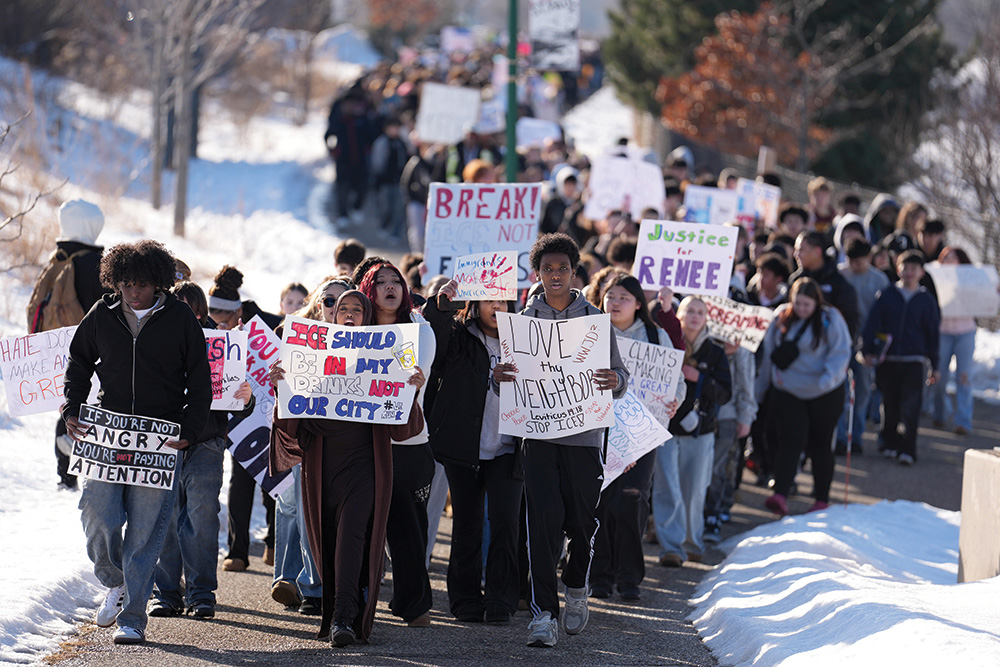
Students from North High School in North St Paul, Minnesota, marched to their local city hall following a mid-afternoon school walkout in protest of ICE and the killing of Renée Good, which had taken place two days prior in neighboring Minneapolis. (Anthony Souffle / The Minnesota Star Tribune)
The January 7 killing of Renée Good sparked national outrage and mass protests, especially in the Twin Cities, which had been roiling since the Trump administration sent thousands of agents to occupy the area as part of Operation Metro Surge.
Immigration and Customs Enforcement (ICE) agent Jonathan Ross’s murder of Good was not the only violent encounter between immigration agents and Minneapolis residents that day. That same afternoon, Border Patrol agents entered the grounds of Roosevelt High School while in pursuit, they claimed, of a US citizen who was “actively trying to impede operations.”
The scene outside the school soon erupted into chaos; the Department of Homeland Security (DHS) alleges that a teacher “proceeded to assault a border patrol agent” and other people started pelting officers with objects and trying to spray-paint them and their vehicles. The Minneapolis educators’ union accused Border Patrol of wrongfully detaining a Roosevelt staff member and of using tear gas on the crowd. Minneapolis Public Schools shut down for the next two days and, soon after, announced it would allow students to stay home and receive remote instruction until February 12.