Should Unions Radically Rethink First Contracts?
If unions are serious about reversing their decline, then shorter, smaller, faster first contracts might be what is needed to scale.
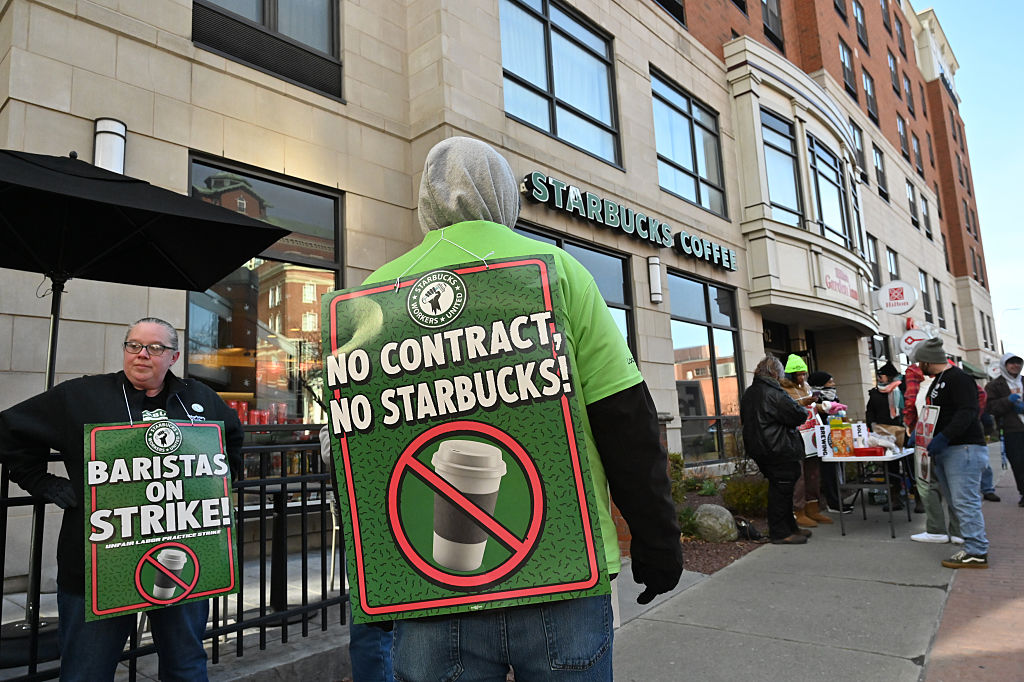
First contracts are one of the largest challenges accelerating labor’s descent into oblivion. Growing union density might require narrowing initial agreements to issues small enough to win, big enough to matter, and quick enough to scale. (Lori Van Buren / Albany Times Union via Getty Images)
After three years of bargaining, the workers at the only unionized Chipotle store in the nation have called it quits on their fight for a first contract. The failure to win a first contract is not a reflection of the courage and tenacity of the workers, which they had in abundance, but a reflection of their inability to amass enough power to force Chipotle to cave. It was a valiant effort by the workers, but the outcome was sadly predictable under current conditions.
First contracts are a second chance for employers to break the union, and their most common strategy is a war of attrition: drag out bargaining, refuse to seriously entertain proposals, and send a steady message that collective bargaining — and by extension the entire unionization project — is futile. Labor law enforcement is so weak that companies violate the duty to bargain in good faith with impunity. Without strategic leverage and deeper organizing density, employers can and will simply refuse to bargain or just stall out negotiations indefinitely.
That story extends far beyond Chipotle. Philadelphia workers successfully unionized the first Whole Foods store in the country last January, but the Amazon-owned company has refused to recognize the union — much less initiate bargaining — for over a year. Starbucks Workers United has successfully organized hundreds of stores representing thousands of workers over the last five years but is still negotiating a first contract. At Volkswagen in Tennessee, United Auto Workers (UAW) members overcame the employer’s “last, best, final offer” and won a strong first agreement, but only after building a credible strike threat at the company’s sole US production facility.