Good Luck, Have Fun, Don’t Die Is the Burned-Out End of Something
Gore Verbinski’s new film, Good Luck, Have Fun, Don’t Die, is so strangely ineffectual that the main fascination while watching it is trying to figure out why nothing the film does is working.
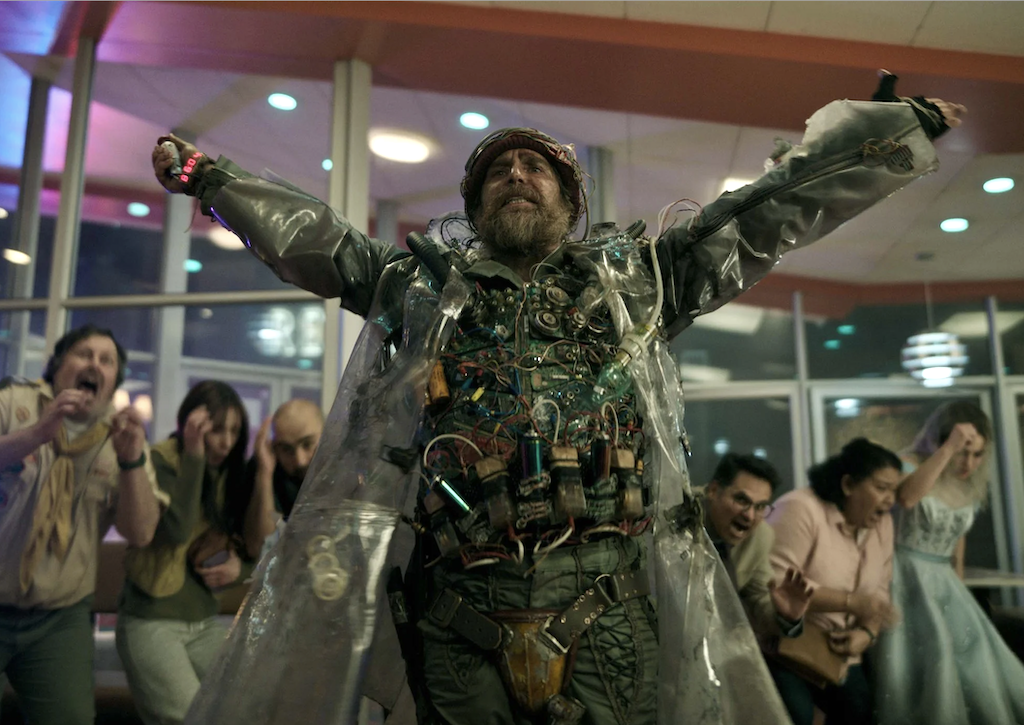
Sam Rockwell in Good Luck, Have Fun, Don't Die. (Briarcliff Entertainment)
While watching the new movie in theatrical release, Good Luck, Have Fun, Don’t Die, an eccentric experiment in dystopian sci-fi black comedy adventure, you might be inclined to wonder what ever happened to Gore Verbinski.
He’s the film’s director and was once a hugely successful figure in the American film industry. His breakout was the kinetic slapstick comedy Mouse Hunt (1997), which became a global hit. The remarkably spooky The Ring (2002) demonstrated his range when working in film genres, showing it was possible to remake a Japanese horror film in American terms and get something excellent out of it. His splendidly oddball and enormously popular Pirates of the Caribbean trilogy (2003–7) put him on top of the Hollywood heap. And his brilliantly scabrous Rango (2011), which deserved and won the Best Animated Feature Oscar, showed us how fantastic CGI animated films might have been if the cutesy Disney–Pixar approach hadn’t so dominated the genre.
Verbinski always took big swings at whatever he tackled, as his short record of immense hits and disastrous misses attests. The Lone Ranger (2013) was so protracted and troubled a production, and cost so ungodly much and was so badly received, that it cast a long shadow over his subsequent career. He began to back off from directing, attaching himself to projects and then either dropping out or retreating to a producer-only role. He also went off and got involved with computer gaming. When he eventually returned as a director with A Cure for Wellness (2016), it bombed. Since then, Verbinski the director has been missing in action for ten years.