Unions Are Going to Die Unless Something Big Changes Soon
The labor movement isn’t just the weakest it’s been in a century. Without a radical and aggressive shift in organizing, US unions could effectively cease to matter in the very near future.
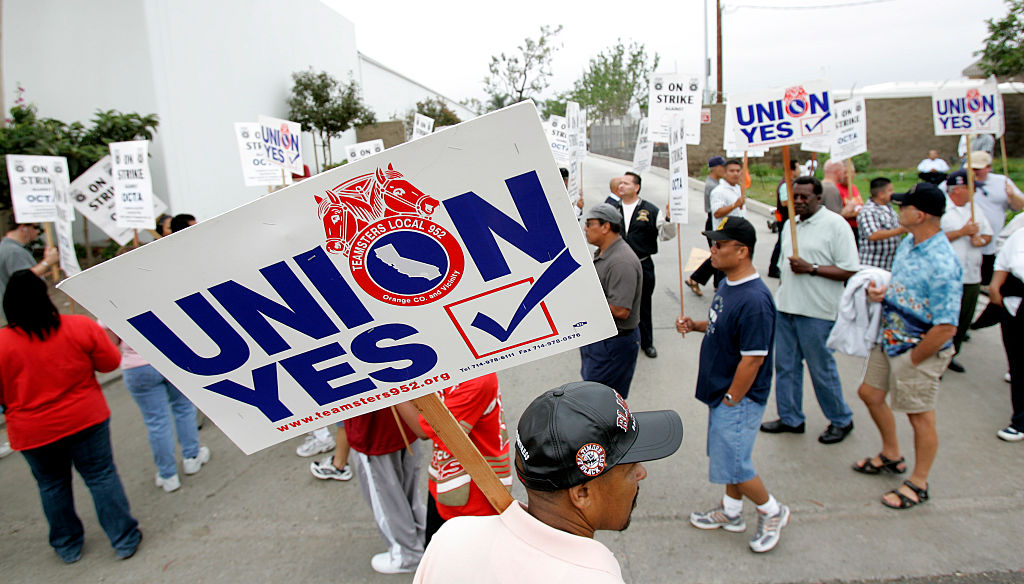
Unions are in a death spiral, and the numbers show they could nearly vanish within our lifetime. That’s not alarmism — it’s basic math. (Don Kelsen / Los Angeles Times via Getty Images)
Unions are in a death spiral, and the numbers show they could nearly vanish within our lifetime. That’s not alarmism. It’s arithmetic.
Private sector union density has collapsed from about one-third of the workforce in the 1950s to just 5.9 percent in 2024. In the last twenty years, we’ve lost a quarter of private sector union density. Unions have failed to organize and win first contracts at a rate that can keep up with the growth of new jobs in the economy. As a result, union density has declined by about 0.1 percent a year over the past two decades. If nothing changes, we could fall to a mere 3.0 percent in the next thirty years, even as unions continue to win most National Labor Relations Board (NLRB) elections they file.
As union density has collapsed, wealth inequality has soared to levels not seen since the Great Depression, creating fertile ground for authoritarianism, right-wing nationalism, and racist scapegoating. Reversing this crisis requires nothing less than a mass, multiracial working-class movement to reclaim democracy — at the ballot box and in the workplace.