Donald Trump’s Imperialism Follows a Grim American Tradition
- George Miller
There’s something disingenuous about liberal Western media rediscovering that the term “imperialism” also applies to the US. Donald Trump is no radical departure from his predecessors; he simply abandons the pretense of exporting democracy.
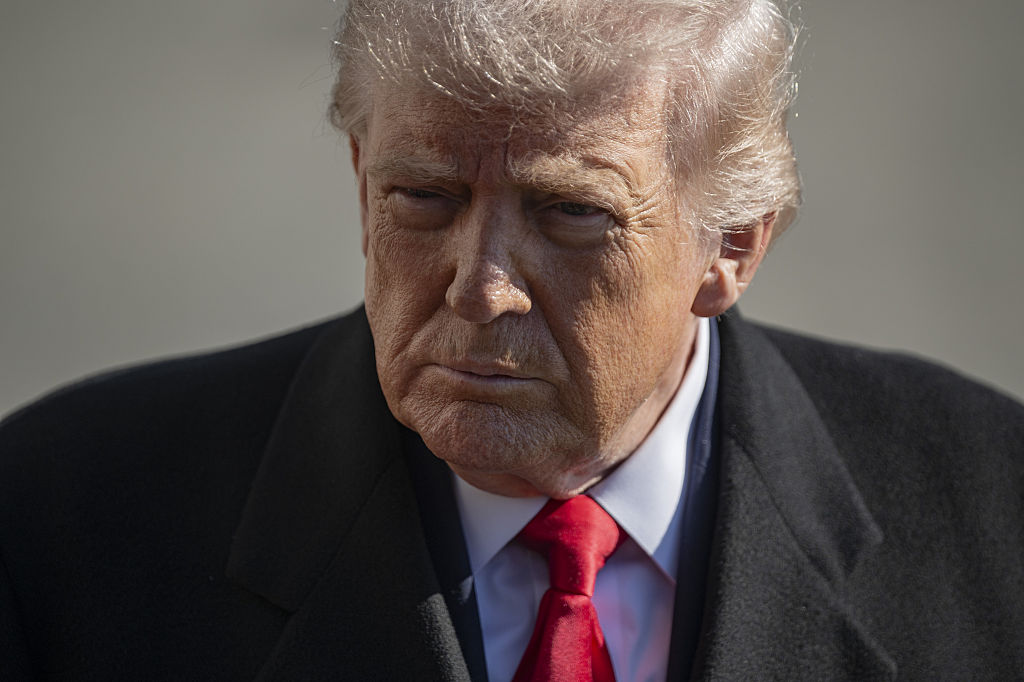
Donald Trump has always prided himself on being a “tough guy” who won’t hesitate to strike when necessary. (Celal Gunes / Anadolu via Getty Images)
It would require a highly selective memory to regard the abduction of Venezuela’s president Nicolás Maduro and his wife on January 3 as Washington’s return to an imperialist policy that it supposedly abandoned in 1945, or even 1918.
There’s something disingenuous about the sudden reappearance of the term “imperialist” in Western media outlets, which previously applied it only to Russia. For — to limit ourselves to the post–Cold War era — it is in a very similar manner that Washington returned to large-scale military operations in 1989 under President George H. W. Bush, after long years of “Vietnam syndrome.” Like the recent intervention in Venezuela, the invasion of Panama and the abduction of its dictator Manuel Noriega, in blatant violation of international law, were also presented as an anti-drug police operation.
This initiated a new sequence of US interventions, culminating in the invasion of Iraq in 2003 under George W. Bush. The occupations of Iraq and Afghanistan following the attacks of September 11, 2001, quickly turned into quagmires from which the United States only managed to extricate itself after significant losses — in 2011 in the case of Iraq, and a decade later in that of Afghanistan.