The Class War on White-Collar Workers Is Just More Capitalism
Thanks to AI, white-collar workers are discovering what blue-collar workers learned a half-century ago: they’re disposable.
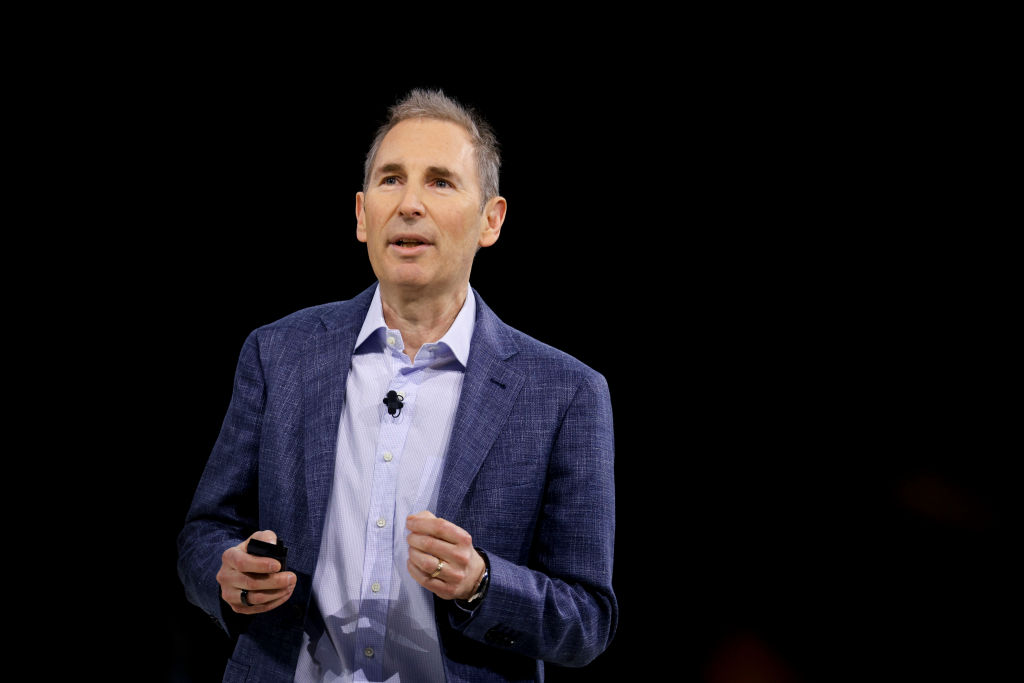
Andy Jassy, chief executive officer of Amazon, speaks during an unveiling event in New York on Wednesday, February 26, 2025. (Michael Nagle / Bloomberg via Getty Images
Last week, MSNBC anchor Chris Hayes took to X to announce that America’s white-collar workers were the latest victims of a newly waged class war captained by tech billionaires. The goal, he wrote, was “to do to white-collar workers what globalization and neoliberalism did to blue-collar workers.”
That thread went viral because the narrative is seductive. The stories about mass layoffs at tech firms, coupled with Donald Trump and the New Right’s attacks against “credentialed elites,” feel like evidence of something both seismic and systemic. But the idea that tech billionaires and elites are engaged in a full-scale campaign specifically against white-collar workers misses a deeper, more uncomfortable truth: What we’re witnessing isn’t some coordinated political vendetta against the laptop class. It’s just capitalism working exactly as intended.
Certainly, the recent jobs data is sobering. According to the latest ADP Employment Report, white-collar job growth has not just slowed; it has entered a period of contraction. Though private employers added a measly 22,000 jobs in January 2026, the professional services sector hemorrhaged 57,000 positions. Last month, US employers announced over 108,000 job cuts, the highest start-of-year total since the 2009 Great Recession, with layoffs rising 118 percent year over year and over 200 percent from the end of 2025. Many of those cuts were in white-collar professions, and the usual suspects in Big Tech are leading the charge: Amazon has implemented multiple rounds of cuts, eliminating around 16,000 corporate jobs in January as part of a broader goal to trim some 30,000 white-collar roles. Meta continued layoffs in its Reality Labs division and other teams, with hundreds of positions already cut in early 2026.