Military Vets in Labor Are Joining the Fight Against Trump
Military veterans are more likely than other Americans to work union jobs. Vets in the labor movement have increasingly joined and led fights against Donald Trump’s attacks on Veterans Affairs and on federal workers’ jobs and collective bargaining rights.
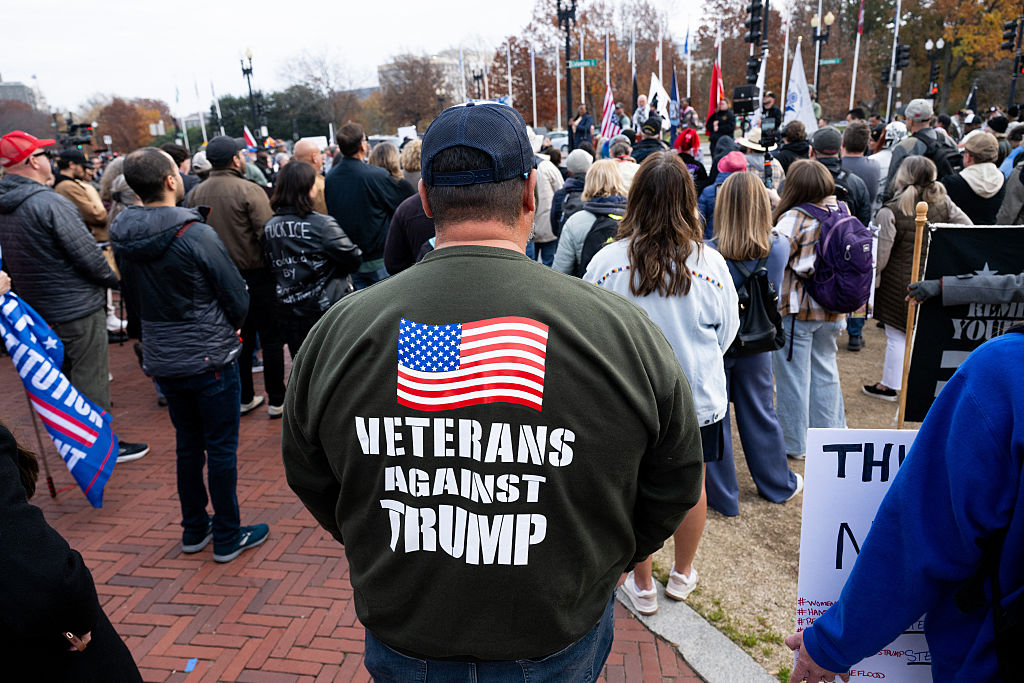
US military veterans in the labor movement have played a front-line role in resisting Trump administration attempts to cut government jobs and services and strip federal workers of their collective bargaining rights. (Saul Loeb / AFP via Getty Images)
The United States is home to seventeen million military veterans. About 1.3 million of them currently work in union jobs, with women and people of color making up the fastest-growing cohorts. Veterans are more likely to join a union than nonveterans, according to the AFL-CIO. In half a dozen states, 25 percent or more of all actively employed veterans belong to unions.
In the heyday of industrial unionism in the decades following World War II, hundreds of thousands of former soldiers could be found on the front lines of labor struggles in auto, steel, meatpacking, electrical equipment manufacturing, mining, trucking, and the telephone industry. Many World War II vets became militant stewards, local union officers, and, in some cases, well-known union reformers in the United Mine Workers and Oil, Chemical and Atomic Workers.
The late labor organizer and author Jane McAlevey argued that the postwar union movement better understood the “strategic value” of veterans than organized labor does today. In her own advice to unions about contract campaign planning, she recommended enlisting former service members whose past “experience with discipline, military formation, and overcoming fear and adversity” could be employed on picket lines and strike committees.