No Other Choice Is Another Masterpiece by Park Chan-wook
Park Chan-wook’s No Other Choice is a shocking, innovative, and darkly comic film about the pressures of life under capitalism. It’s more proof that the Oldboy director is nothing less than a cinematic master.
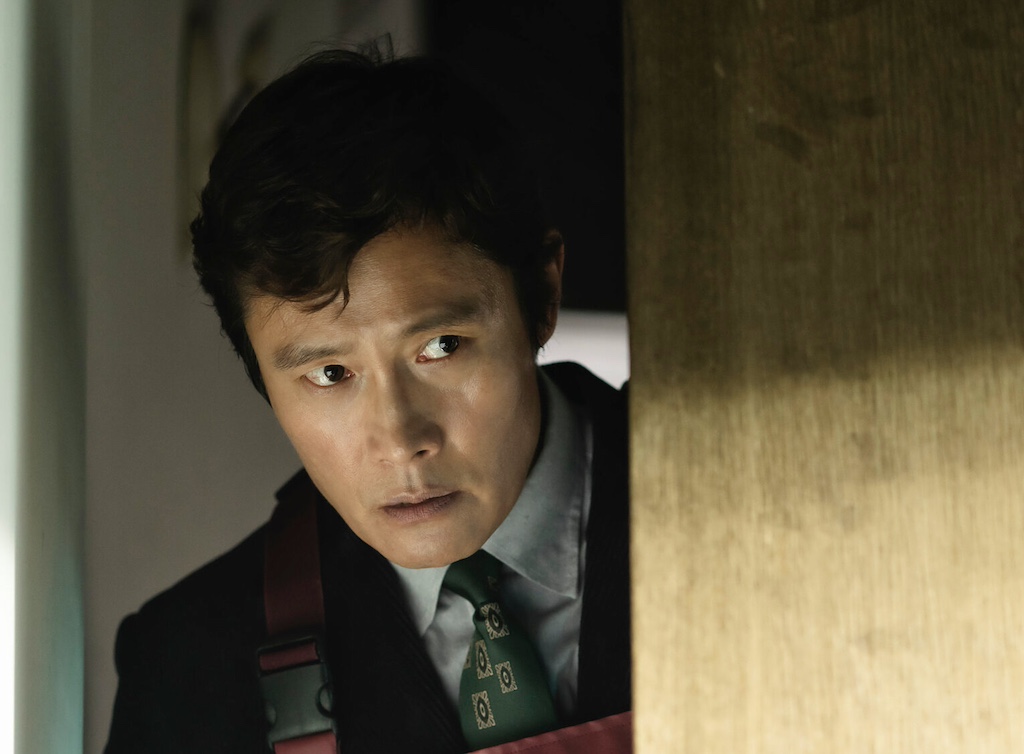
Lee Byung-hun in No Other Choice. (CJ Entertainment)
I expected the intense hype surrounding Park Chan-wook’s No Other Choice would, when I finally saw it, inevitably make it less exciting no matter how good it actually was. But the hype can’t even touch it. It’s a great film that works in such unexpected ways, you can’t really anticipate what you’re going to see from a typical summary. It’s one of those rare films that discombobulates you and silences your glib responses.
Based on Donald Westlake’s 1997 novel, The Ax, previously adapted by Costa-Gavras with his 2005 film, The Axe, Park’s No Other Choice is about an affluent paper mill manager, Yoo Man-su (Lee Byung-hun), who’s devoted to his family, his idyllic home, and the intensive work he performs on the job. We see him just before the life-wrecking blow falls, when he’s on the patio barbequing the family dinner in the summer heat, appreciating his happy situation but looking forward to the cooler fall weather on the way. With ironic prescience, he murmurs, “Come on, fall.”
But after the mill is taken over by an American company, he abruptly loses his job for refusing to lay off his highly trained coworkers. Crushed, Man-su is determined to find other work within three months so he can go on tending his plants in the greenhouse he built himself; his homemaker wife, Lee Mi-ri (Son Ye-jin), can continue her tennis lessons and dance lessons; his teenage son can lounge around pricing the latest tech gadgets; his neurodivergent daughter, Ri-one, a gifted cellist, can work with a more advanced music teacher; and the family’s two golden retrievers can carry on gamboling around the yard.