The Socialist Tradition Shaped Martin Luther King
Accounts of the life of Martin Luther King Jr often present him as a singularly great individual. Yet MLK was profoundly shaped by a vibrant ecosystem of socialists and labor radicals, from Myles Horton and Rosa Parks to Bayard Rustin and Stanley Levison.
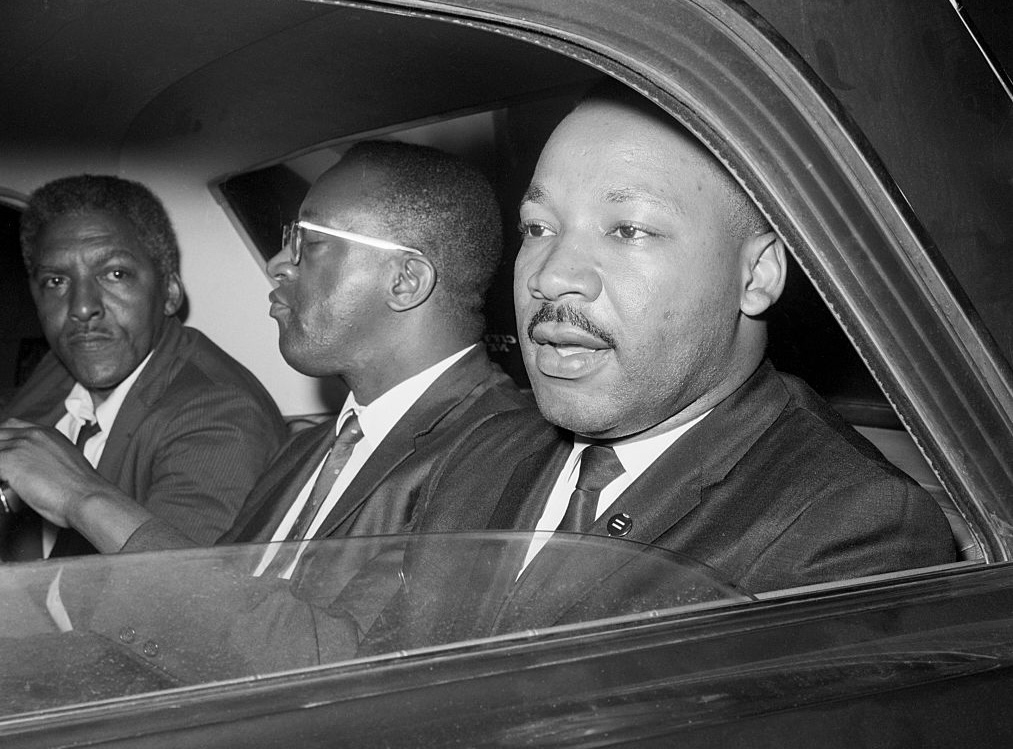
Martin Luther King’s radicalism wasn’t a private attribute. It was the outcome of apprenticeship inside an organized tradition — a network of socialists, labor radicals, and movement educators. (Bettmann / Getty Images)
Almost everyone left of center now understands that Martin Luther King Jr was more radical than the milquetoast, “I Have a Dream”–only version many Americans grew up with.
MLK Jr was a political radical who spent his final years opposing militarism, denouncing capitalism, and demanding a massive economic redistribution. That’s why Zohran Mamdani’s go-to definition of socialism has been to quote King: “Call it democracy, or call it democratic socialism, but there must be a better distribution of wealth within this country for all God’s children.”
And yet, even many of the most sympathetic “radical King” accounts still cling to a familiar American fairy tale: the Great Man who simply had it in him — born with moral courage, hatched fully formed, and then leading history forward by sheer force of charisma.