The Rise of Chile’s Hard Right
The first round of voting in Chile’s general election in November saw the shocking rise of the far right and the collapse of the country’s new left. It’s a crushing but not total defeat for the movement helmed by President Gabriel Boric.
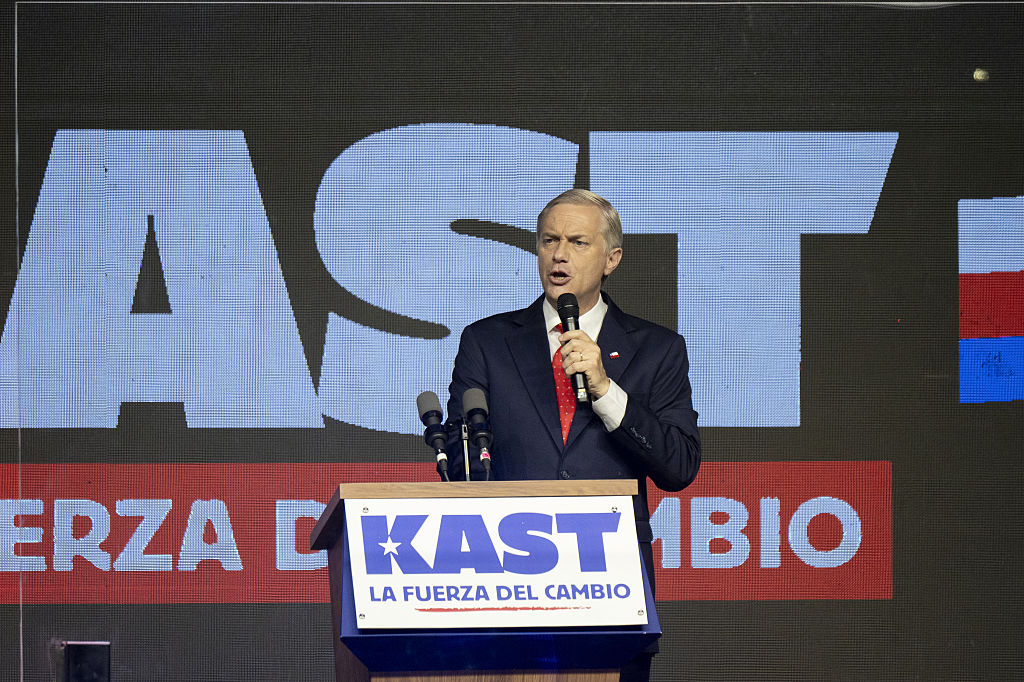
Presidential candidate Jose Antonio Kast on November 16, 2025, in Santiago. (Tamara Merino / Bloomberg via Getty Images)
On November 16, Chile held its first general election since former student movement leader Gabriel Boric won the 2021 presidential runoffs as a candidate of a promising new left coalition. This time, however, a hard right emerged as the country’s dominant political force. It is now set to cruise to a second-round victory in December, which would drive a national realignment favoring reactionary parties.
These were also the first elections since voters overwhelming rejected a proposal to replace the 1980 constitution, a charter imposed under military rule that enshrined core neoliberal principles and institutions. As with the 2022 constitutional plebiscite, mandatory voting turned out swaths of disaffected working-class voters whose pressing needs Boric’s Broad Front–Communist Party coalition government left largely unaddressed. Today they are seeking pragmatic solutions from the extreme right and anti-ideological demagogues.
The results amount to a devastating, though not definitive, blow to reform and socialist politics. Chile is now likely to be governed by an alliance between José Antonio Kast’s ultraconservative neo-authoritarian Partido Republicano (PR) and upstart Johannes Kaiser’s reactionary libertarian Partido Nacional Libertario. As the Cambio por Chile coalition pushes forward in reshaping the country’s party system and policy agenda, it has effectively subordinated the old center-right bloc that spent three decades co-governing with the now-dissolved center-left Concertación following the 1990 transition from dictatorship.