Life Inside China’s Gig Machine
Hu Anyan’s I Deliver Parcels in Beijing describes life working in China’s logistics and service trades. Anyan’s account reveals differences in context between Chinese and US workers that indicate the difficulty of international working-class solidarity.
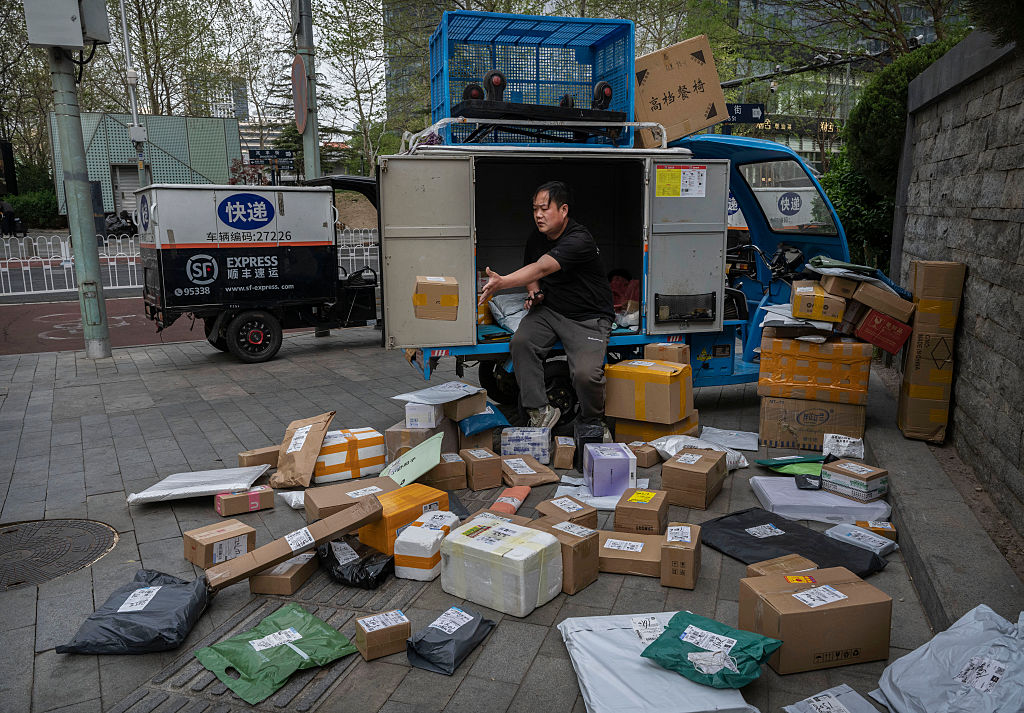
A courier driver organizes small parcels in the Central Business District on April 9, 2025, in Beijing, China. (Kevin Frayer / Getty Images)
For example, if a minute was worth 0.5 yuan, then the cost of urination was 1 yuan — that is, if the toilet was free to use and I only took two minutes. Eating lunch needed twenty minutes — ten minutes of which were spent waiting for the food — and had a time cost of 10 yuan. If a simple dish of rice and meat cost 15 yuan on top of this, then the whole endeavor was too extravagant! Basically, I skipped a lot of lunches.
Like all good writers, Hu Anyan lets the particular illuminate the universal. In his new collection, I Deliver Parcels in Beijing, he sidesteps sweeping pronouncements about his work in logistics, transportation, and other odd jobs in China’s urban centers. Instead he relates the small moments that defined his days — flashes of frustration with customers, rivalries with coworkers, and the ways his work rhythms spilled into his personal life. The result is an insightful, relatable, and often humorous account of working life in twenty-first-century China.
For all the similarities between Hu’s work frustrations and those of Americans, however, there are stark contrasts between the two national contexts that the following interview with the author highlights. Chinese working conditions are, by American standards, often excessively grueling and precarious. But they are widely tolerated against the backdrop of rising living standards brought about by rapid industrialization. And when the conversation turns to unions, the concept seems so alien that the exchange takes on a comic air. As relatable as Hu’s writing is, it also points to marked differences in context that indicate the difficulty of international working-class solidarity.