For Struggling Workers, Appeals to Democracy Aren’t Enough
After decades of rising inequality and stagnant wages for workers, a large majority of people in the US now reject belief in the American dream. These voters won’t be won over by calls to defend a democracy they feel has let them down.
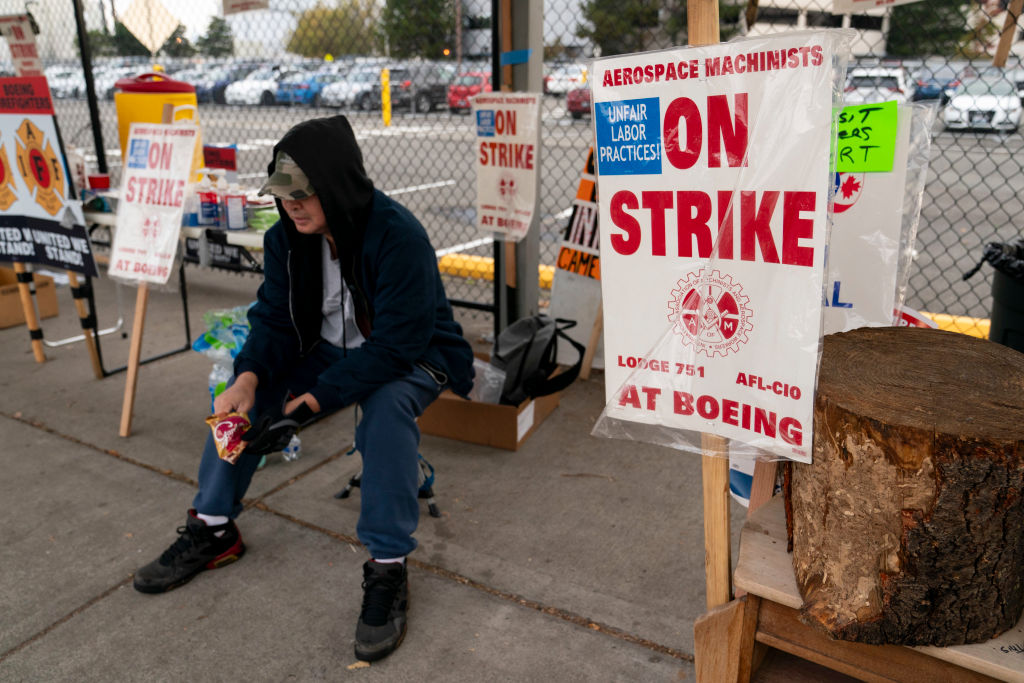
Inequality predicts low trust in institutions, and many working-class Americans feel democracy has let them down. And they’re right. It has. (David Ryder / Getty Images)
New polling shows that only about a third of Americans (36 percent) approve of Donald Trump’s handling of the economy, and only about 30 percent think he’s doing a good job lowering the cost of living. This is important because the economy and the cost of living were top issues for Trump voters in the 2024 election, with concerns about the economy the highest since the Great Recession of 2008.
Even more important: that left-wing rag the Wall Street Journal reported last week that 70 percent of Americans said the American dream — that if you work hard, you’ll get ahead — isn’t true or never was. They’re not wrong: virtually all Americans earned more than their parents in the decades after World War II, but only 50 percent of those born in 1980 will. This is the anger that drives far-right populism. Economic populism is about economics.
Trump is now as unpopular on inflation as Joe Biden was in 2022. Does it matter? It won’t if all Democrats talk about is defense of democracy. What we need to do to defend democracy in the short term is different from what we need to do to defend it in the long term. In the short term, we need resistance — in the courts, on the streets. But to defend democracy in the long term, we need to address economic dissatisfaction.