Ocean Vuong’s Way Out
The meeting of New England’s newer low-wage immigrant working class and its older industrial working class is beautifully rendered, warts and all, by Ocean Vuong in his new novel, The Emperor of Gladness.
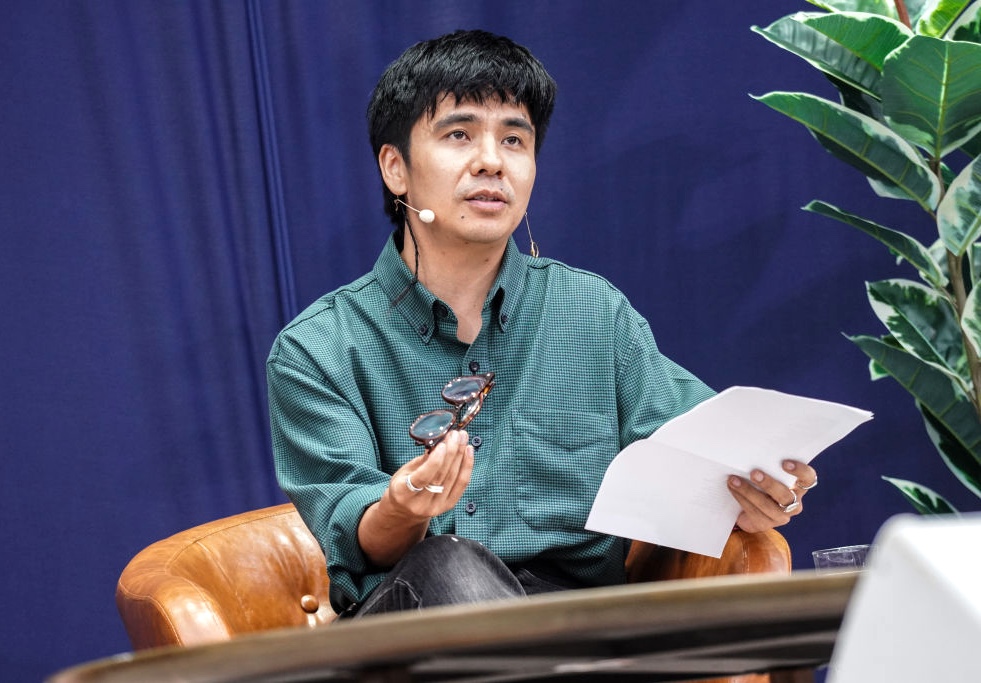
Ocean Vuong delivering a talk at the University of California San Diego on October 16, 2024. (Michael Ho Wai Lee / SOPA Images / LightRocket via Getty Images)
Deindustrialization in the Northeast spawned a service sector that didn’t quite match up to the offerings of the old, manufacturing-based economy. The resulting lower wages, limited job benefits, and reduced job security propelled many workers, their families, and communities into a downward spiral.
Two great regional storytellers — Russell Banks and Richard Russo — plowed this field with great personal insight. Both endured difficult childhoods, marked by absent or unreliable blue-collar fathers who left single moms in charge. In their short fiction and novels, both Banks and Russo chronicled the tragedies and tribulations of white working-class people living in hometowns like their own.
In works by Banks like Hamilton Stark, Affliction, and Rule of Bone or Russo’s The Risk Pool, Empire Falls, and Nobody’s Fool, we meet pipe fitters and laborers, leather factory workers, auto mechanics and small-town cops, grill cooks and waitresses, and even the occasional failed academic.