Katrina Set the Stage for New Orleans’s Capture by Investors
Hurricane Katrina hit New Orleans 20 years ago today. In the years after the storm, the city became a laboratory of Frankenstein proportions for the most extreme forms of privatization and deregulation.
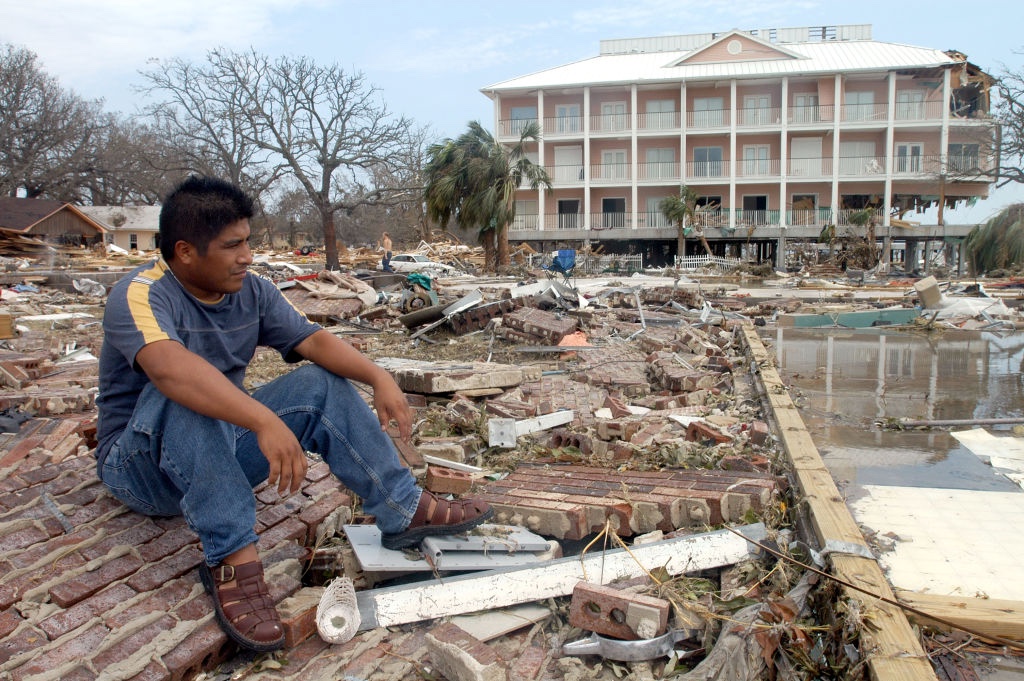
In the wake of the sheer devastation of Hurricane Katrina, public officials, wealthy developers, private contractors, and others coalesced to promote a vision of wholesale privatization. (Barry Williams / Getty Images)
Beg-Knows America is a regular feature on CBS Mornings. Hosted by native Louisianan David Begnaud, the show’s title is a play on his Cajun French surname. Begnaud focuses his segment on human interest stories, profiling ordinary Americans and their sometimes-remarkable everyday experiences. Against the “if it bleeds, it leads” logic of the legacy news cycle, Begnaud attempts to recall a different America — one too often buried in headlines of death, chaos, and political chicanery.
And while the neighbors-helping-neighbors narrative may be a strong tonic against cynicism, it is not above politics. Rather, his news story on New Orleans conforms to the dominant narrative of the city’s recovery since Hurricane Katrina. Instead of focusing on the imposition of an investor-led reconstruction and ongoing political struggles over the city’s future, we are fed a steady diet of stories about the strength of its residents, heroic acts of charity, and sanctimonious talk of the city’s cultural exceptionalism.
Beg-Knows’s coverage of New Orleans obscures how many of its recovery narratives are deeply linked to the privatized charities that dominated the city’s reconstruction in the aftermath of Katrina. In one summer 2024 installment titled “A Lesson in Kindness,” Begnaud profiled the work of Tulane University architecture students who constructed a small home for Benjamin Henry, a senior black man who had been living on the streets for nearly twenty years. When asked how he became homeless, sheltering under the Claiborne Expressway, Henry blamed himself, “My story was bad decisions. Hanging with wrong people, drugs, alcohol.”